WhatsApp 💬 WhatsApp serves over 2 billion users globally, handling 100+ billion messages daily. This document outlines the comprehensive architecture that enables secure, real-time messaging at massive scale with end-to-end encryption and 99.99% availability.
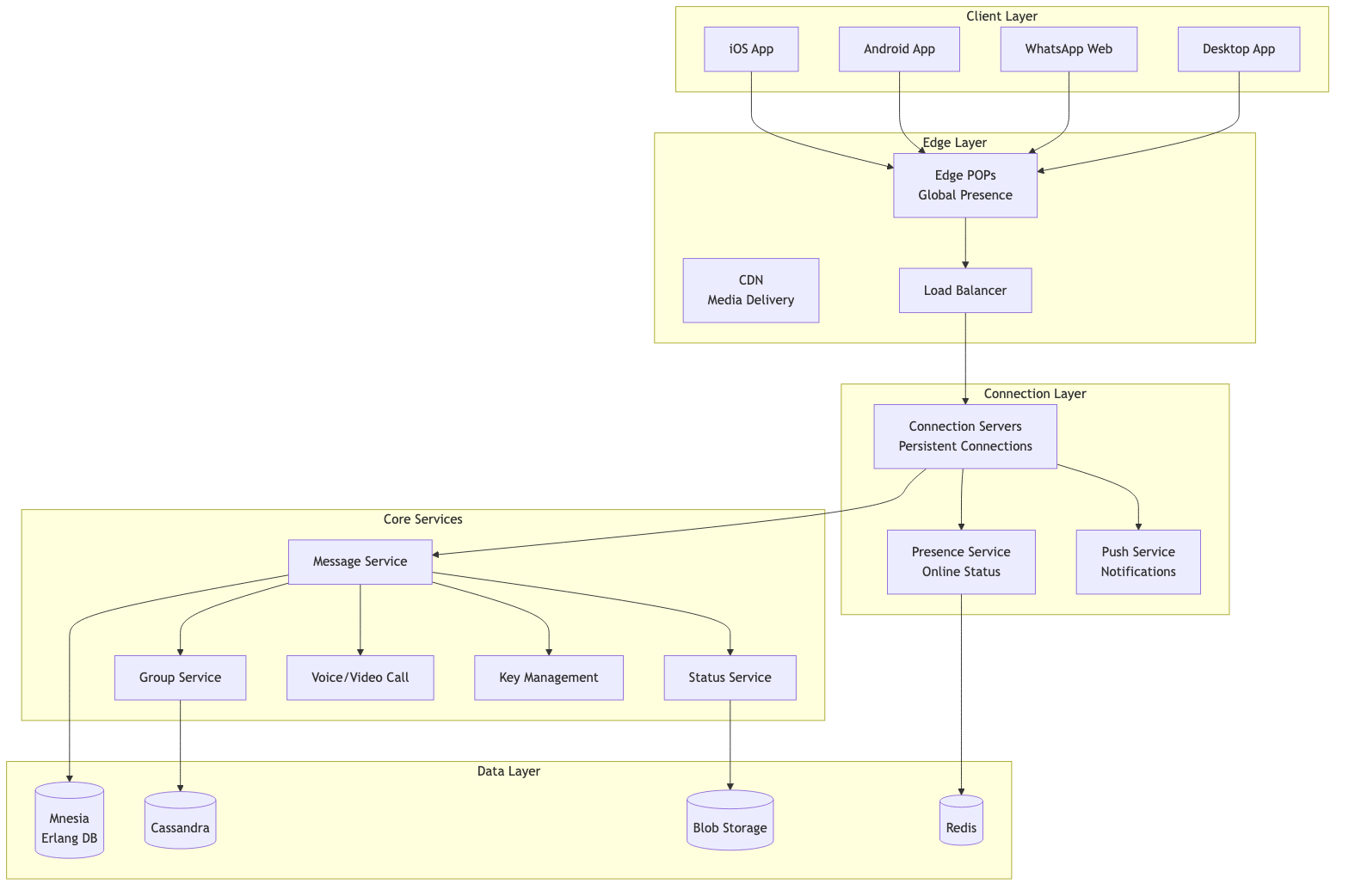
Connection Servers
Presence Service
Push Service
Connection Servers
Presence Service
Push Service
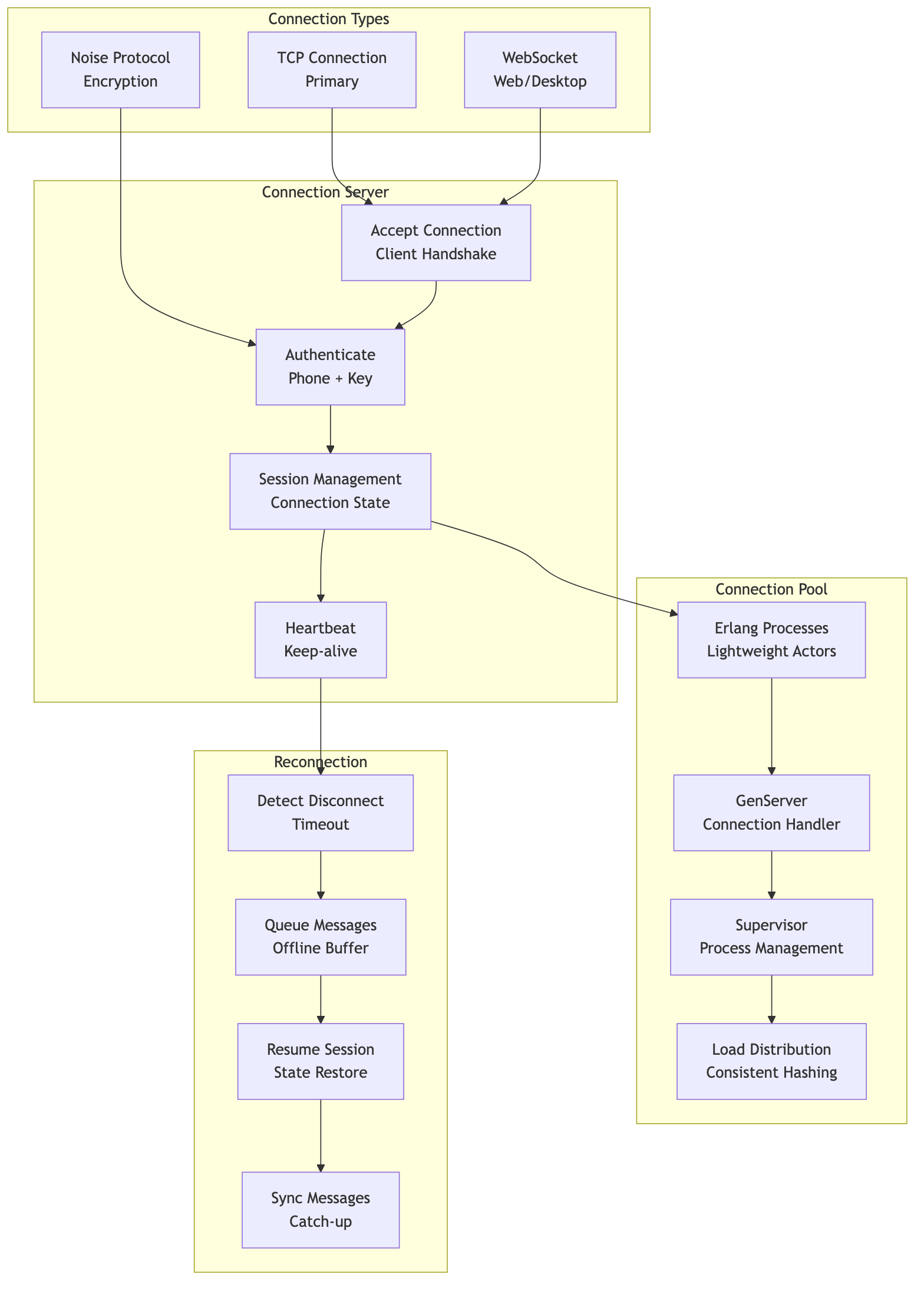
Accept Connection
Session Management
Erlang Processes
GenServer
Supervisor
Load Distribution
Queue Messages
Resume Session
Accept Connection
Session Management
Erlang Processes
GenServer
Supervisor
Load Distribution
Queue Messages
Resume Session
Connection Features:
2M+ concurrent connections per server
Erlang/OTP for lightweight processes
Sub-second reconnection
Offline message queuing
Technologies: Erlang, FreeBSD, Noise Protocol
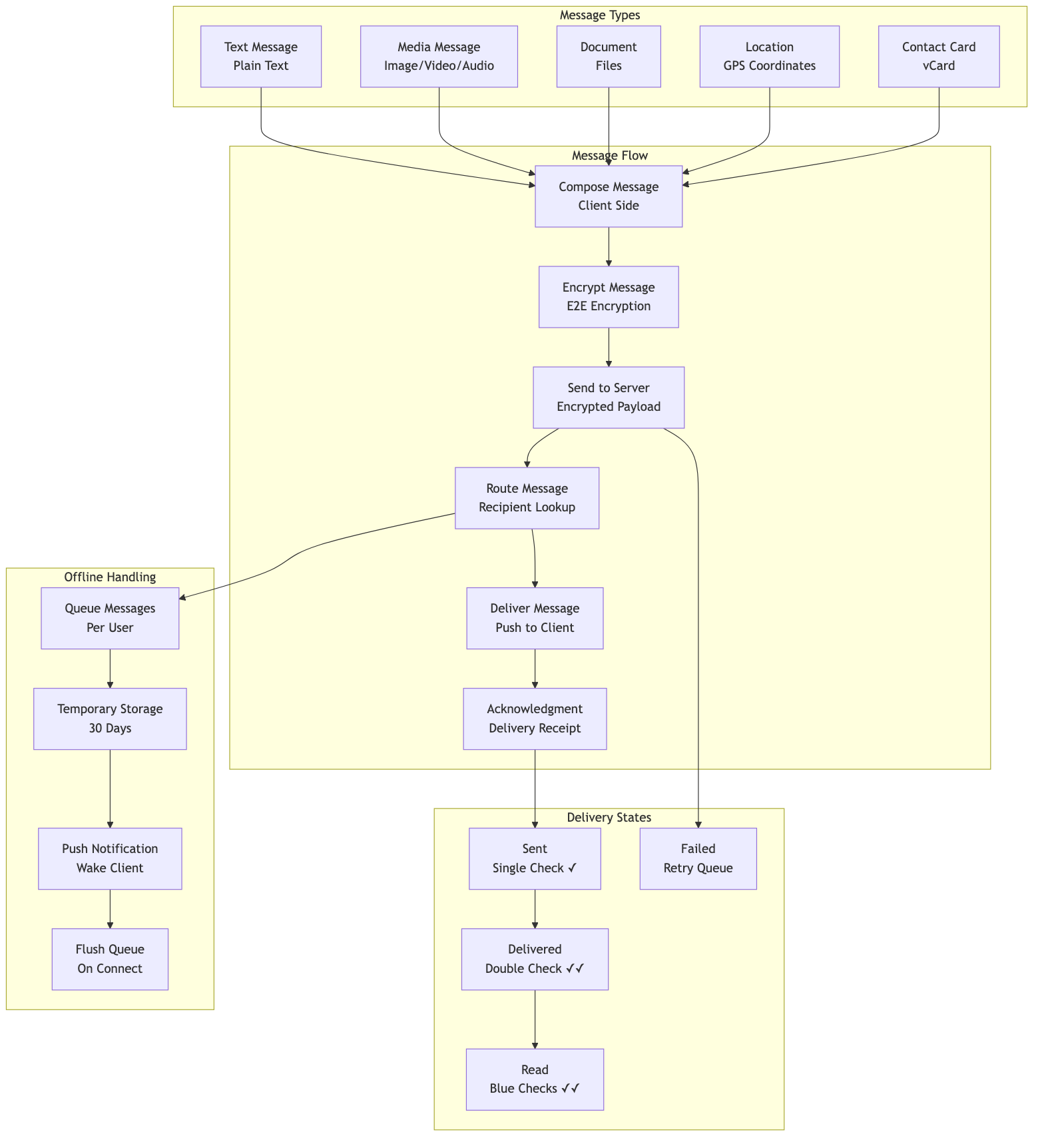
Compose Message
Encrypt Message
Send to Server
Route Message
Deliver Message
Acknowledgment
Push Notification
Media Message
Compose Message
Encrypt Message
Send to Server
Route Message
Deliver Message
Acknowledgment
Push Notification
Media Message
Message Delivery Features:
At-least-once delivery guarantee
30-day offline message storage
Read receipts tracking
Multi-device sync
Retry with exponential backoff
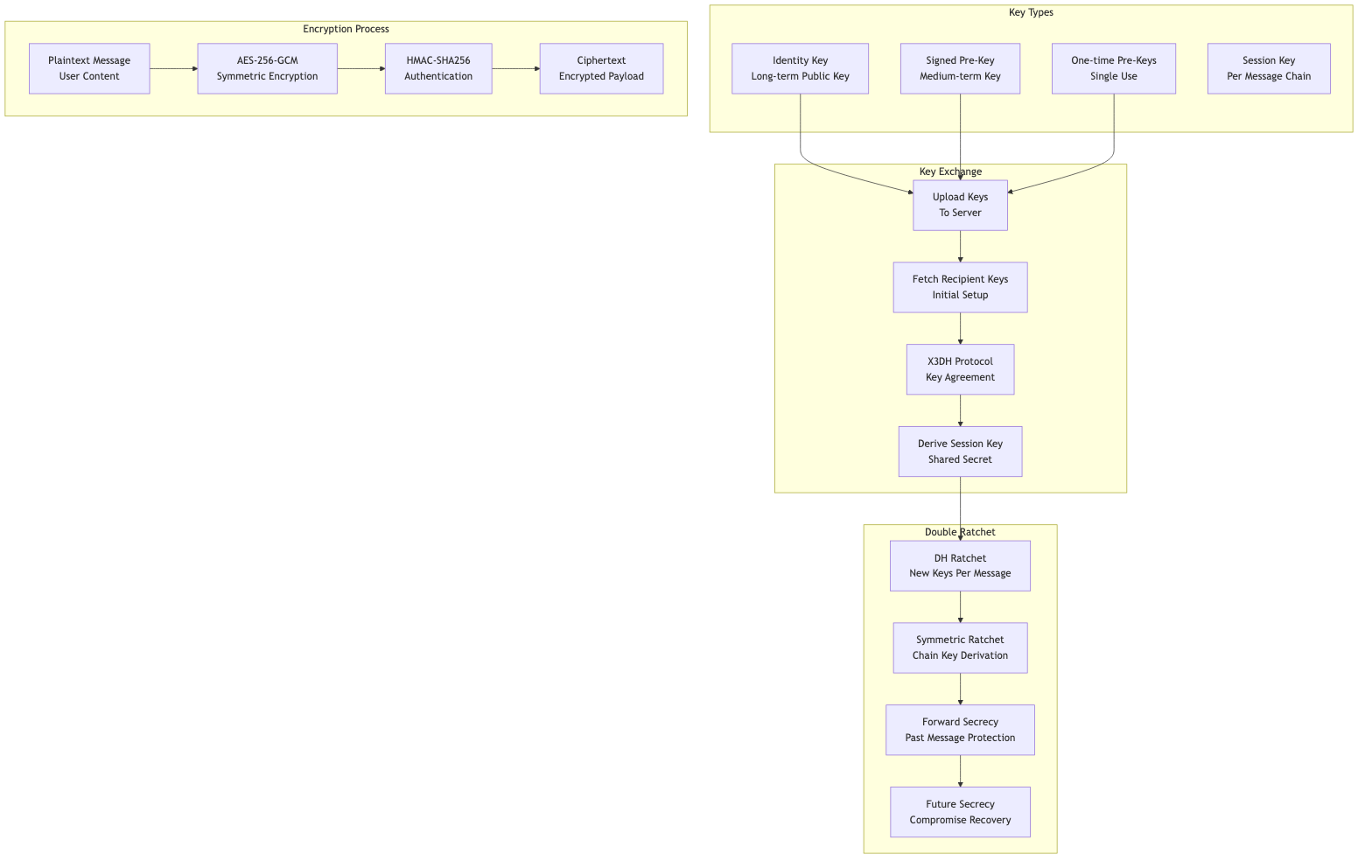
Plaintext Message
AES-256-GCM
HMAC-SHA256
Ciphertext
Identity Key
Signed Pre-Key
One-time Pre-Keys
Session Key
Fetch Recipient Keys
X3DH Protocol
Derive Session Key
DH Ratchet
Symmetric Ratchet
Forward Secrecy
Future Secrecy
Plaintext Message
AES-256-GCM
HMAC-SHA256
Ciphertext
Identity Key
Signed Pre-Key
One-time Pre-Keys
Session Key
Fetch Recipient Keys
X3DH Protocol
Derive Session Key
DH Ratchet
Symmetric Ratchet
Forward Secrecy
Future Secrecy
Signal Protocol Features:
Forward secrecy (past messages protected)
Future secrecy (recovery from compromise)
Deniability (no proof of sender)
Asynchronous key exchange
Multi-device support
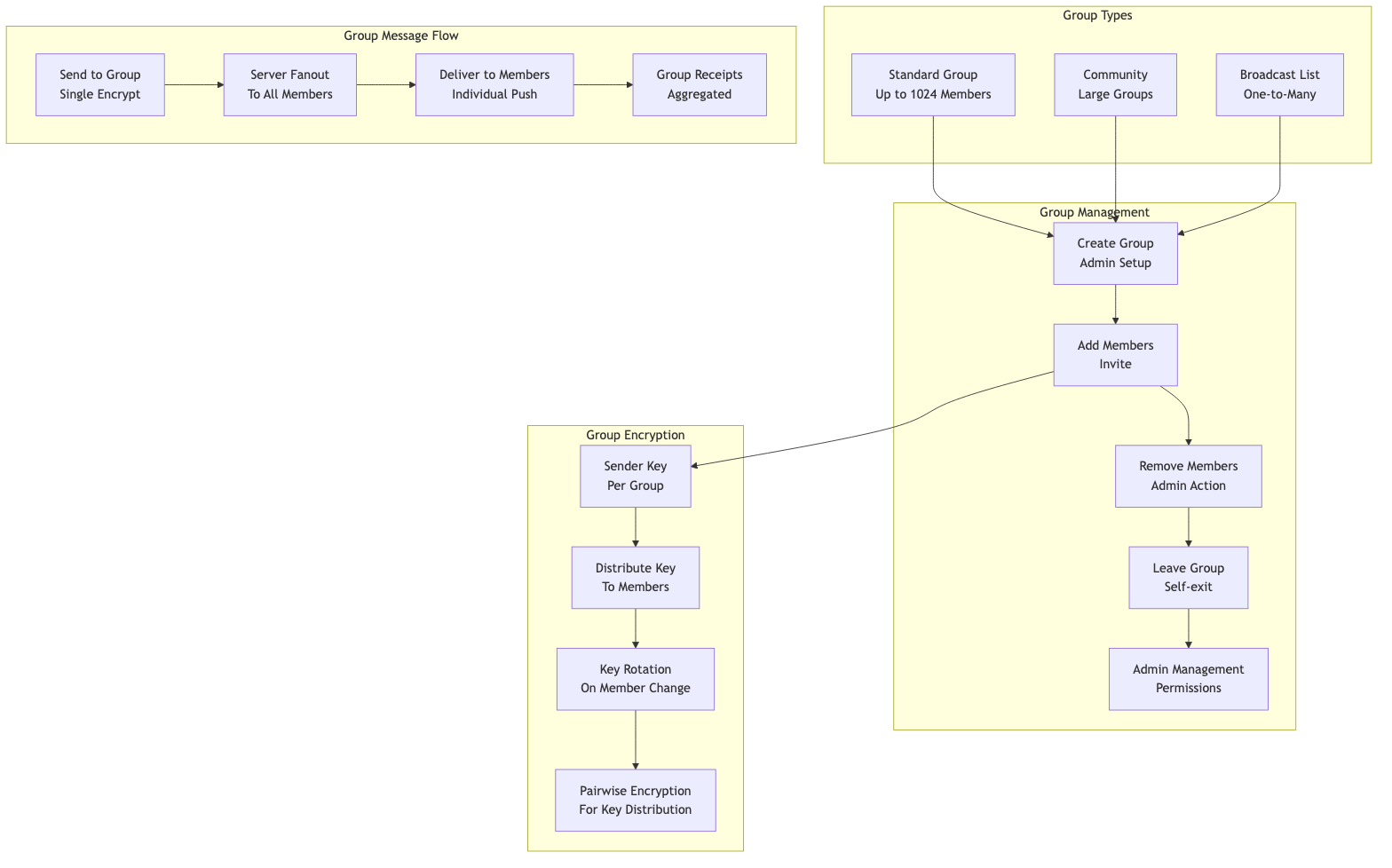
Send to Group
Server Fanout
Deliver to Members
Standard Group
Broadcast List
Remove Members
Admin Management
Key Rotation
Pairwise Encryption
Send to Group
Server Fanout
Deliver to Members
Standard Group
Broadcast List
Remove Members
Admin Management
Key Rotation
Pairwise Encryption
Group Features:
Sender Key protocol for efficiency
Single encryption for all members
Key rotation on membership changes
Admin controls and permissions
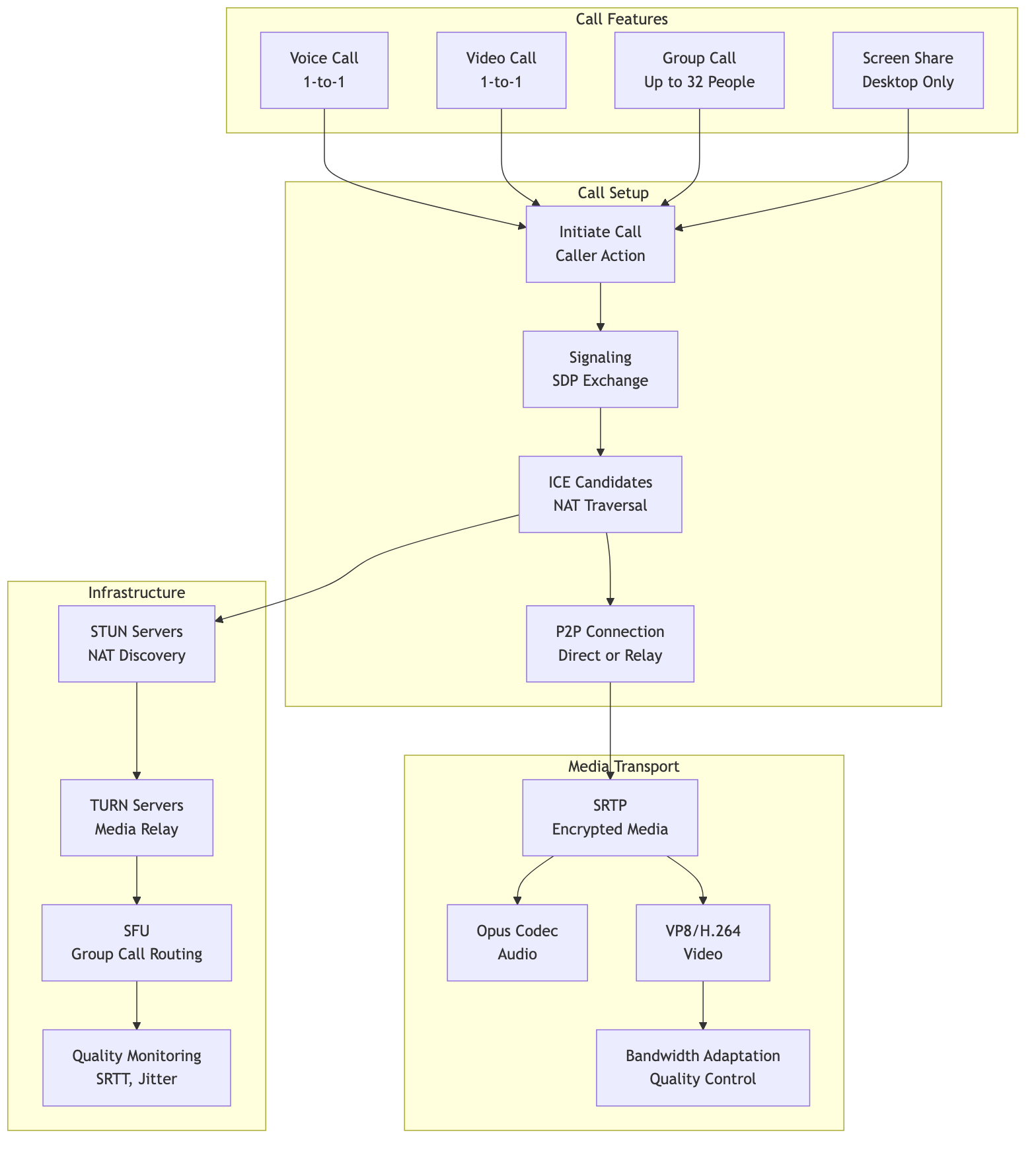
Initiate Call
ICE Candidates
P2P Connection
Bandwidth Adaptation
Group Call
STUN Servers
Quality Monitoring
Initiate Call
ICE Candidates
P2P Connection
Bandwidth Adaptation
Group Call
STUN Servers
Quality Monitoring
Calling Features:
Peer-to-peer with TURN fallback
End-to-end encrypted media
Adaptive bitrate streaming
Group calls up to 32 participants
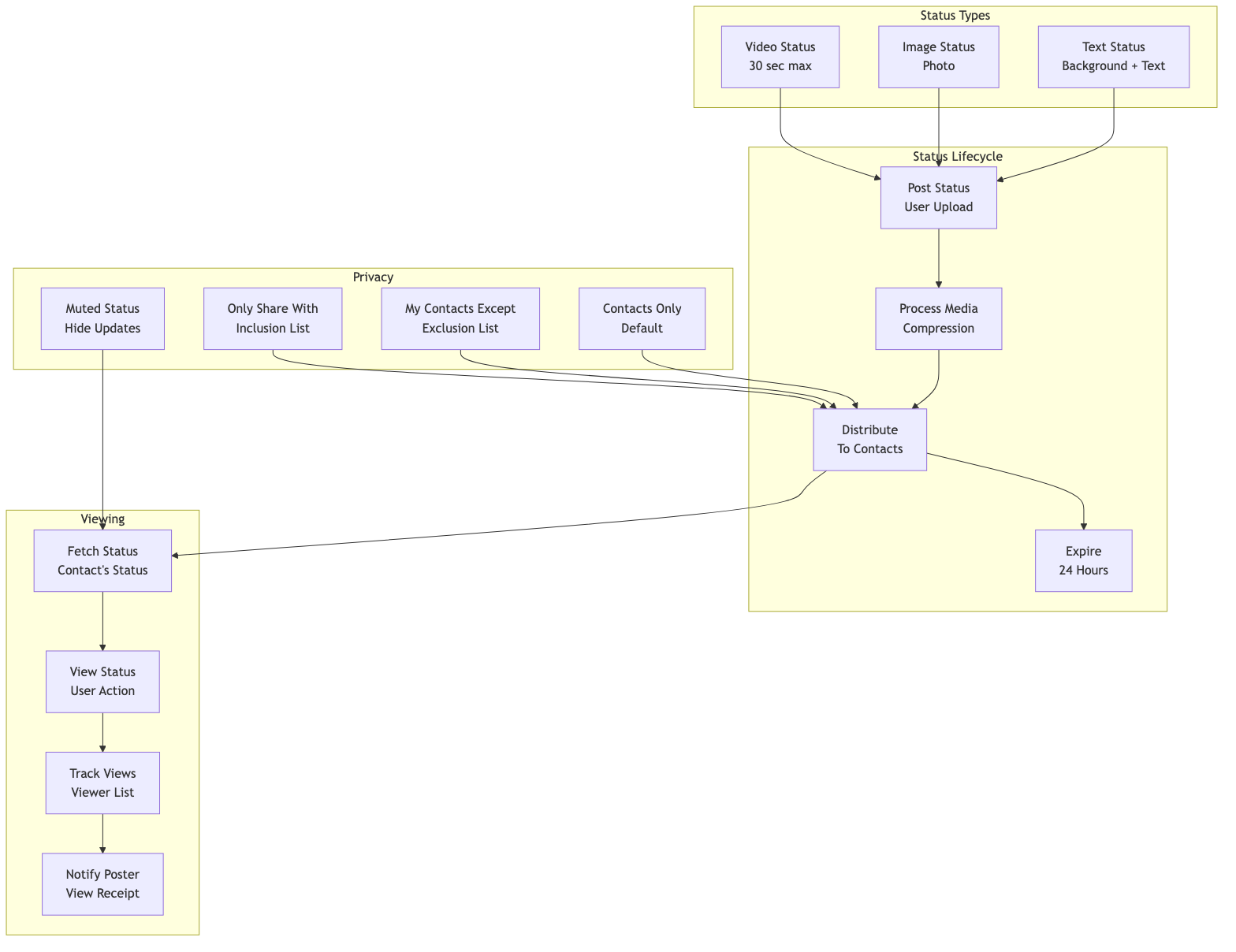
Text Status
Fetch Status
Notify Poster
My Contacts Except
Only Share With
Text Status
Fetch Status
Notify Poster
My Contacts Except
Only Share With
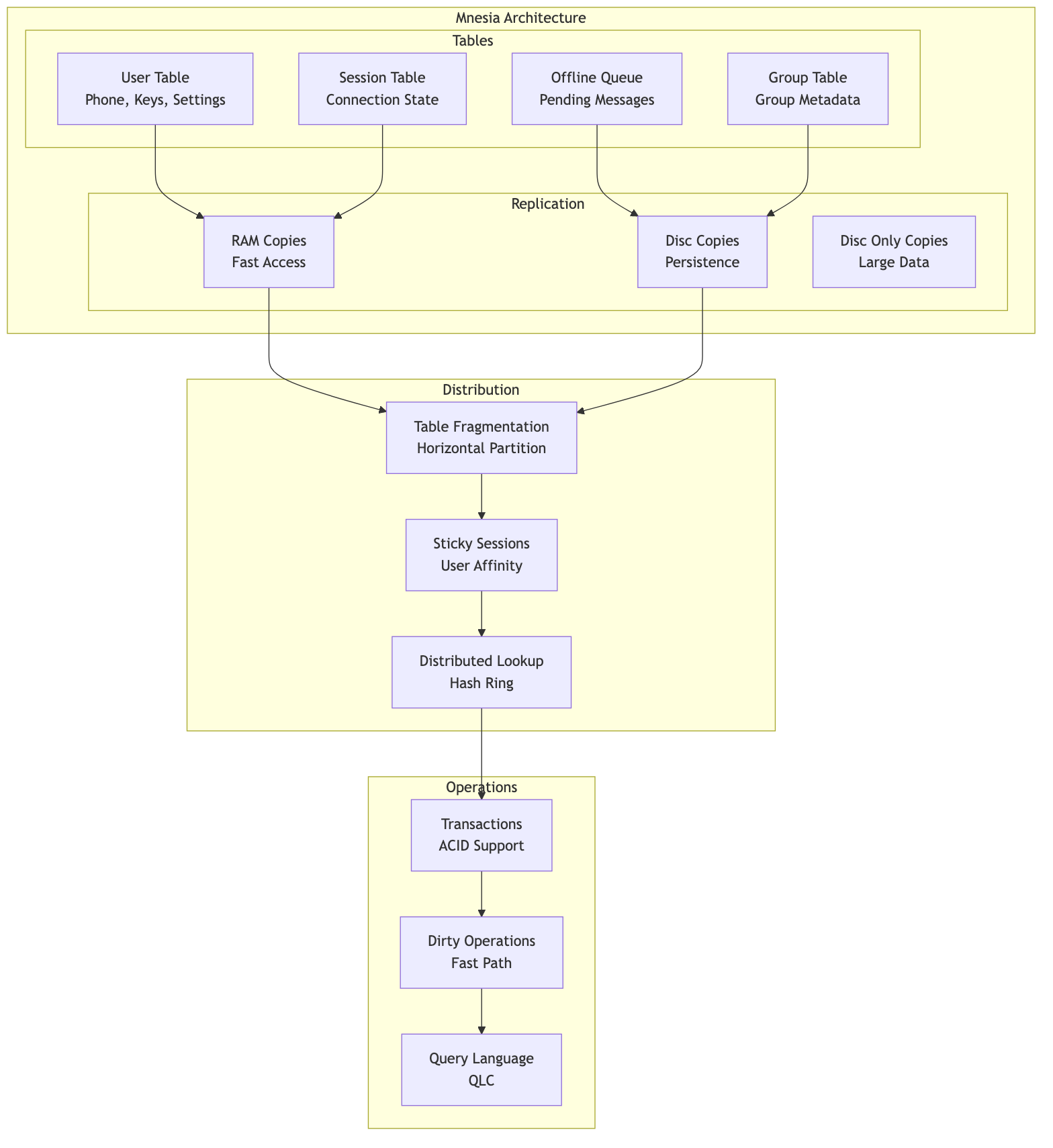
User Table
Session Table
Offline Queue
Group Table
Disc Only Copies
Table Fragmentation
Sticky Sessions
Distributed Lookup
Dirty Operations
User Table
Session Table
Offline Queue
Group Table
Disc Only Copies
Table Fragmentation
Sticky Sessions
Distributed Lookup
Dirty Operations
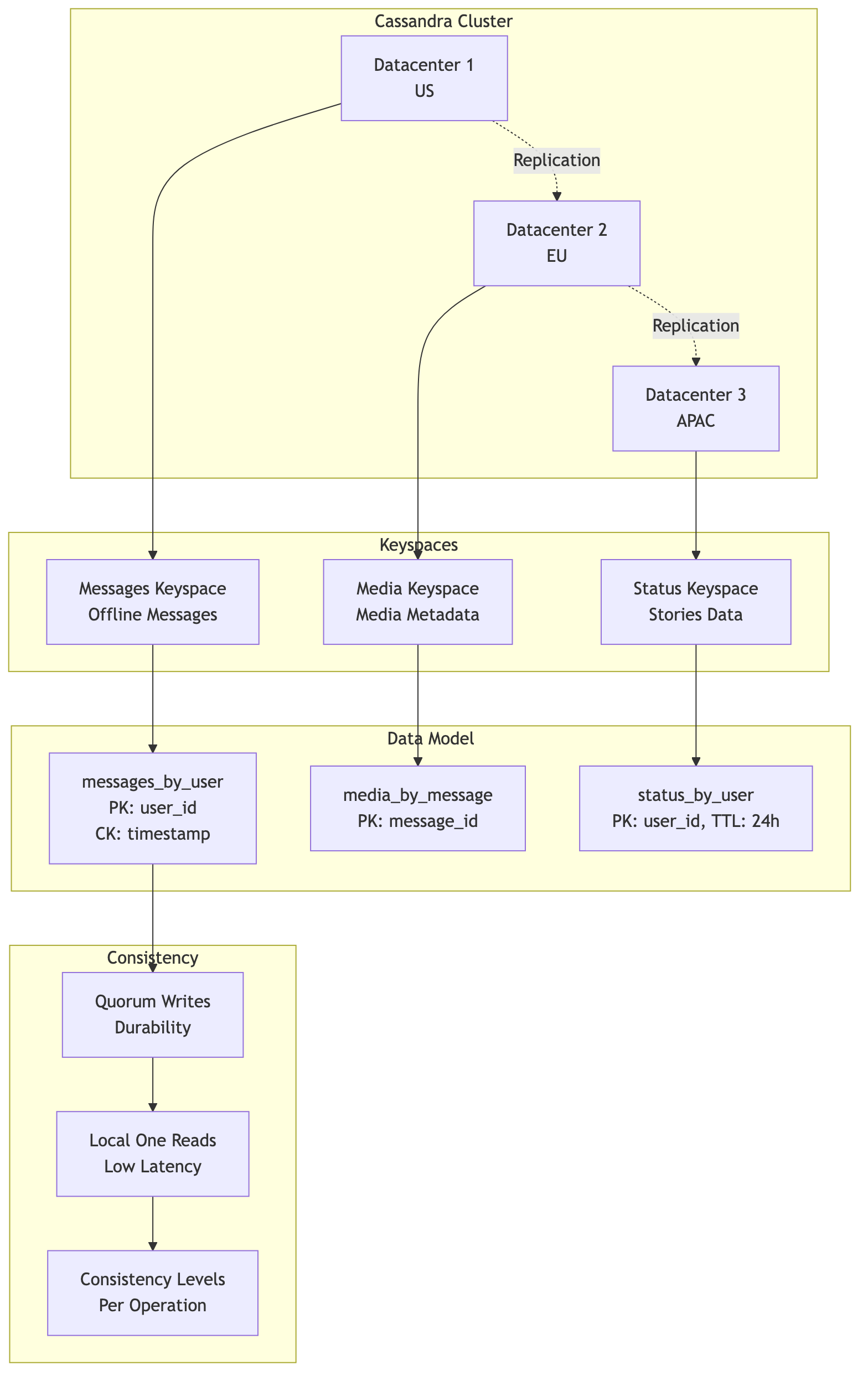
Messages Keyspace
Media Keyspace
Status Keyspace
messages_by_user
media_by_message
status_by_user
Local One Reads
Consistency Levels
Messages Keyspace
Media Keyspace
Status Keyspace
messages_by_user
media_by_message
status_by_user
Local One Reads
Consistency Levels
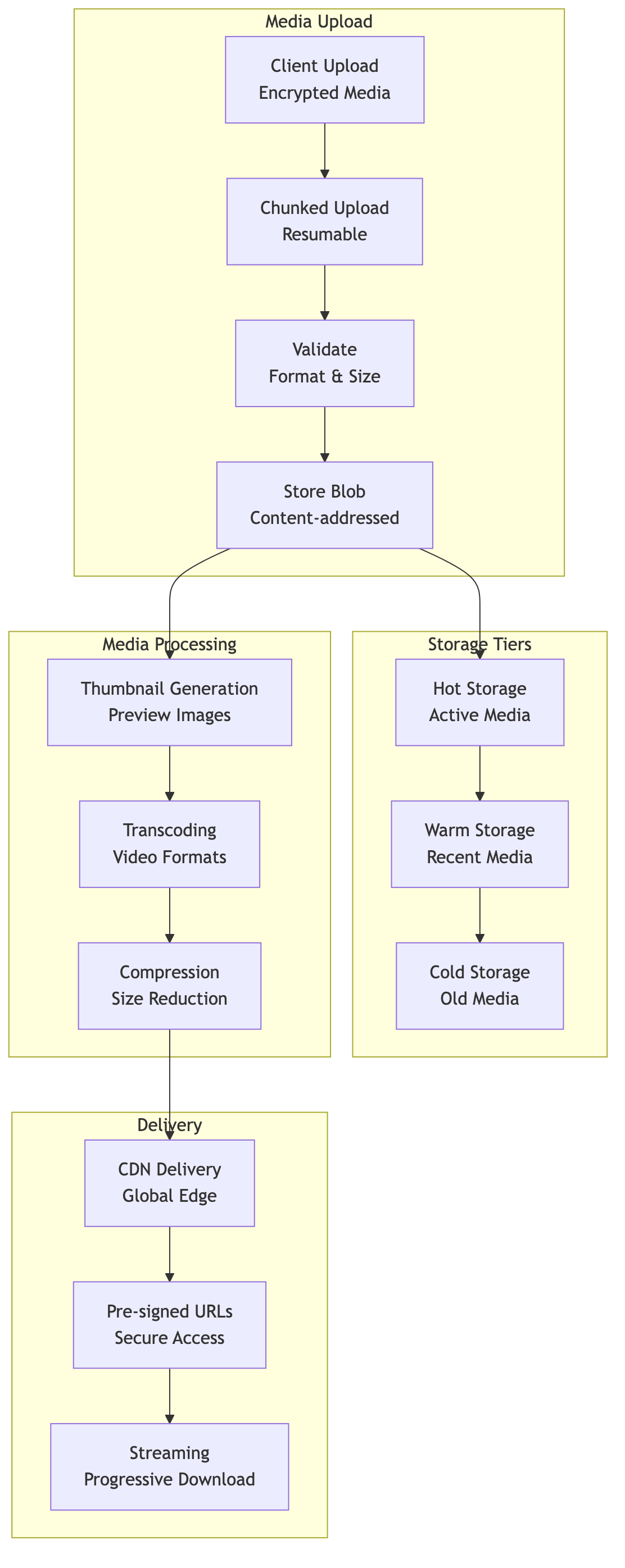
Client Upload
Store Blob
Thumbnail Generation
Compression
Pre-signed URLs
Streaming
Client Upload
Store Blob
Thumbnail Generation
Compression
Pre-signed URLs
Streaming
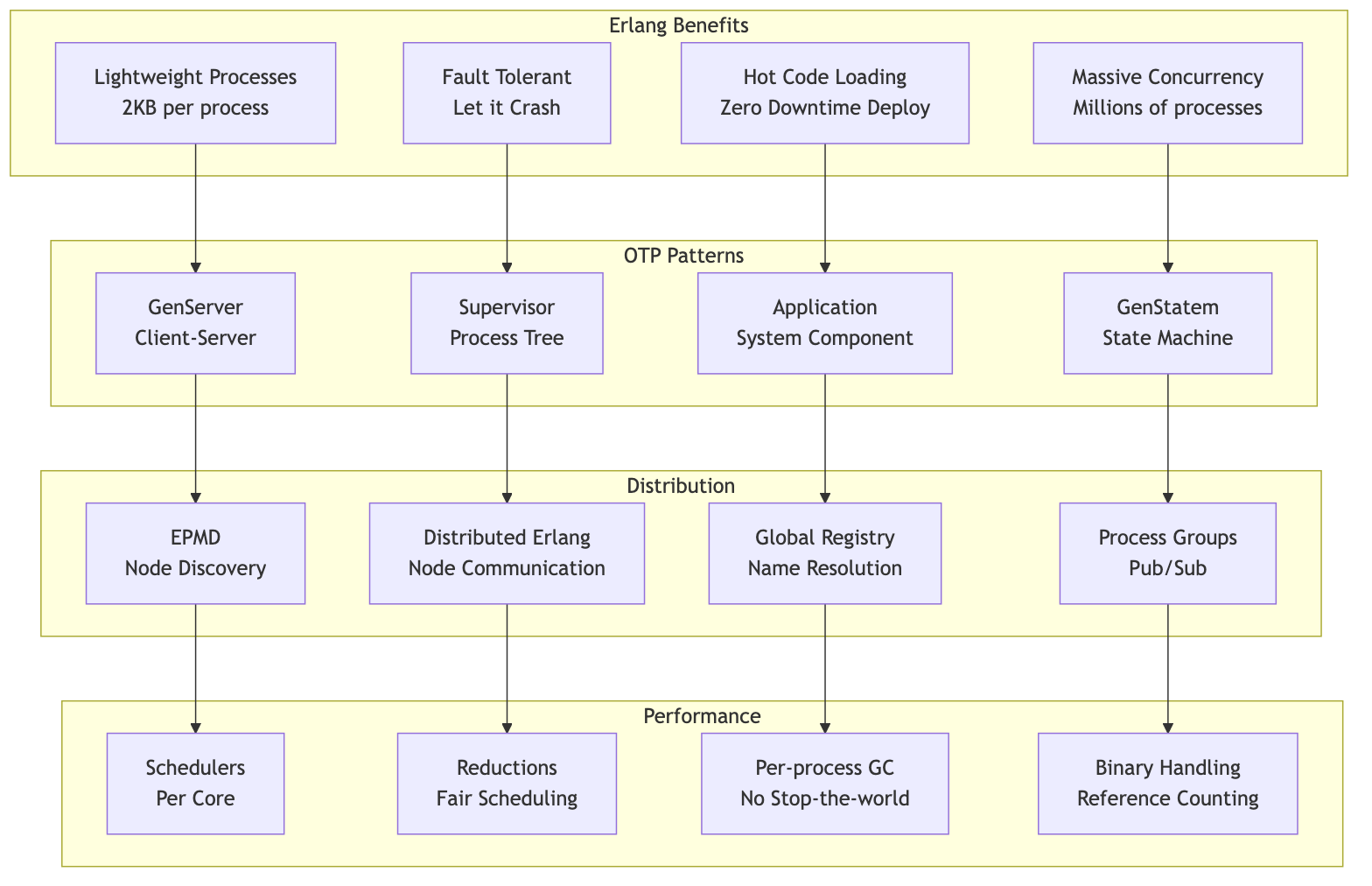
Lightweight Processes
Massive Concurrency
Fault Tolerant
Hot Code Loading
Application
Distributed Erlang
Global Registry
Reductions
Per-process GC
Binary Handling
Lightweight Processes
Massive Concurrency
Fault Tolerant
Hot Code Loading
Application
Distributed Erlang
Global Registry
Reductions
Per-process GC
Binary Handling
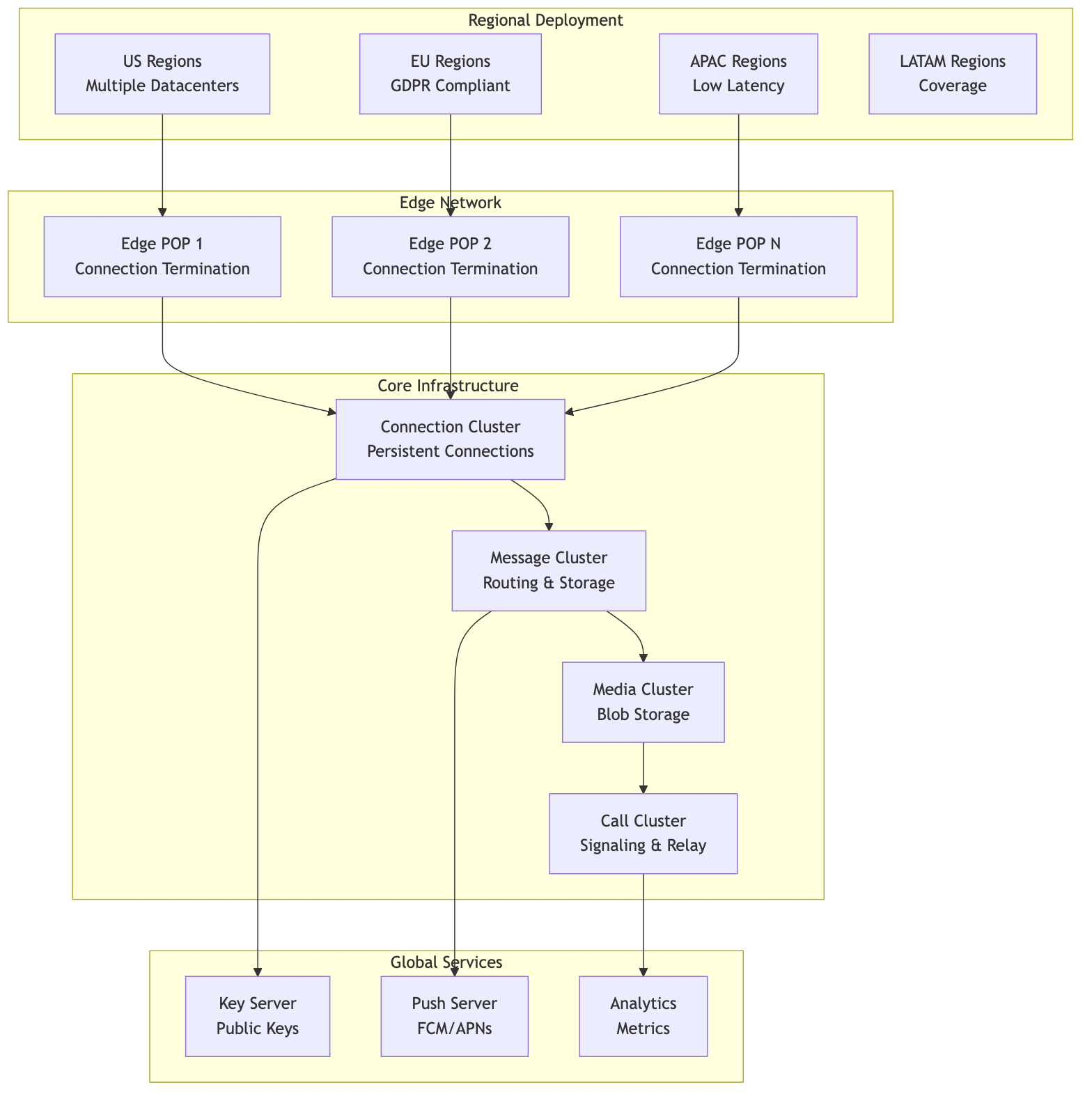
US Regions
Edge POP 1
Edge POP 2
Edge POP N
Connection Cluster
Message Cluster
Media Cluster
Call Cluster
US Regions
Edge POP 1
Edge POP 2
Edge POP N
Connection Cluster
Message Cluster
Media Cluster
Call Cluster
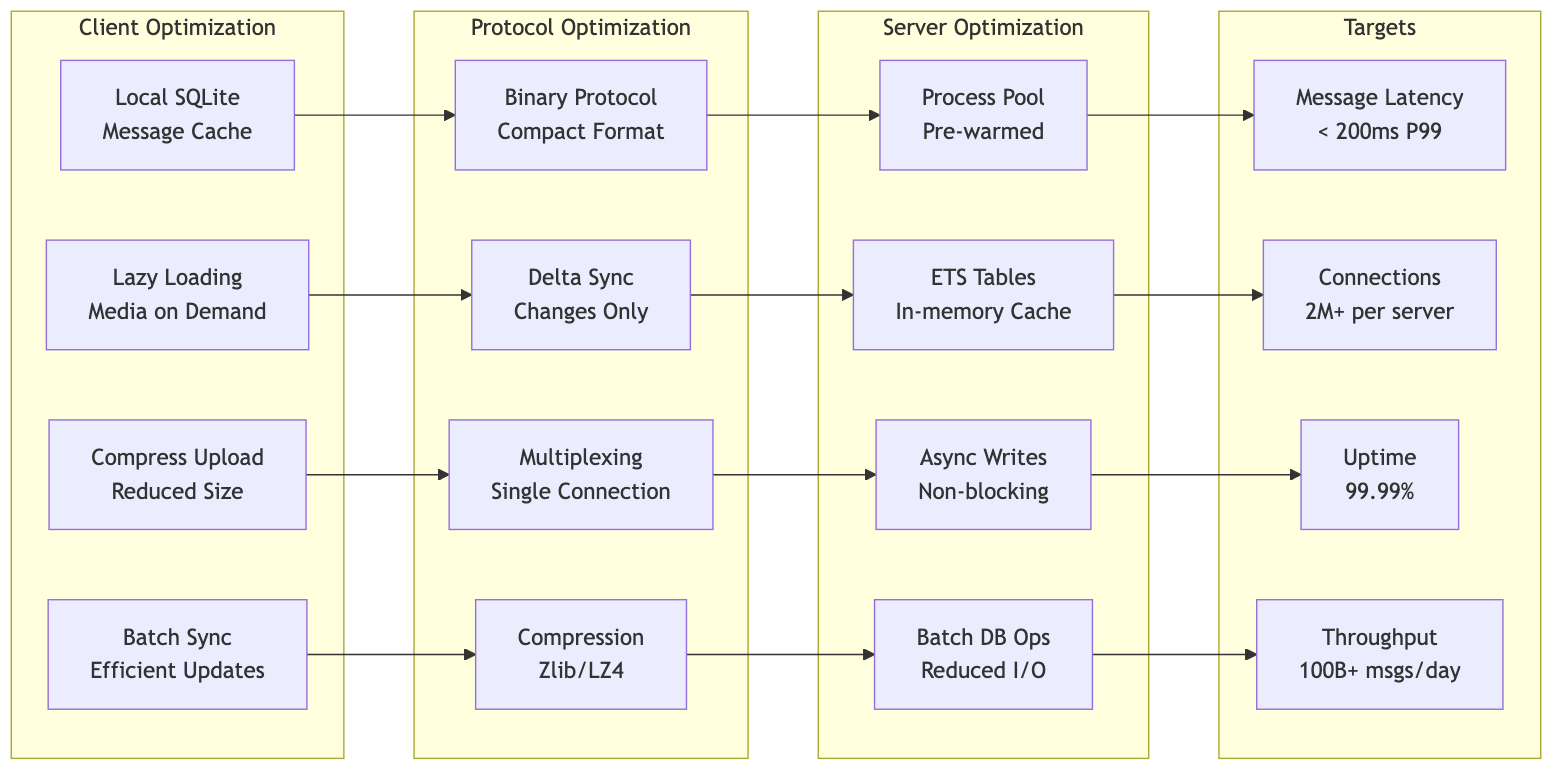
Local SQLite
Lazy Loading
Compress Upload
Batch Sync
Binary Protocol
Multiplexing
ETS Tables
Message Latency
Connections
Local SQLite
Lazy Loading
Compress Upload
Batch Sync
Binary Protocol
Multiplexing
ETS Tables
Message Latency
Connections
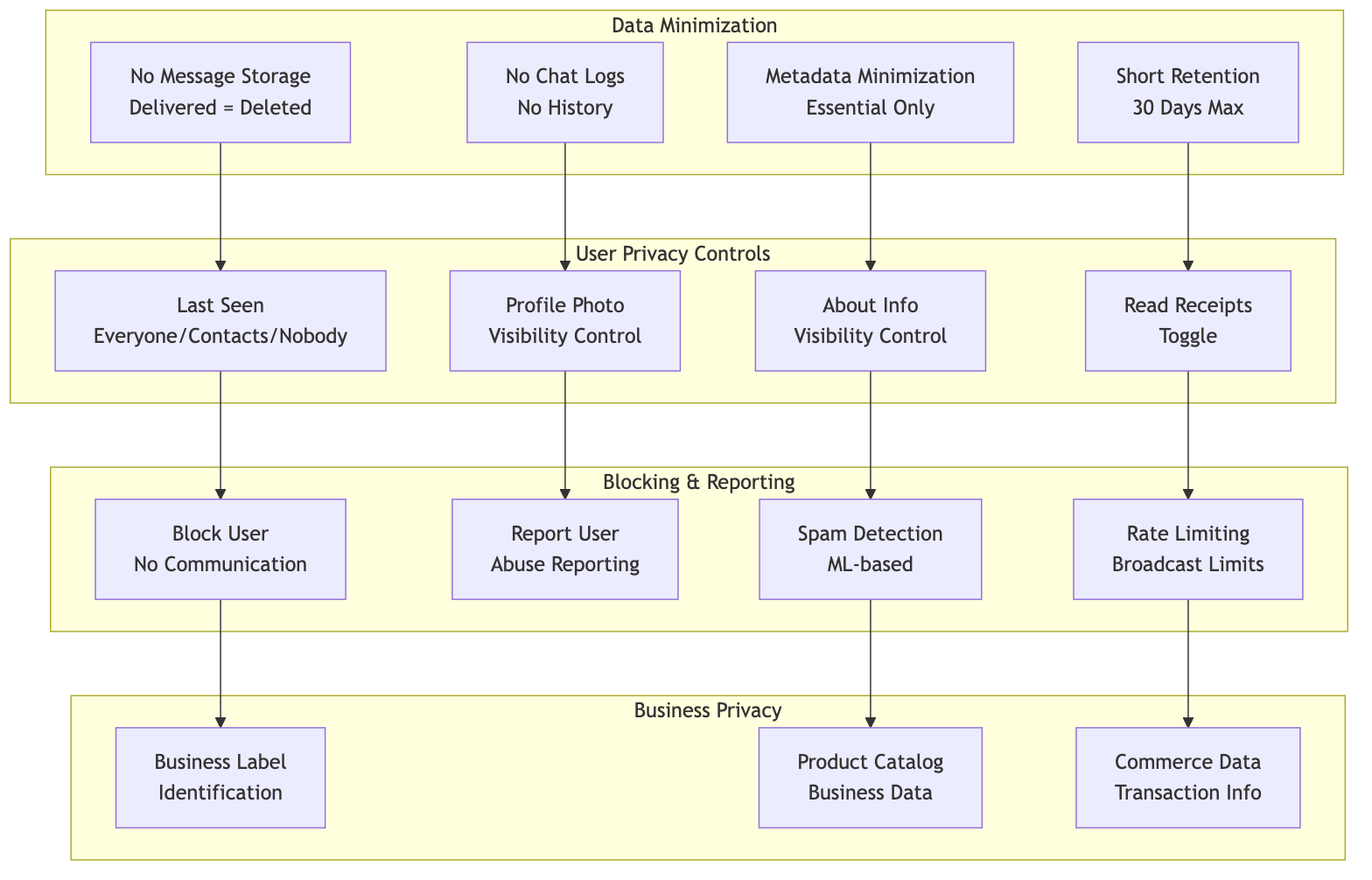
No Message Storage
Metadata Minimization
Short Retention
Last Seen
Profile Photo
About Info
Block User
Report User
Rate Limiting
Business Label
Product Catalog
Commerce Data
No Message Storage
Metadata Minimization
Short Retention
Last Seen
Profile Photo
About Info
Block User
Report User
Rate Limiting
Business Label
Product Catalog
Commerce Data
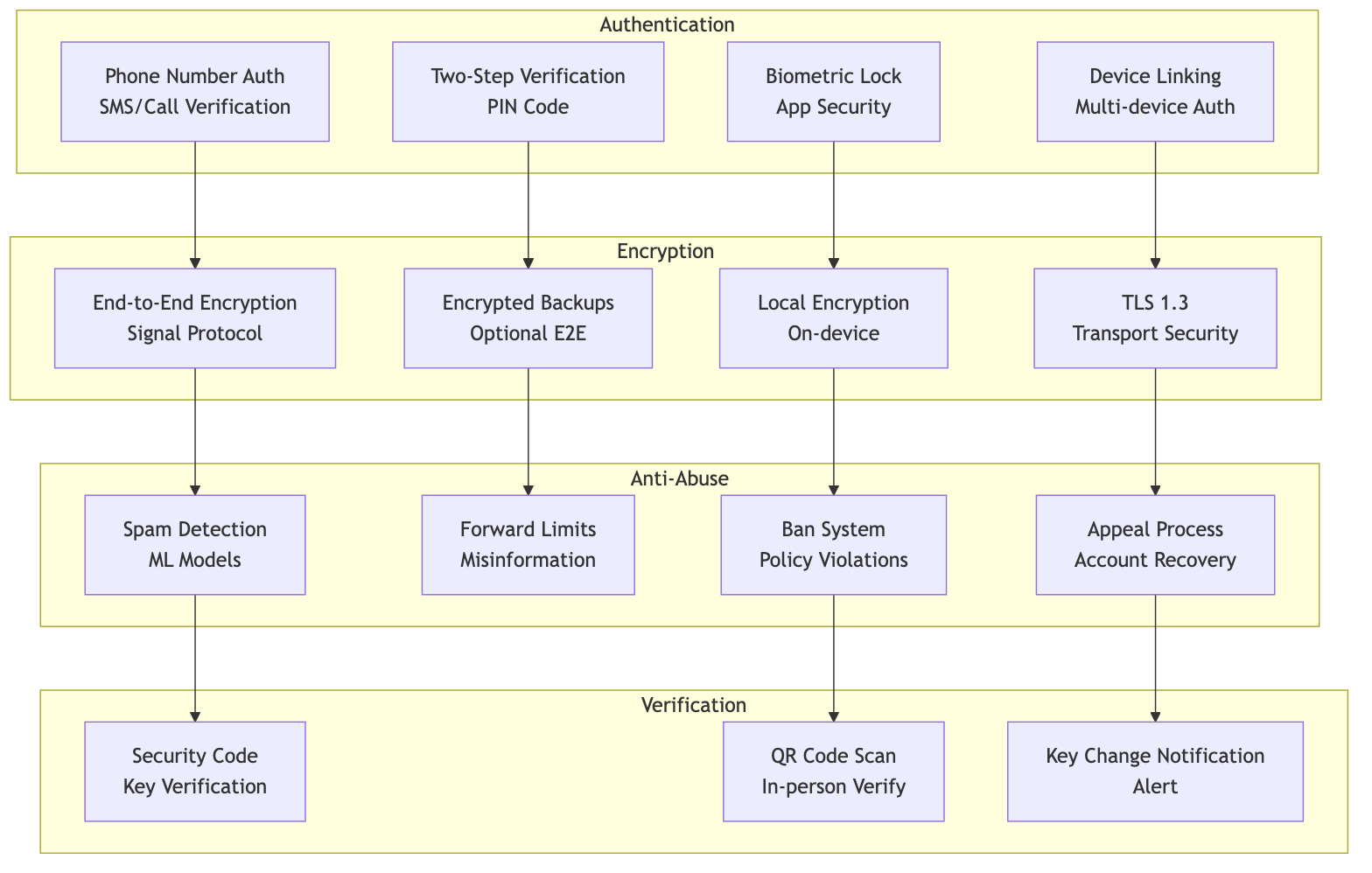
Phone Number Auth
Two-Step Verification
Biometric Lock
Device Linking
End-to-End Encryption
Encrypted Backups
Local Encryption
TLS 1.3
Forward Limits
Ban System
Appeal Process
Security Code
QR Code Scan
Key Change Notification
Phone Number Auth
Two-Step Verification
Biometric Lock
Device Linking
End-to-End Encryption
Encrypted Backups
Local Encryption
TLS 1.3
Forward Limits
Ban System
Appeal Process
Security Code
QR Code Scan
Key Change Notification
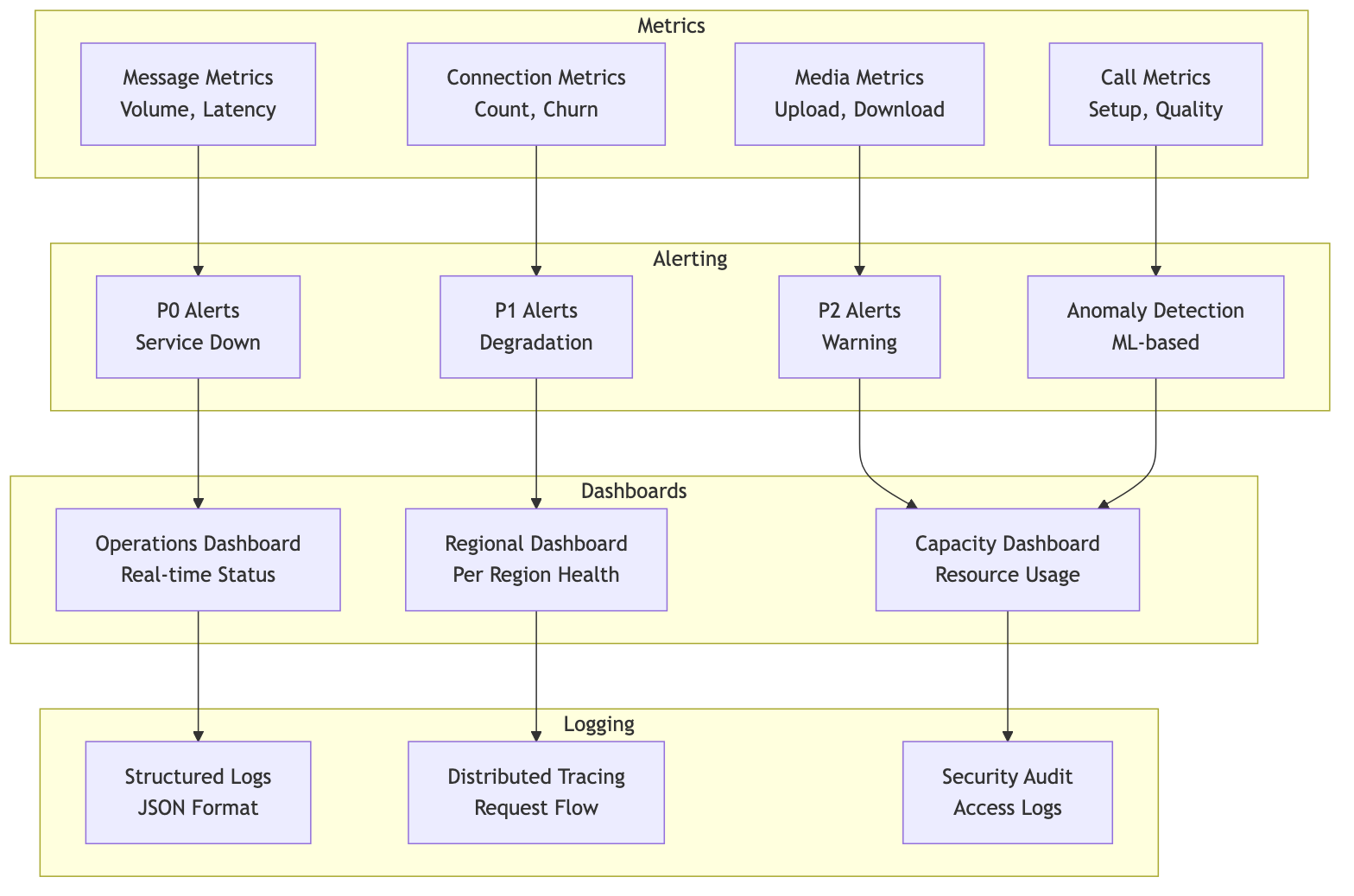
Message Metrics
Connection Metrics
Media Metrics
Call Metrics
Anomaly Detection
Operations Dashboard
Regional Dashboard
Capacity Dashboard
Structured Logs
Distributed Tracing
Security Audit
Message Metrics
Connection Metrics
Media Metrics
Call Metrics
Anomaly Detection
Operations Dashboard
Regional Dashboard
Capacity Dashboard
Structured Logs
Distributed Tracing
Security Audit
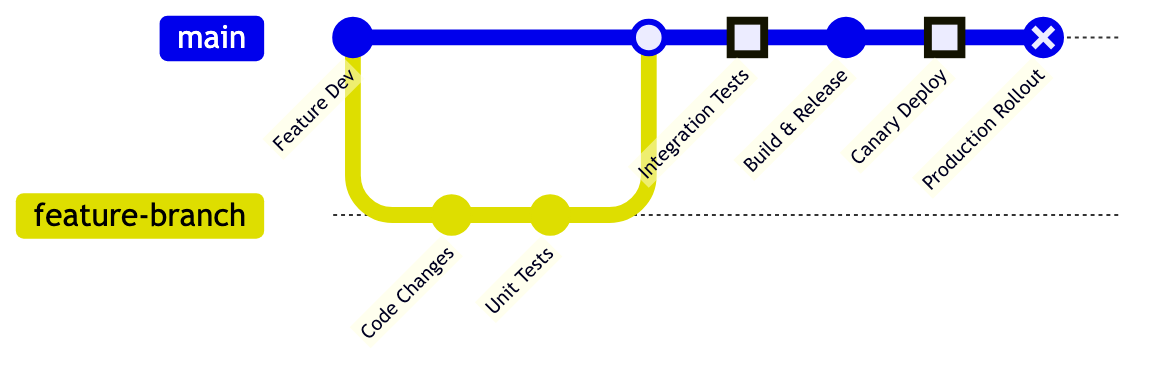
main feature-branch Feature Dev Code Changes Unit Tests Integration Tests Build & Release Canary Deploy Production Rollout main feature-branch Feature Dev Code Changes Unit Tests Integration Tests Build & Release Canary Deploy Production Rollout
Build & Test
Canary Deployment
Monitor Metrics
Progressive Rollout
Hot Code Rollback
Build & Test
Canary Deployment
Monitor Metrics
Progressive Rollout
Hot Code Rollback
Erlang hot code loading : Zero-downtime deploymentsRegional rollout : Country-by-country deploymentCanary analysis : Automated metric comparisonInstant rollback : Hot code swap capability
Configuration management : Centralized config distributionErlang releases : OTP release handlingContainer orchestration : Custom clustering
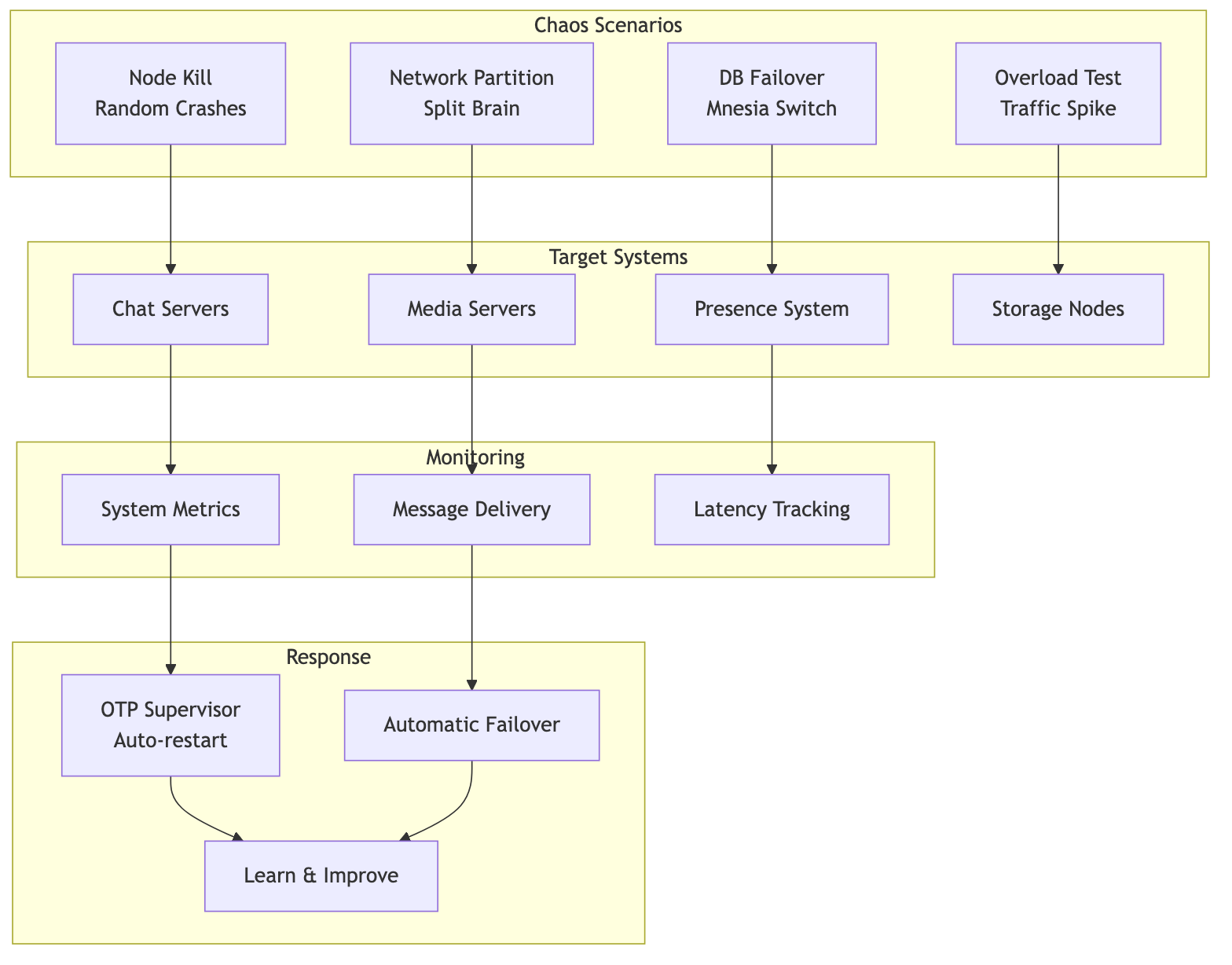
Network Partition
Overload Test
OTP Supervisor
Network Partition
Overload Test
OTP Supervisor
Erlang "let it crash" : Built-in fault toleranceSupervisor trees : Automatic process recoveryNetwork partition testing : Split-brain scenariosLoad testing : Peak traffic simulation
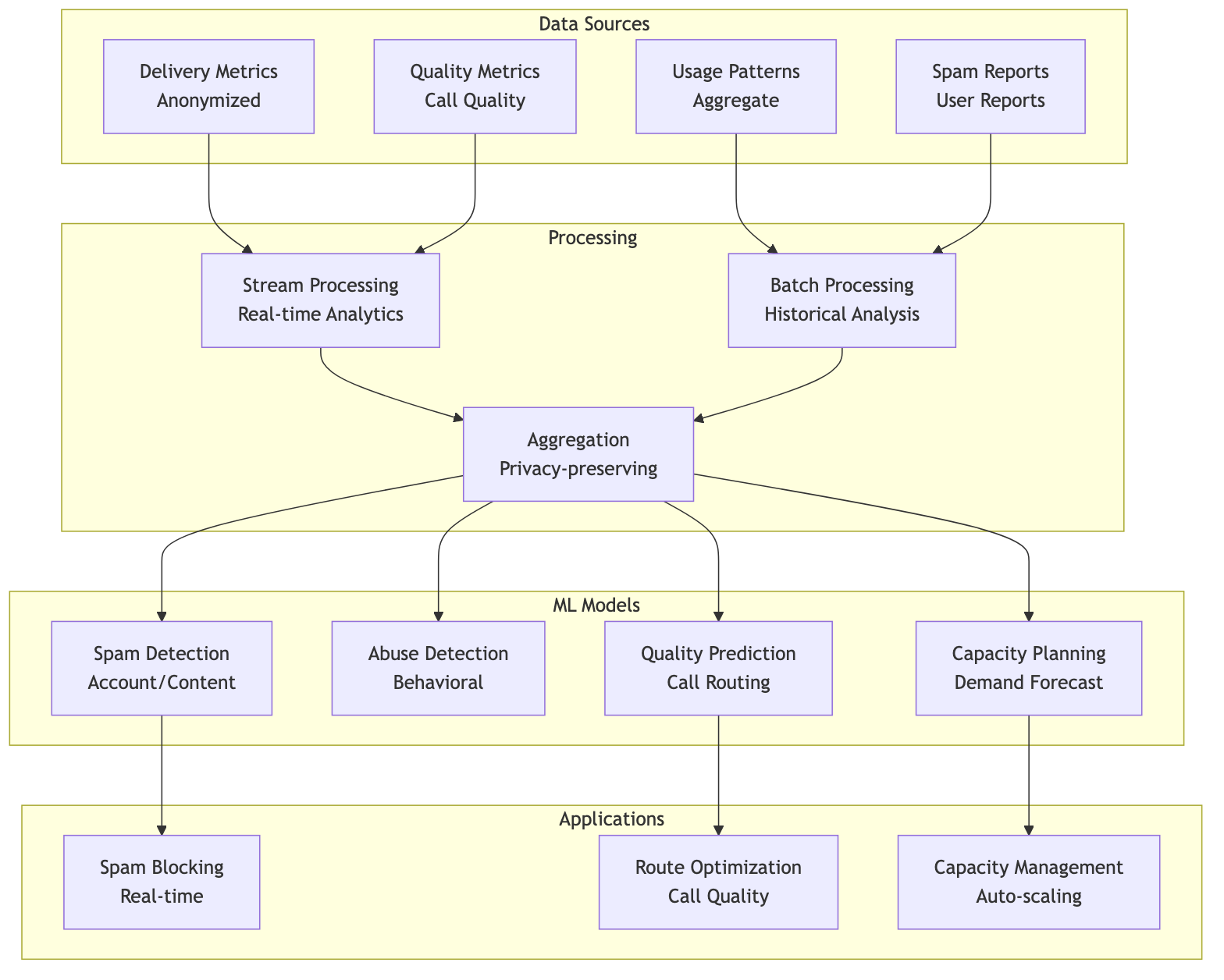
Delivery Metrics
Quality Metrics
Stream Processing
Batch Processing
Aggregation
Spam Detection
Abuse Detection
Quality Prediction
Capacity Planning
Route Optimization
Capacity Management
Delivery Metrics
Quality Metrics
Stream Processing
Batch Processing
Aggregation
Spam Detection
Abuse Detection
Quality Prediction
Capacity Planning
Route Optimization
Capacity Management
Spam detection : Account and content spam without reading messagesAbuse prevention : Behavioral pattern detectionQuality optimization : Call routing and media server selectionCapacity planning : Regional demand forecastingNote : All ML is done on metadata, never on message content
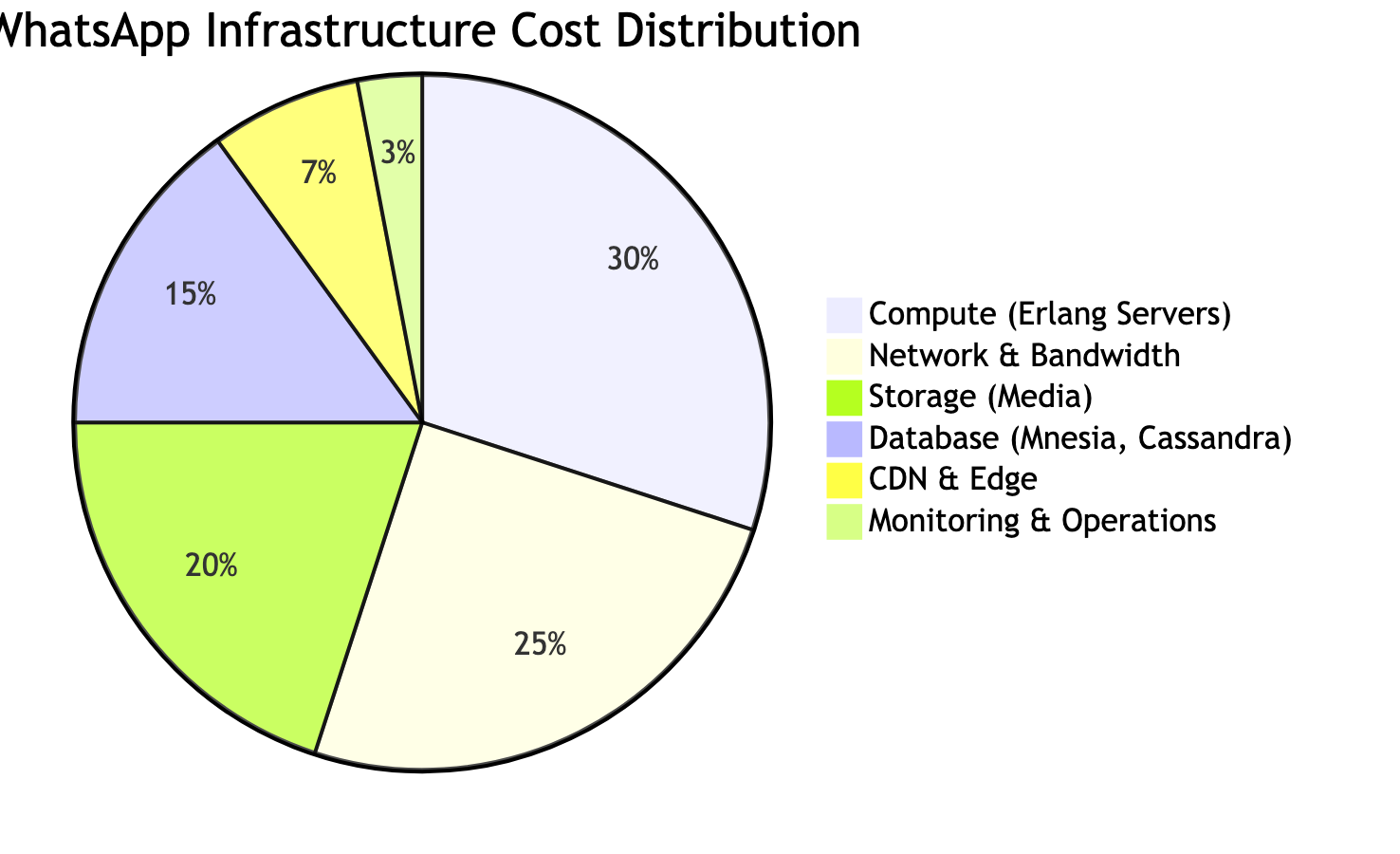
30% 25% 20% 15% 7% 3% WhatsApp Infrastructure Cost Distribution Compute (Erlang Servers) Network & Bandwidth Storage (Media) Database (Mnesia, Cassandra) CDN & Edge Monitoring & Operations 30% 25% 20% 15% 7% 3% WhatsApp Infrastructure Cost Distribution Compute (Erlang Servers) Network & Bandwidth Storage (Media) Database (Mnesia, Cassandra) CDN & Edge Monitoring & Operations
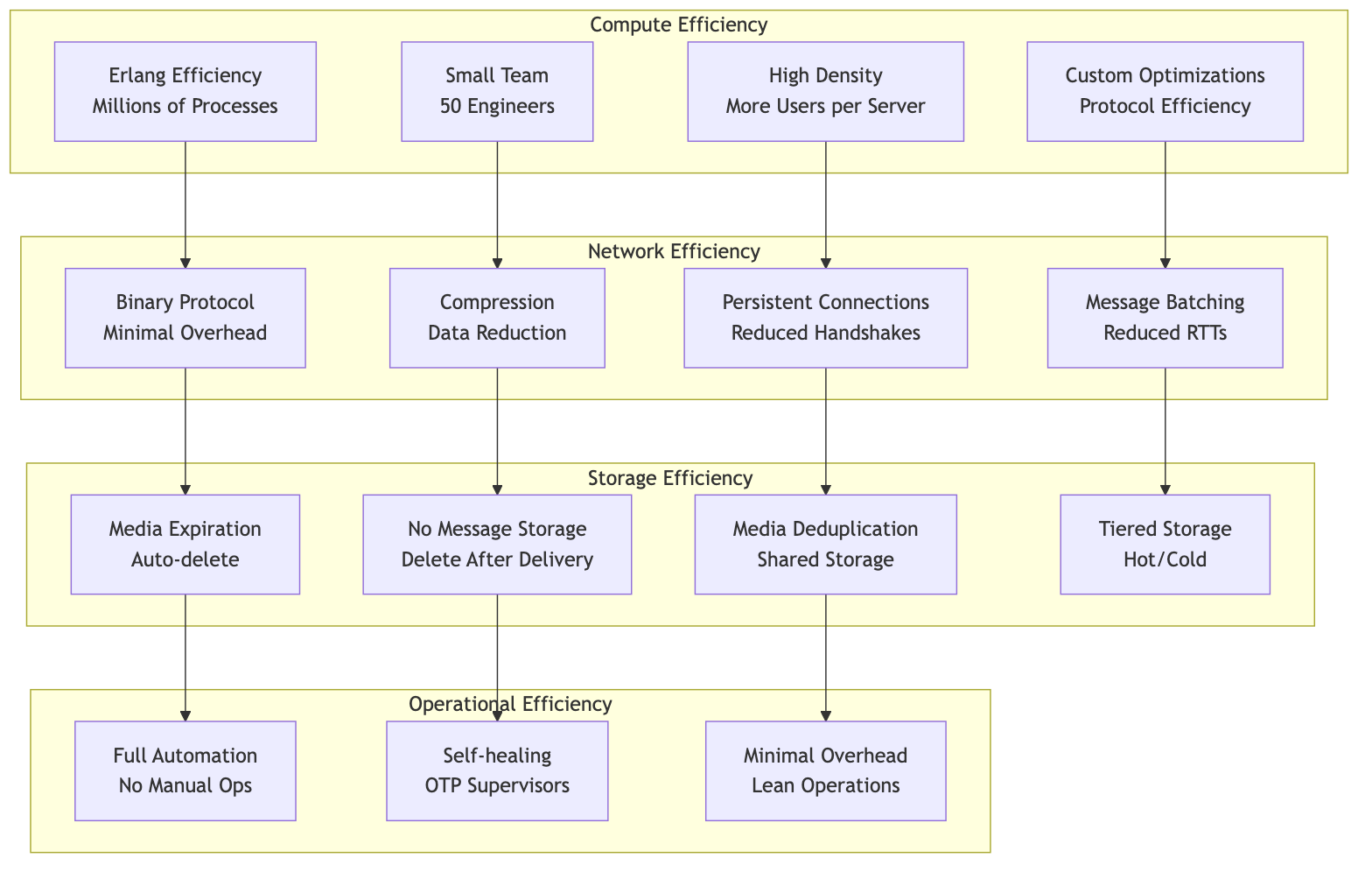
Erlang Efficiency
High Density
Custom Optimizations
Binary Protocol
Compression
Persistent Connections
Message Batching
Media Expiration
No Message Storage
Media Deduplication
Full Automation
Self-healing
Minimal Overhead
Erlang Efficiency
High Density
Custom Optimizations
Binary Protocol
Compression
Persistent Connections
Message Batching
Media Expiration
No Message Storage
Media Deduplication
Full Automation
Self-healing
Minimal Overhead
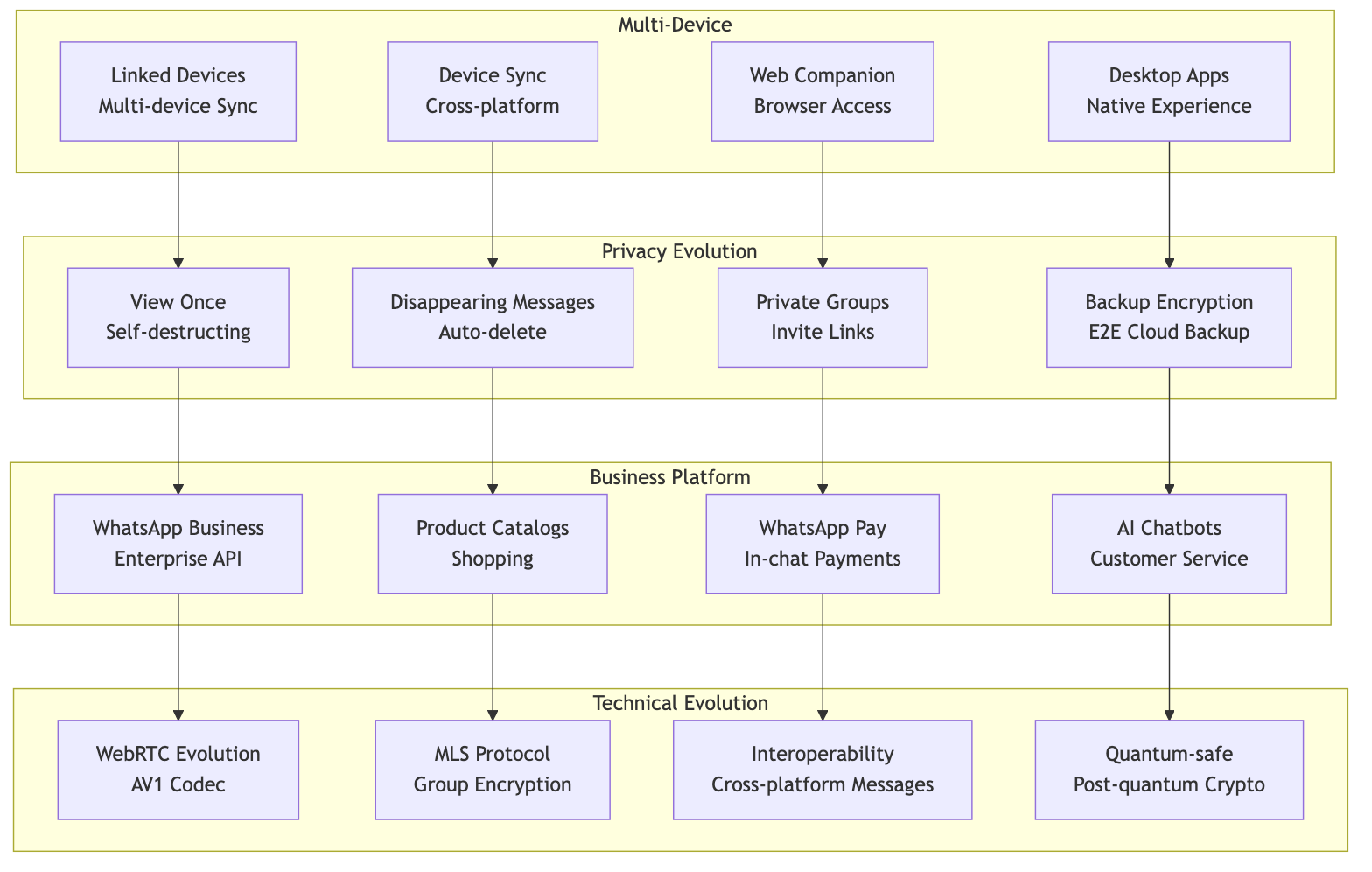
Linked Devices
Device Sync
Web Companion
Desktop Apps
View Once
Disappearing Messages
Private Groups
Backup Encryption
WhatsApp Business
WhatsApp Pay
AI Chatbots
WebRTC Evolution
MLS Protocol
Interoperability
Quantum-safe
Linked Devices
Device Sync
Web Companion
Desktop Apps
View Once
Disappearing Messages
Private Groups
Backup Encryption
WhatsApp Business
WhatsApp Pay
AI Chatbots
WebRTC Evolution
MLS Protocol
Interoperability
Quantum-safe
WhatsApp's architecture demonstrates expertise in building secure, reliable messaging at unprecedented scale. The system successfully manages:
Massive Scale : 2B+ users, 100B+ messages dailyEnd-to-End Encryption : Signal Protocol for all messagesHigh Availability : 99.99% uptime globallyLow Latency : Sub-200ms message deliveryEfficiency : Small engineering team, minimal infrastructure
Erlang/OTP Foundation
Lightweight processes (millions per node)
Fault tolerance (let it crash)
Hot code loading (zero downtime)
Distributed by design
Security First
End-to-end encryption by default
Minimal data retention
Forward and future secrecy
User privacy controls
Simplicity
Single-purpose focus
Minimal features, maximum reliability
Small team, high impact
Avoid premature optimization
Global Scale
Edge presence worldwide
Regional data handling
Offline-first design
Efficient protocols
Data Minimization
No message storage after delivery
Minimal metadata
Short retention periods
Privacy by design
The platform continues to evolve with features like multi-device support, disappearing messages, and business messaging, while maintaining the core principles of security, privacy, and simplicity.
This architecture represents WhatsApp's known systems and best practices. Actual implementation details may vary.
 Masst Docs