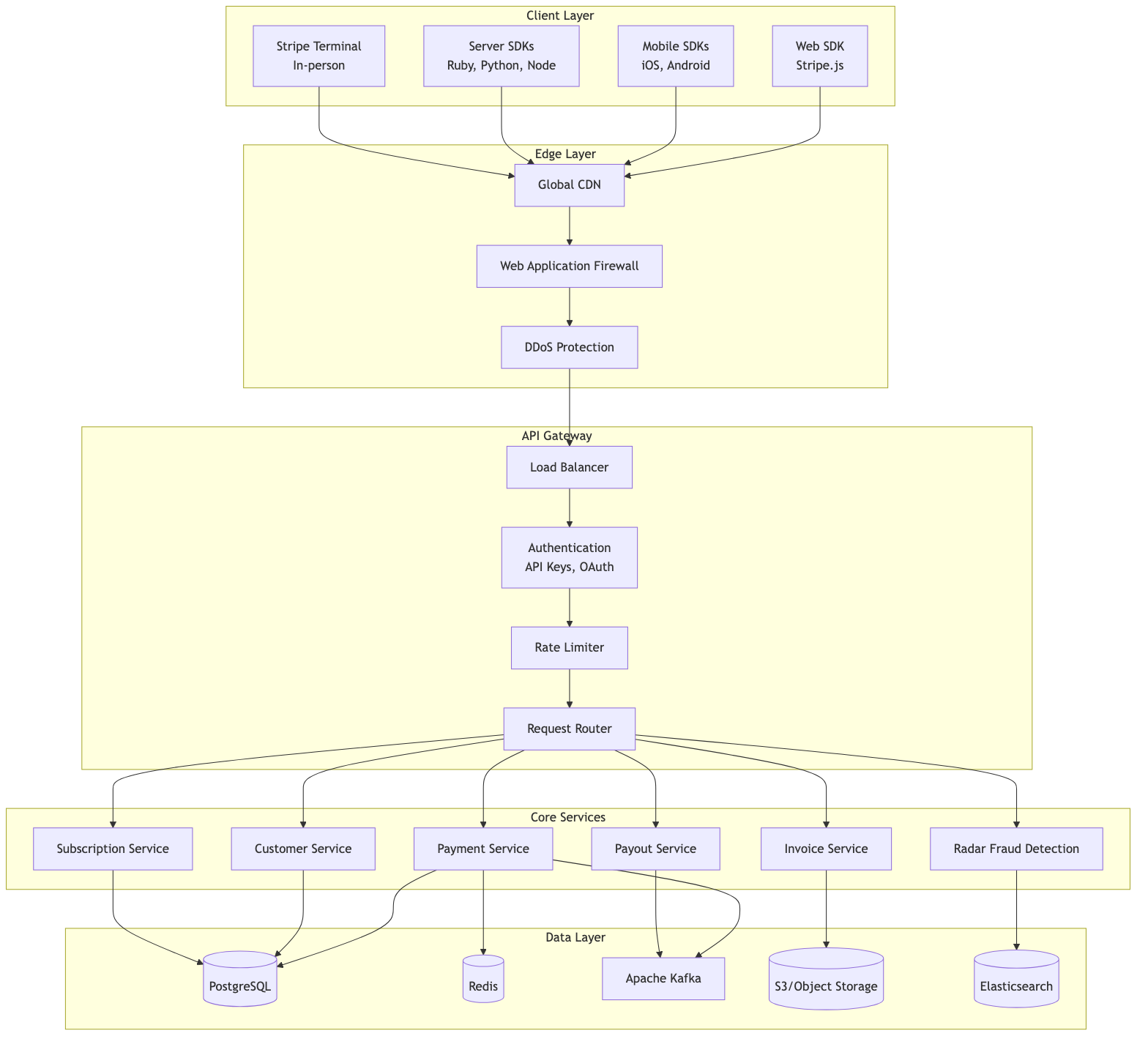
Stripe 🏗️ Stripe processes hundreds of billions of dollars annually, handling millions of API requests per minute across 195+ countries. This document outlines the comprehensive architecture that enables Stripe to deliver reliable payment infrastructure with 99.999% uptime.
Server SDKs
Authentication
Server SDKs
Authentication
Stripe's core payment flow processes millions of transactions per minute.
Input Validation
Tokenization
Radar ML Models
Custom Rules
Card Network
Issuing Bank
Auth Response
Batch Processing
Input Validation
Tokenization
Radar ML Models
Custom Rules
Card Network
Issuing Bank
Auth Response
Batch Processing
Components:
PaymentIntent : Tracks payment lifecycle from creation to confirmationTokenization : PCI-DSS compliant card data handlingRadar : ML-powered fraud detection (prevents $25B+ in fraud annually)Network Routing : Intelligent routing for optimal authorization rates
Key Features:
Idempotency for safe retries
Automatic card network selection
Dynamic 3D Secure authentication
Real-time fraud scoring
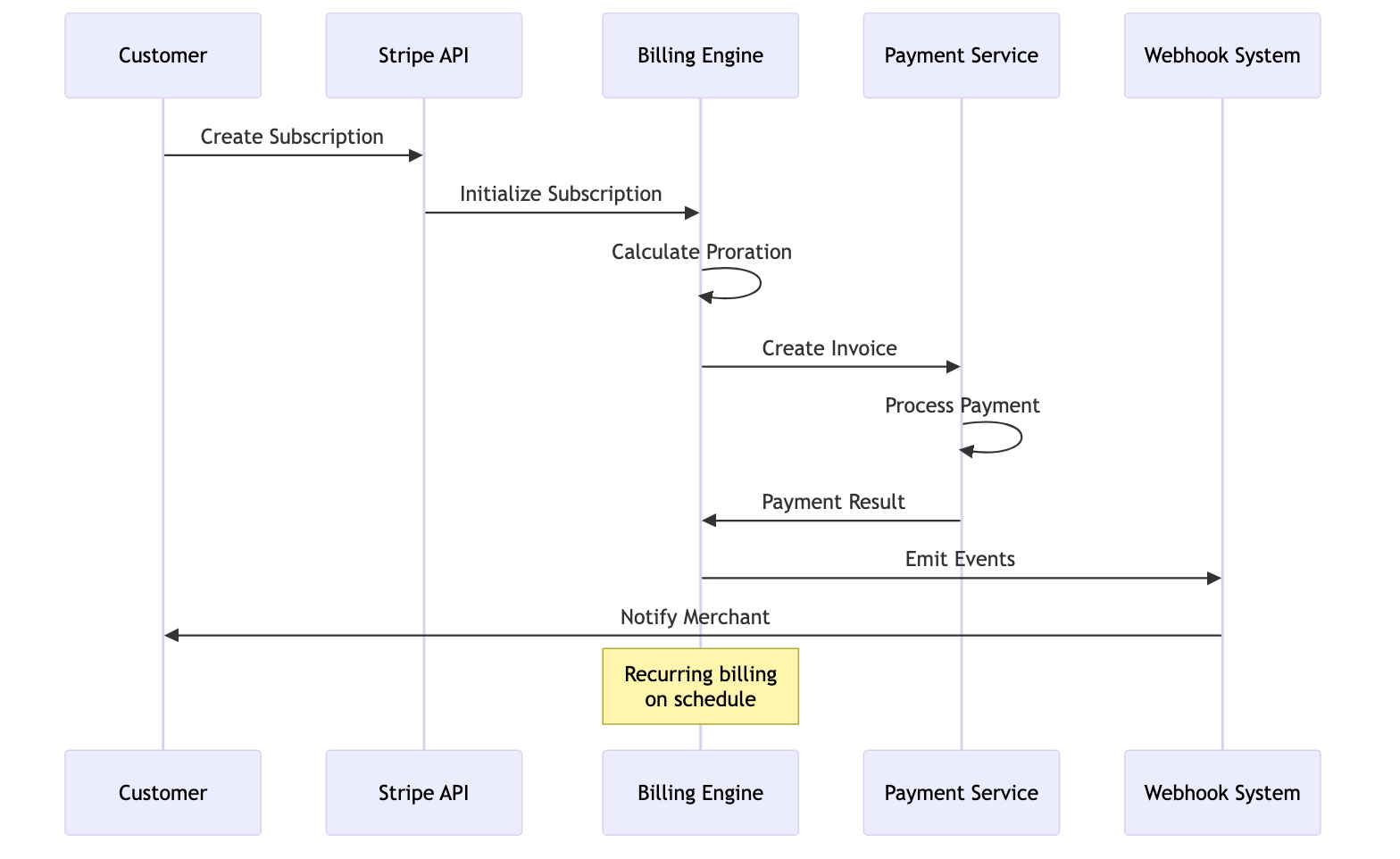
Handles complex recurring billing scenarios.
Webhook System Payment Service Billing Engine Stripe API Customer Webhook System Payment Service Billing Engine Stripe API Customer Recurring billing on schedule Create Subscription Initialize Subscription Calculate Proration Create Invoice Process Payment Payment Result Emit Events Notify Merchant Webhook System Payment Service Billing Engine Stripe API Customer Webhook System Payment Service Billing Engine Stripe API Customer Recurring billing on schedule Create Subscription Initialize Subscription Calculate Proration Create Invoice Process Payment Payment Result Emit Events Notify Merchant Billing Features:
Proration : Automatic pro-rated charges for plan changesUsage-based Billing : Metered billing supportTrials : Free trial period managementDunning : Smart retry logic for failed payments
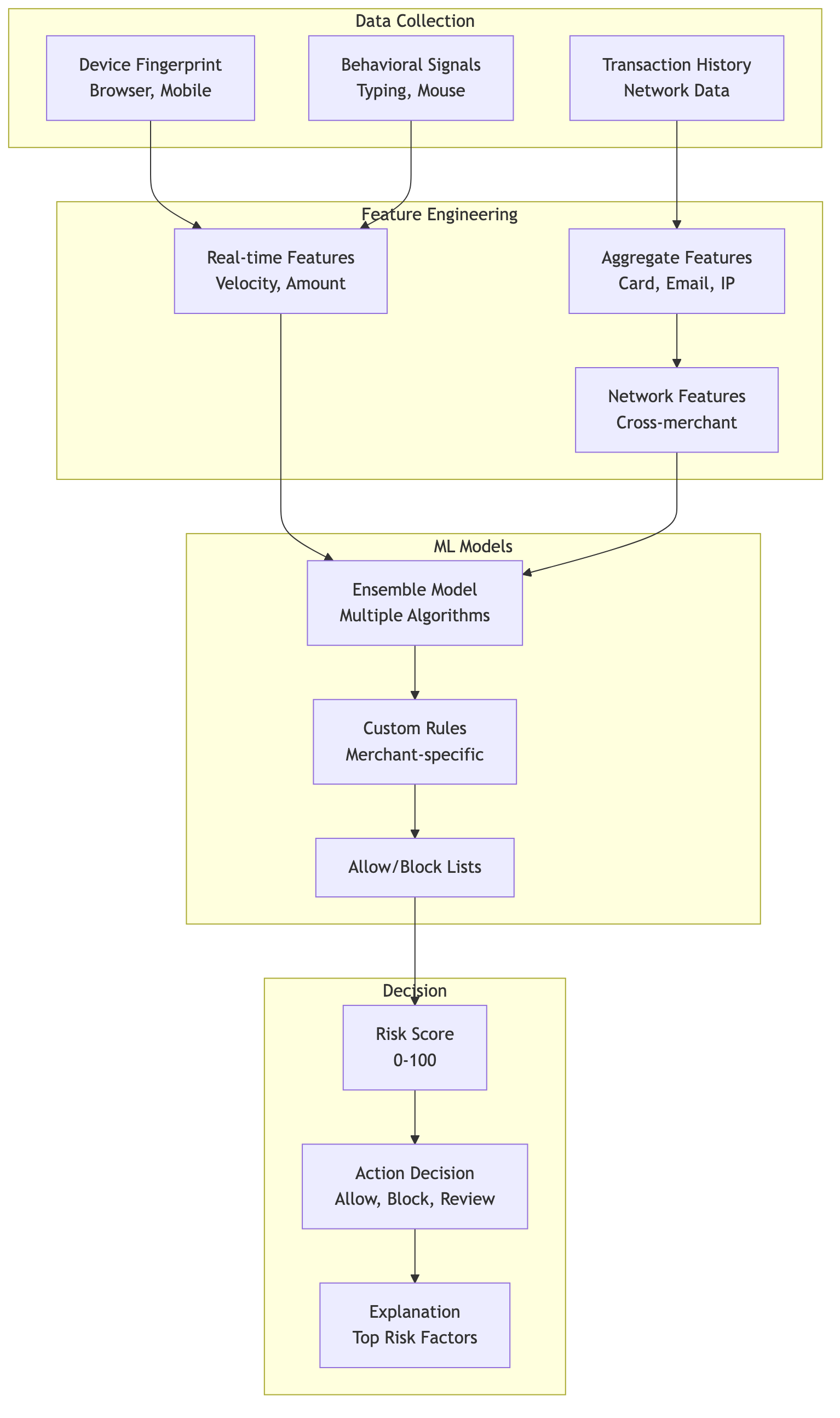
ML-powered fraud prevention system.
Device Fingerprint
Behavioral Signals
Transaction History
Real-time Features
Aggregate Features
Network Features
Ensemble Model
Custom Rules
Action Decision
Explanation
Device Fingerprint
Behavioral Signals
Transaction History
Real-time Features
Aggregate Features
Network Features
Ensemble Model
Custom Rules
Action Decision
Explanation
Radar Capabilities:
Network Effect : Learns from billions of transactionsAdaptive ML : Continuously updates with new fraud patternsCustom Rules : Merchant-configurable rule engine3D Secure Integration : Smart authentication triggers
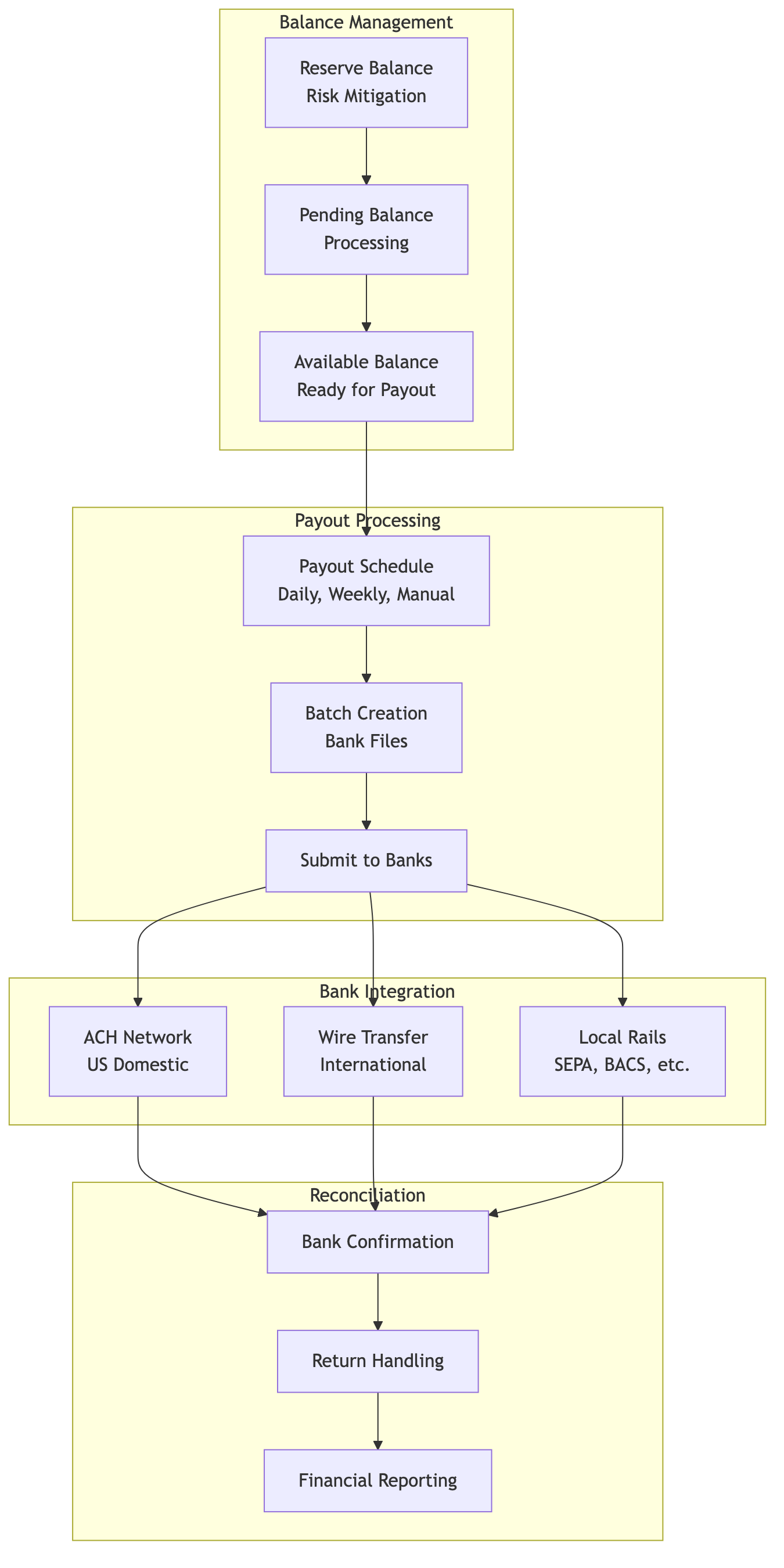
Distributes funds to millions of connected accounts.
Available Balance
Pending Balance
Reserve Balance
Payout Schedule
Wire Transfer
Local Rails
Available Balance
Pending Balance
Reserve Balance
Payout Schedule
Wire Transfer
Local Rails
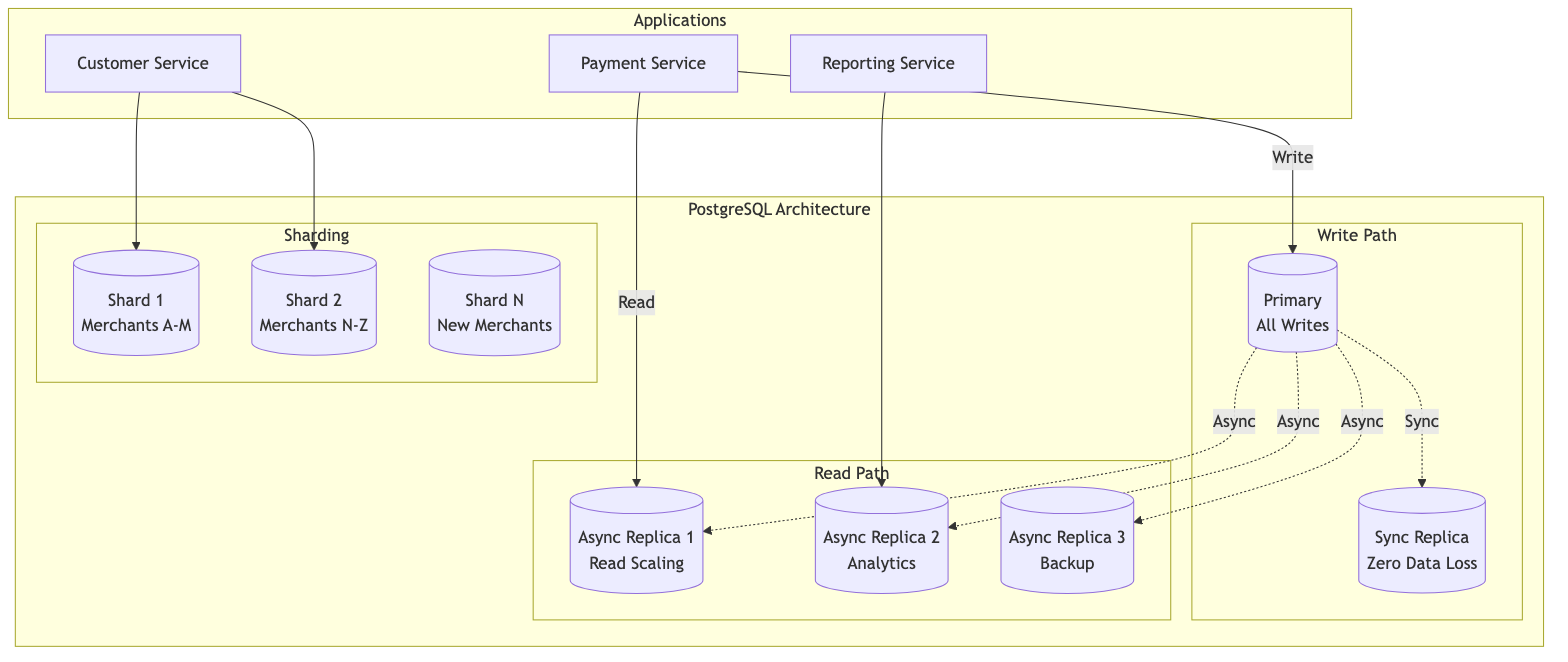
Sync Replica
Async Replica 1
Sync Replica
Async Replica 1
Database Practices:
Synchronous Replication : Zero data loss for transactionsSharding by Merchant : Horizontal scalabilityConnection Pooling : PgBouncer for efficient connectionsEncryption : AES-256 at rest, TLS in transit
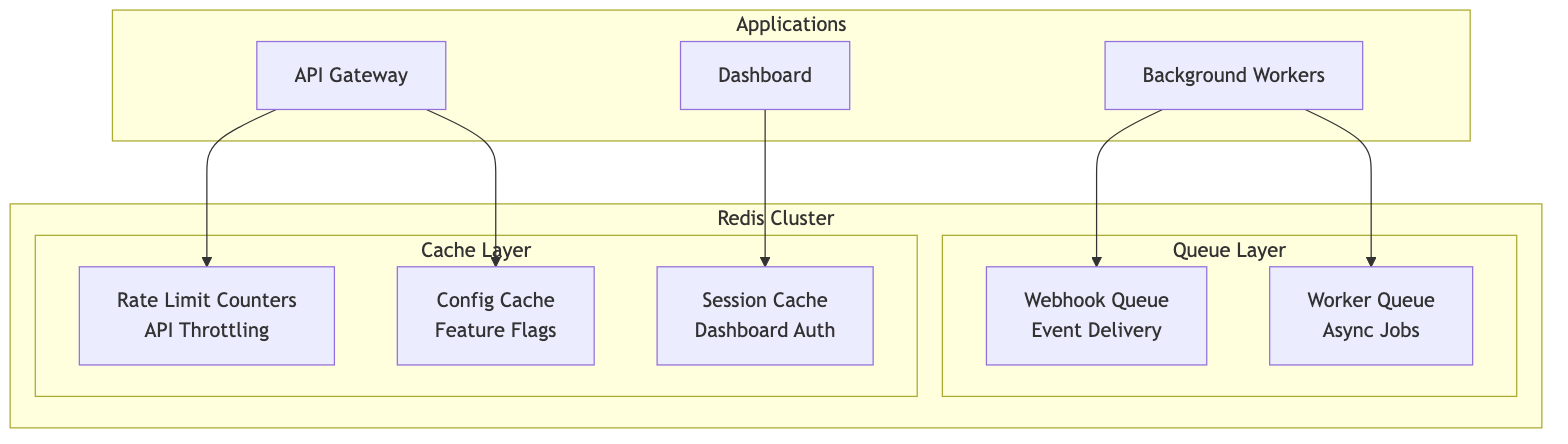
Rate Limit Counters
Session Cache
Config Cache
Webhook Queue
Rate Limit Counters
Session Cache
Config Cache
Webhook Queue
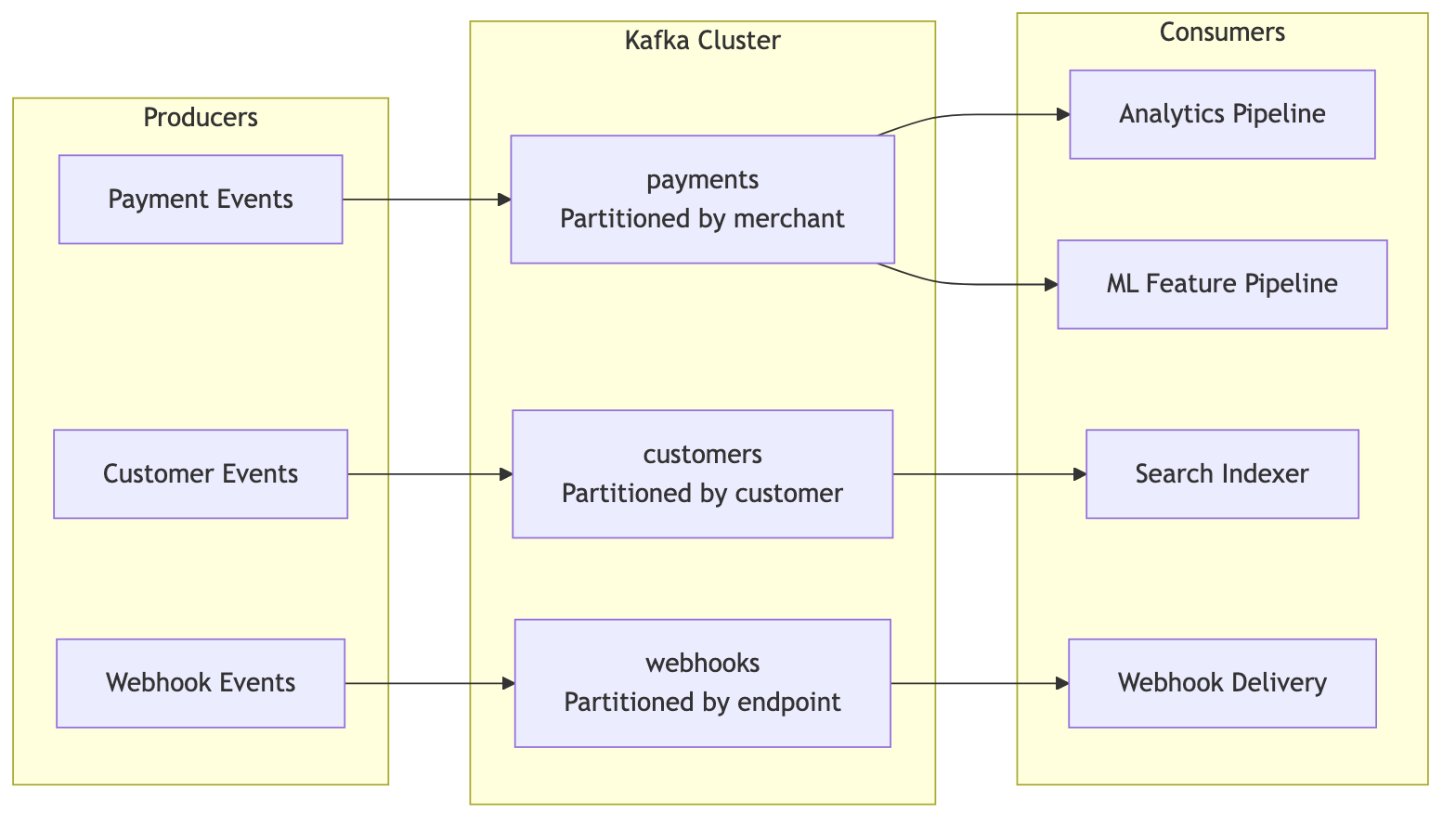
payments
customers
webhooks
payments
customers
webhooks
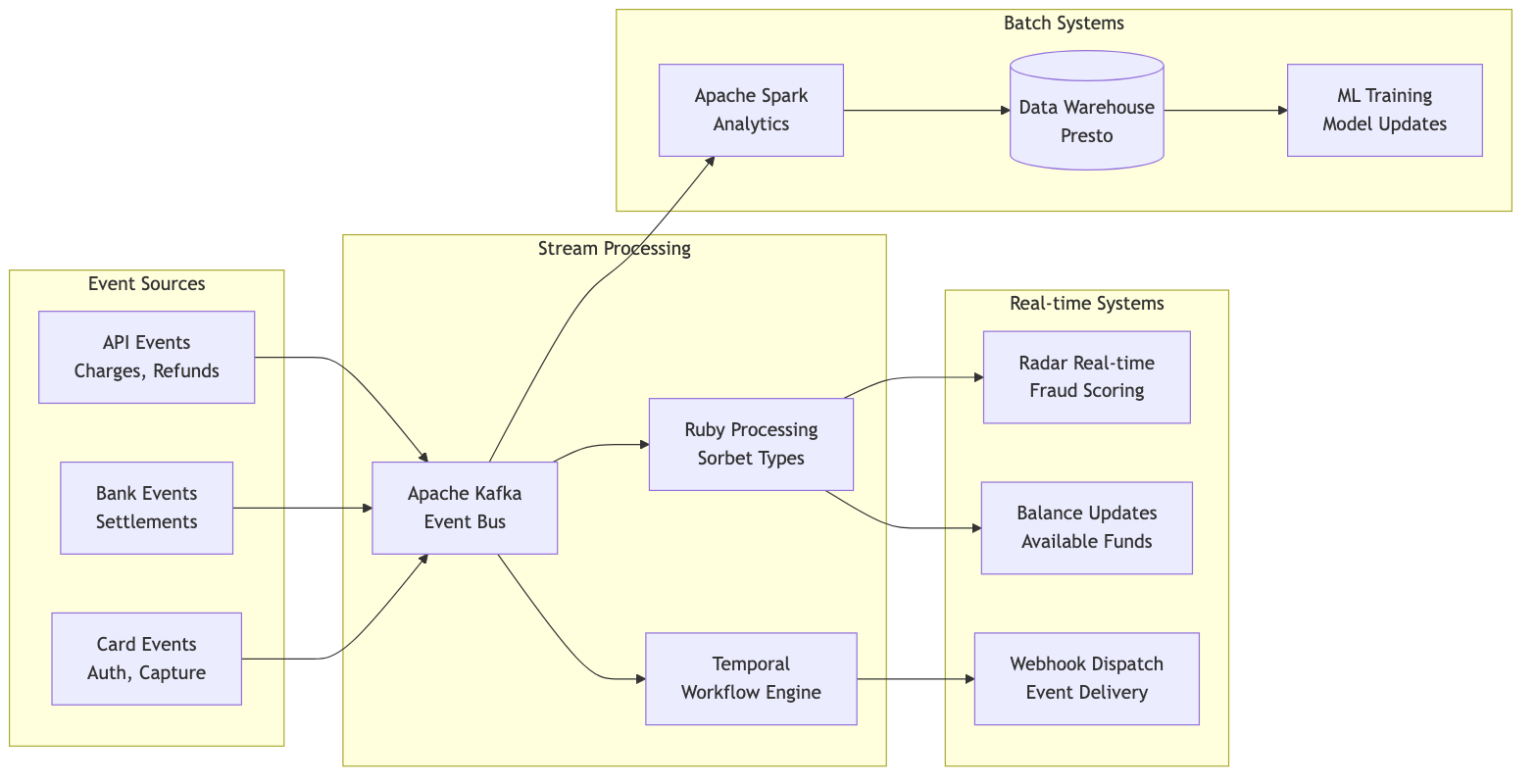
API Events
Ruby Processing
Radar Real-time
Balance Updates
Webhook Dispatch
API Events
Ruby Processing
Radar Real-time
Balance Updates
Webhook Dispatch
Durable Execution : Workflows survive process failuresPayout Workflows : Multi-step payout processingSubscription Lifecycle : Complex billing state machinesRetry Policies : Configurable retry strategies
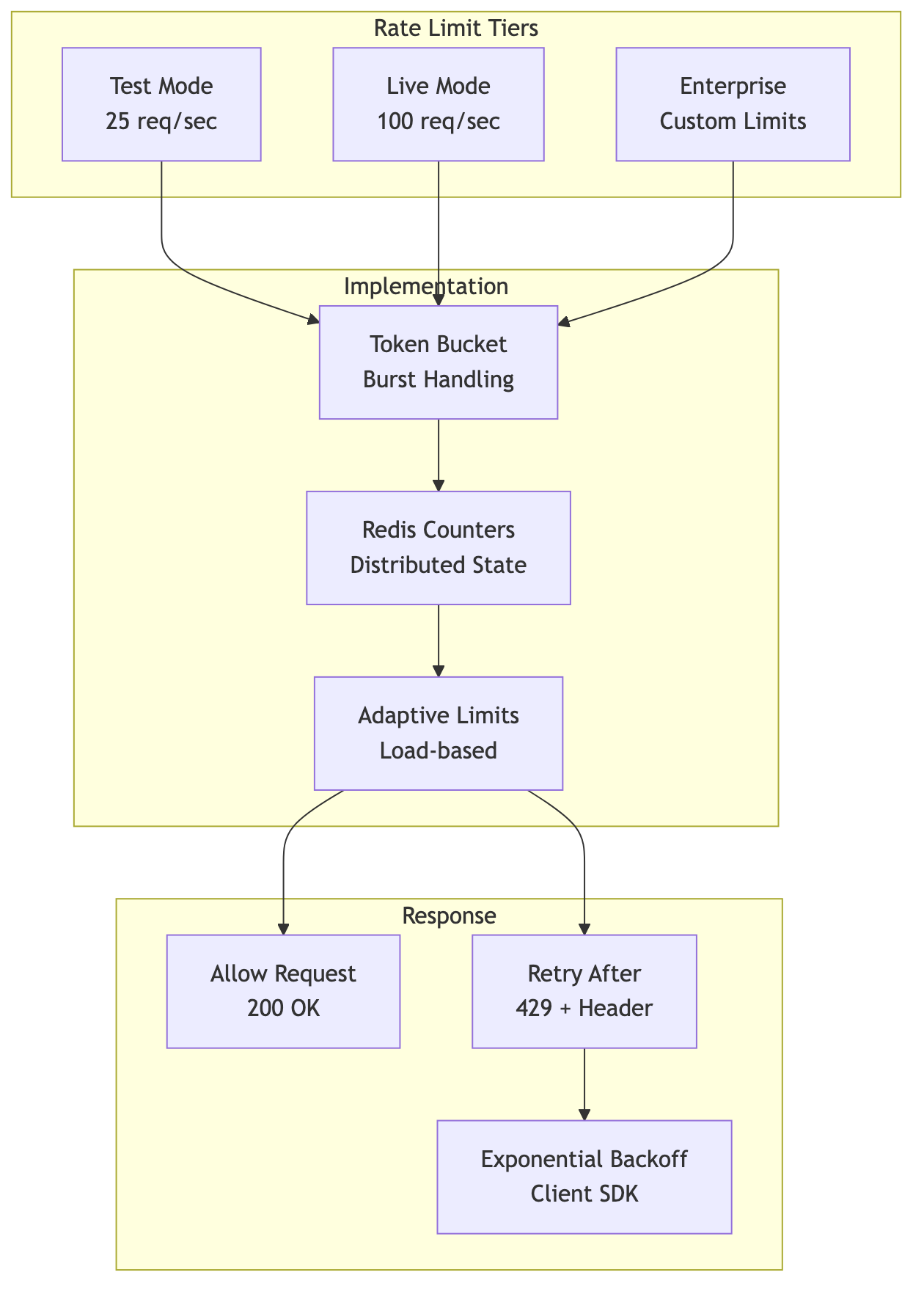
Token Bucket
Redis Counters
Adaptive Limits
Exponential Backoff
Token Bucket
Redis Counters
Adaptive Limits
Exponential Backoff
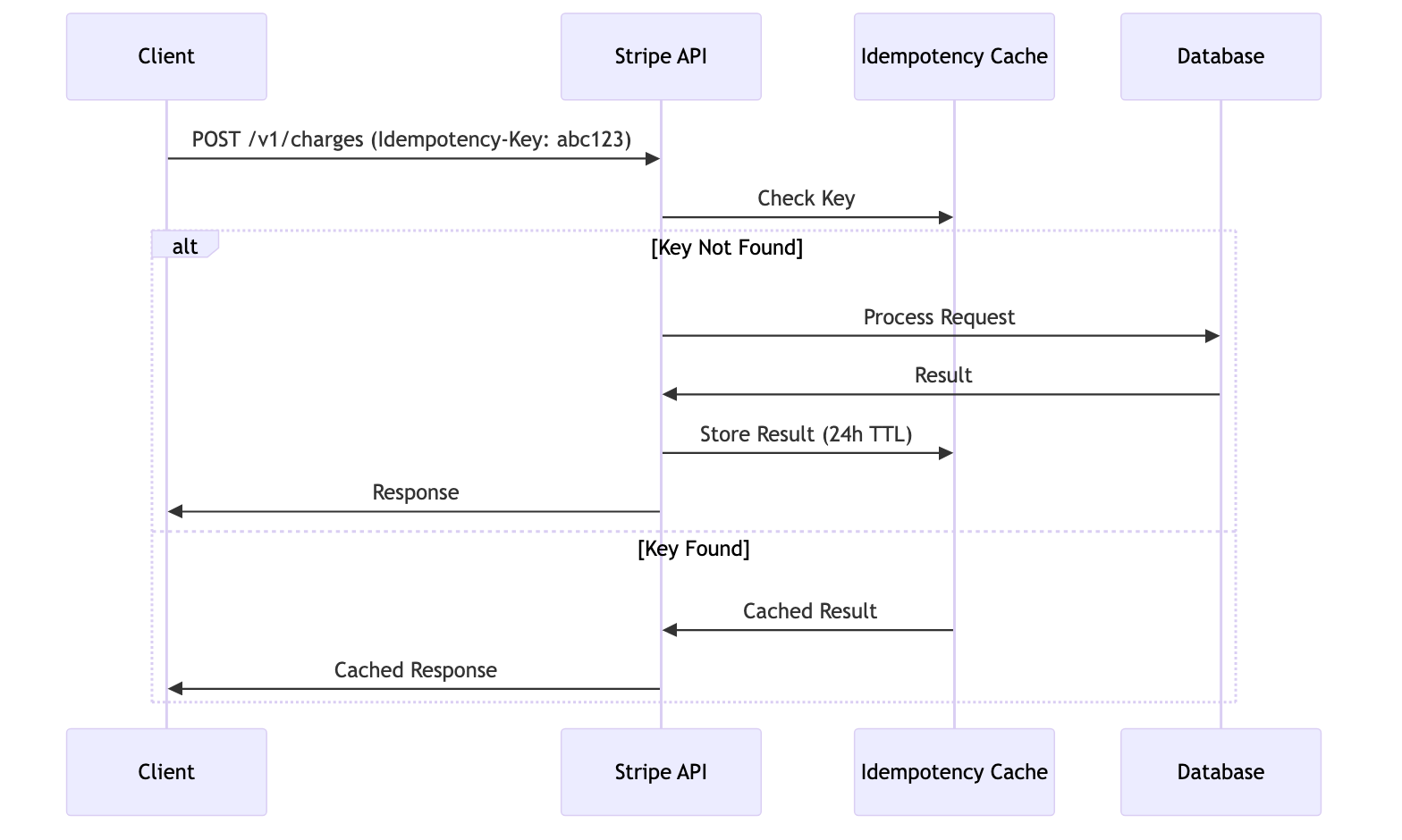
Database Idempotency Cache Stripe API Client Database Idempotency Cache Stripe API Client alt [Key Not Found] [Key Found] POST /v1/charges (Idempotency-Key: abc123) Check Key Process Request Result Store Result (24h TTL) Response Cached Result Cached Response Database Idempotency Cache Stripe API Client Database Idempotency Cache Stripe API Client alt [Key Not Found] [Key Found] POST /v1/charges (Idempotency-Key: abc123) Check Key Process Request Result Store Result (24h TTL) Response Cached Result Cached Response Idempotency Features:
24-hour key validity : Safe retries within windowAtomic operations : Prevents duplicate chargesResponse caching : Consistent responses for same key
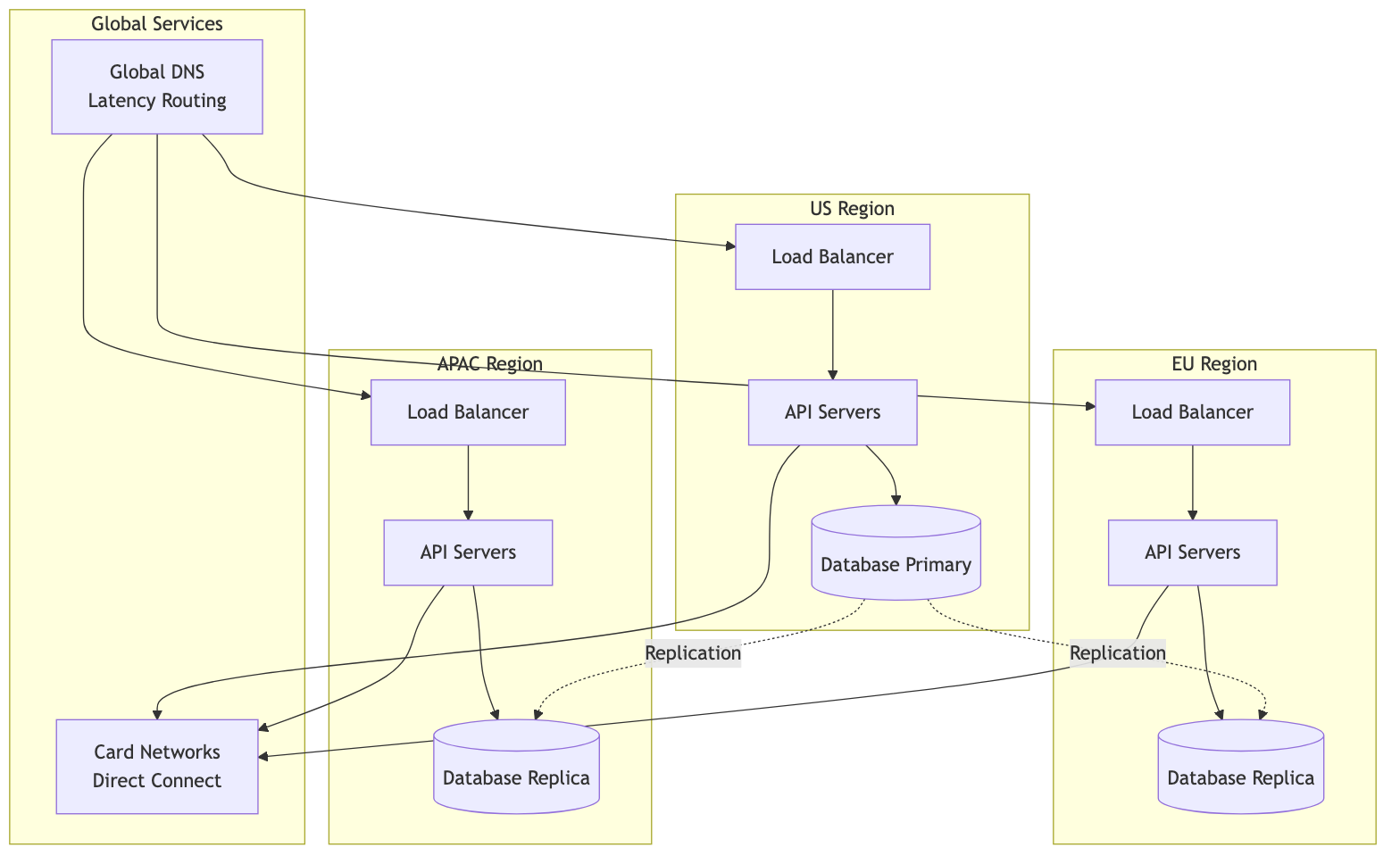
Global DNS
Card Networks
Global DNS
Card Networks
Velocity Checks
Manual Review
Tokenization
Hardware Security Modules
Network Segmentation
API Key Auth
OAuth 2.0
Webhook Signatures
TLS 1.3
Encryption at Rest
Audit Logging
Velocity Checks
Manual Review
Tokenization
Hardware Security Modules
Network Segmentation
API Key Auth
OAuth 2.0
Webhook Signatures
TLS 1.3
Encryption at Rest
Audit Logging
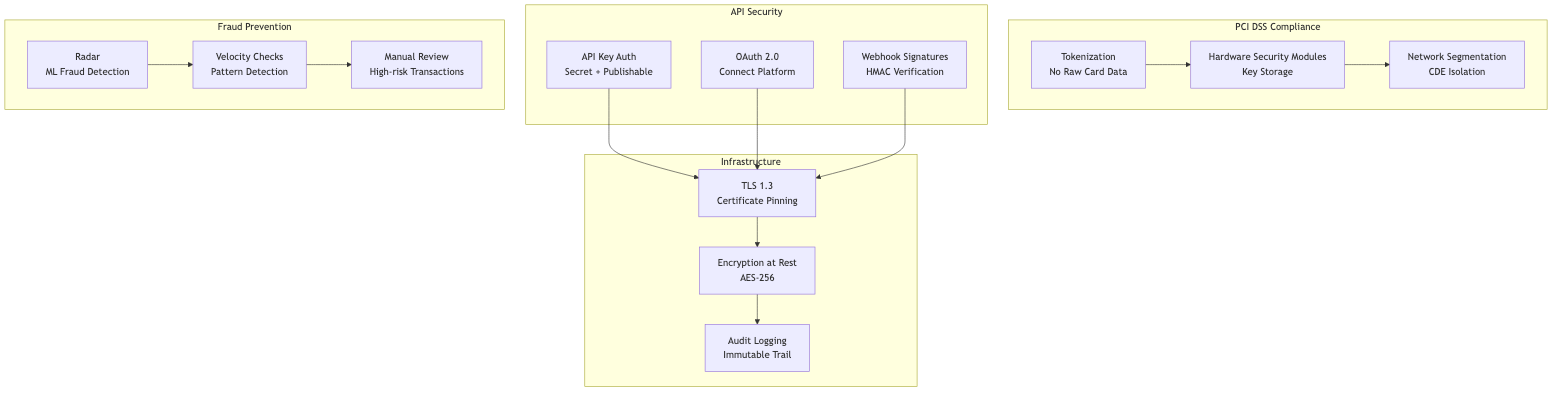
Tokenization : Card data never touches merchant serversHSM-backed encryption : Hardware security for keysAnnual audits : Third-party security assessmentsPenetration testing : Regular security testing
Secret keys : Server-side only, never exposedPublishable keys : Client-side, limited scopeRestricted keys : Granular permission controlWebhook verification : HMAC signature validation
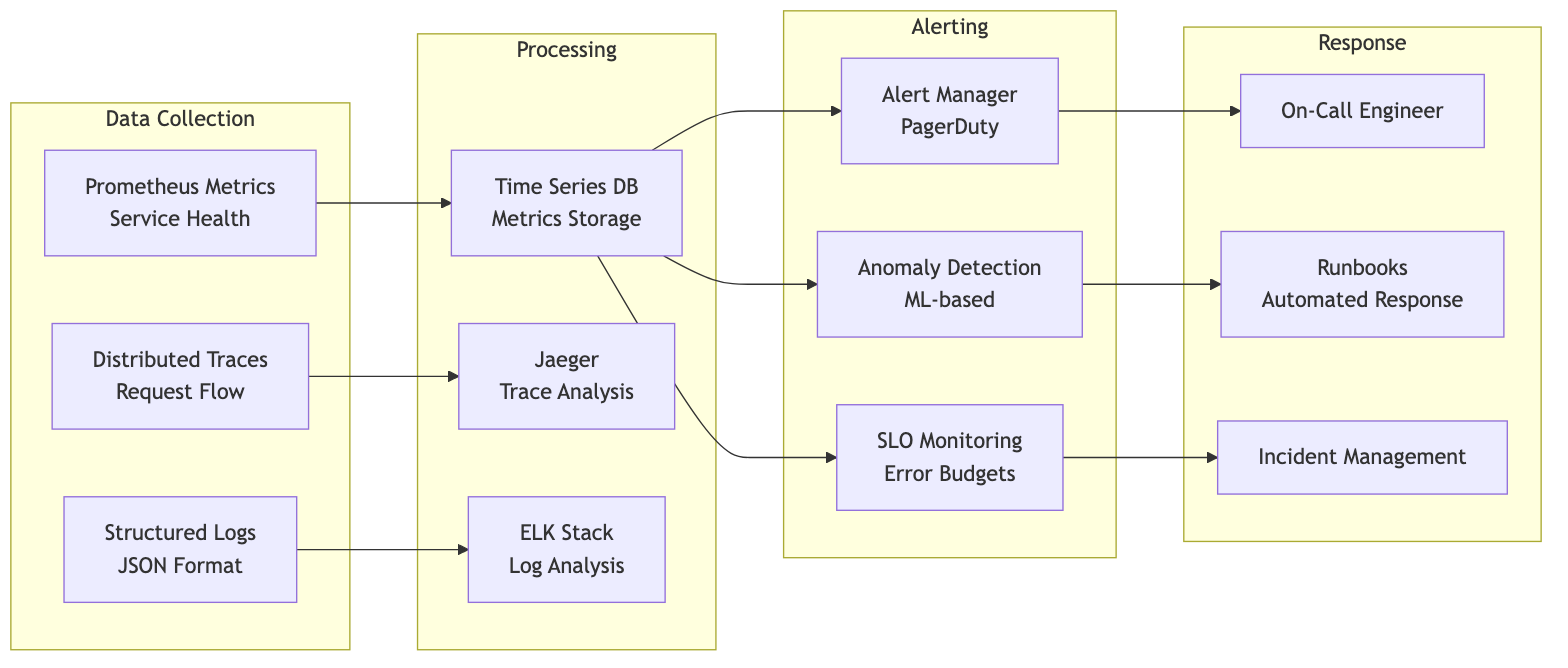
Prometheus Metrics
Distributed Traces
Structured Logs
Time Series DB
Anomaly Detection
SLO Monitoring
Runbooks
Prometheus Metrics
Distributed Traces
Structured Logs
Time Series DB
Anomaly Detection
SLO Monitoring
Runbooks
API Latency : p50, p95, p99 response timesError Rates : 4xx, 5xx by endpointPayment Success Rate : Authorization rate by networkWebhook Delivery : Success rate and latency
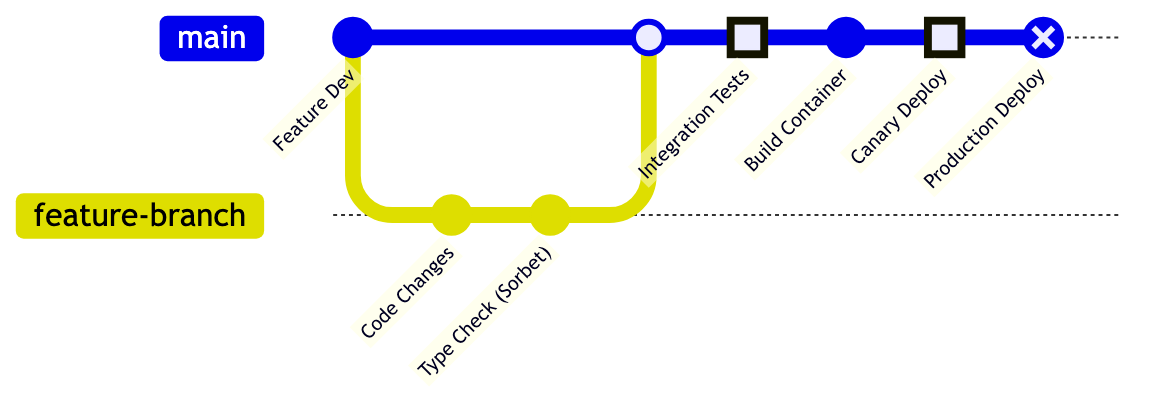
main feature-branch Feature Dev Code Changes Type Check (Sorbet) Integration Tests Build Container Canary Deploy Production Deploy main feature-branch Feature Dev Code Changes Type Check (Sorbet) Integration Tests Build Container Canary Deploy Production Deploy
Sorbet Type Check
Security Scan
Observe Metrics
Sorbet Type Check
Security Scan
Observe Metrics
Kubernetes : Container orchestrationSorbet : Gradual typing for RubyTemporal : Workflow orchestrationTerraform : Infrastructure as code
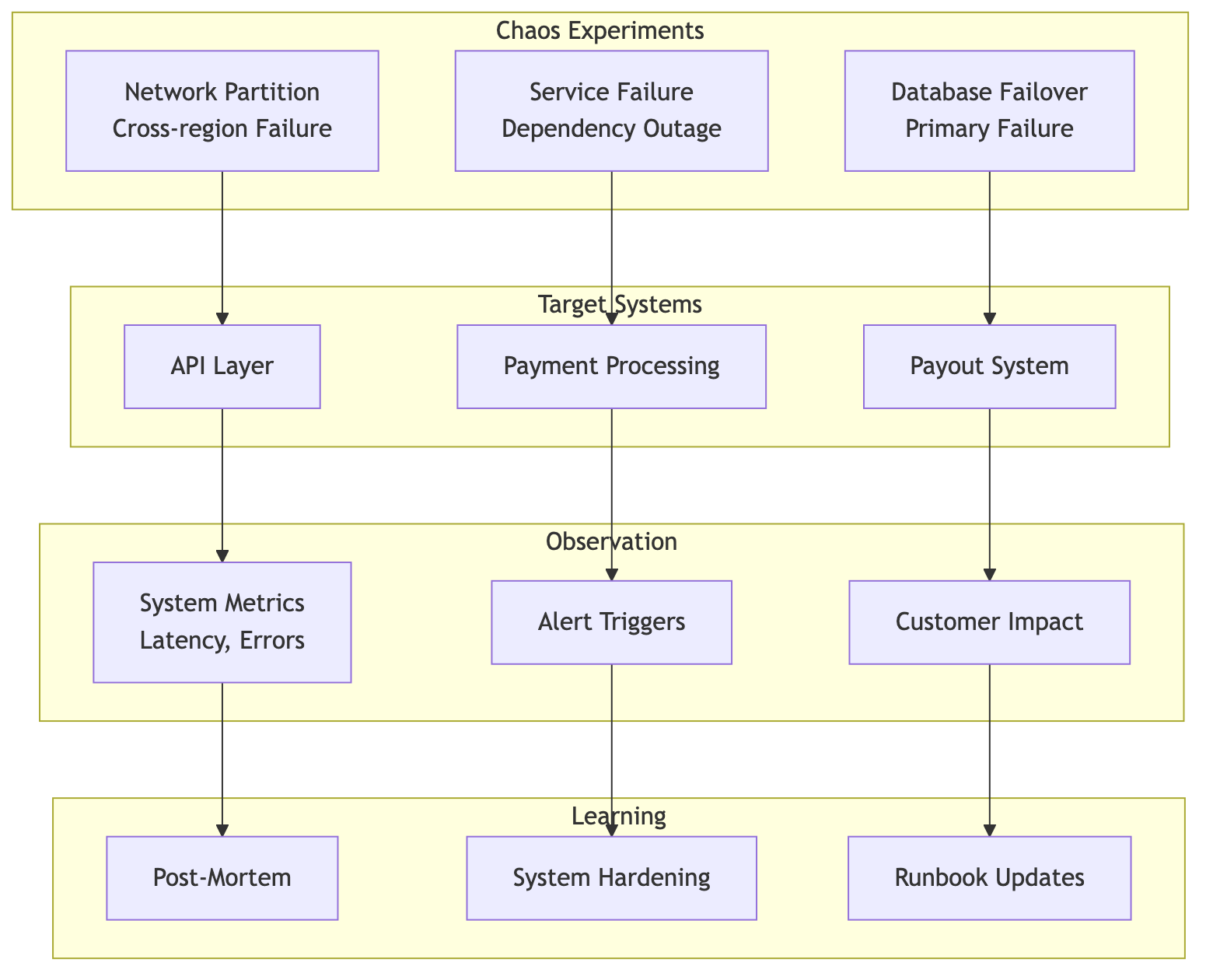
Network Partition
Service Failure
Database Failover
System Metrics
Network Partition
Service Failure
Database Failover
System Metrics
Chaos Practices:
GameDay Exercises : Quarterly disaster recovery drillsDependency Failures : Simulated network/bank outagesDatabase Failovers : Automated primary promotionLoad Testing : 10x traffic simulation
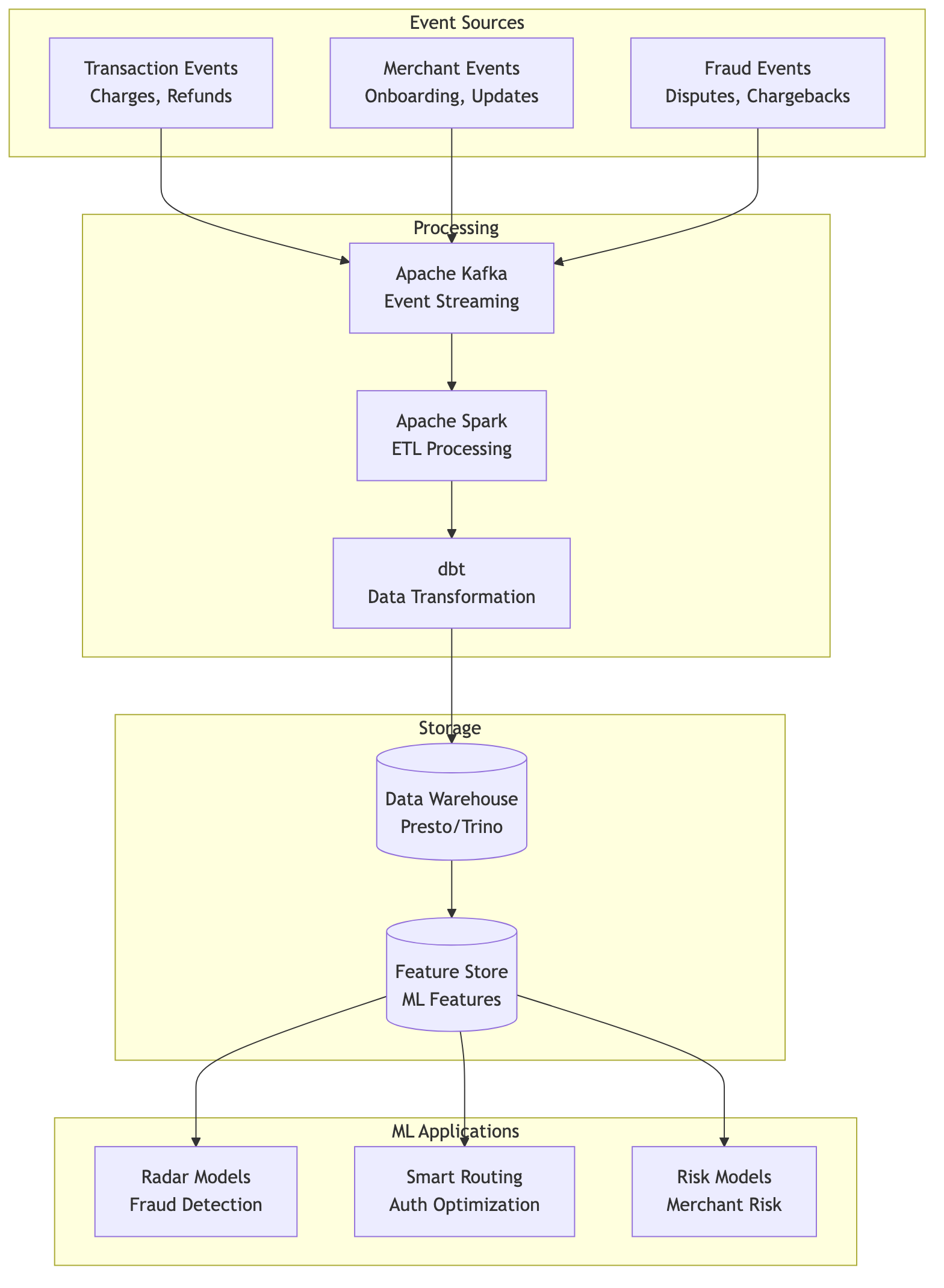
Transaction Events
Merchant Events
Fraud Events
Apache Kafka
Apache Spark
Data Warehouse
Radar Models
Smart Routing
Transaction Events
Merchant Events
Fraud Events
Apache Kafka
Apache Spark
Data Warehouse
Radar Models
Smart Routing
Fraud Detection (Radar) : Real-time transaction scoringAuthorization Optimization : Network routing for success rateRisk Assessment : Merchant and account risk scoringRevenue Recovery : Smart retry timing for failed paymentsAnomaly Detection : System health and abuse detection
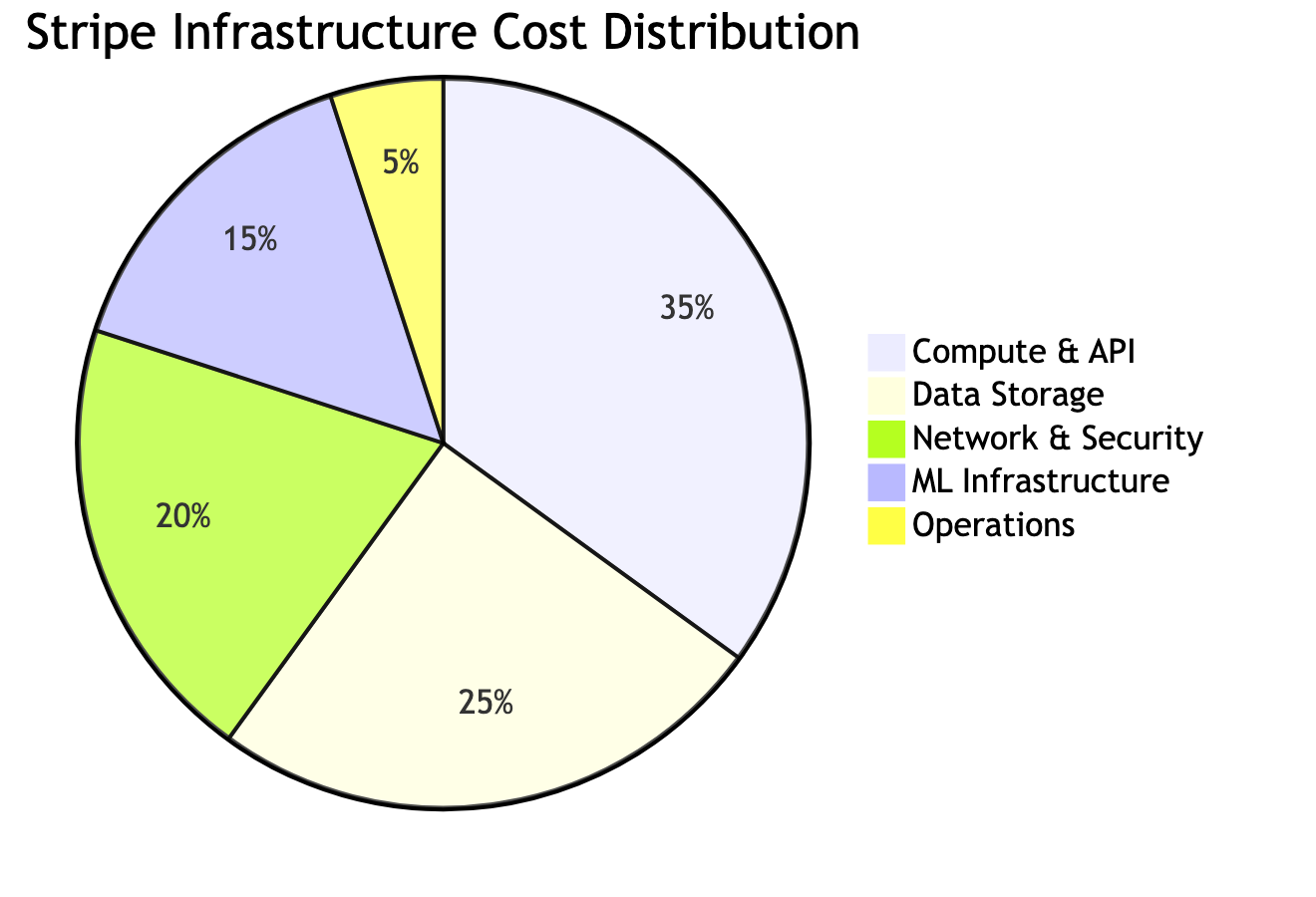
35% 25% 20% 15% 5% Stripe Infrastructure Cost Distribution Compute & API Data Storage Network & Security ML Infrastructure Operations 35% 25% 20% 15% 5% Stripe Infrastructure Cost Distribution Compute & API Data Storage Network & Security ML Infrastructure Operations
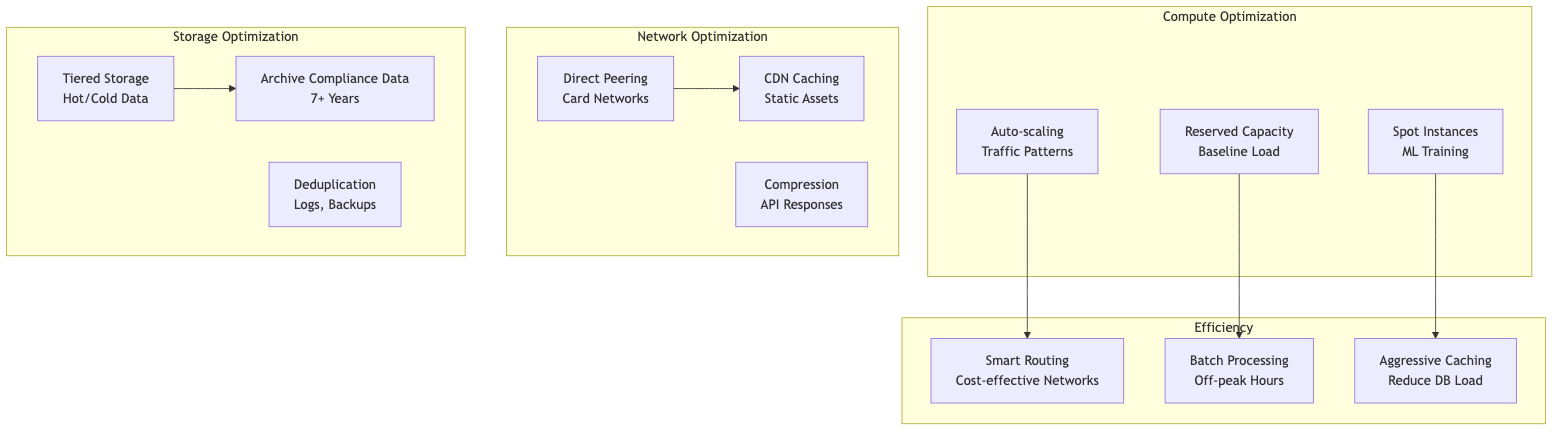
Tiered Storage
Archive Compliance Data
Deduplication
Direct Peering
Auto-scaling
Reserved Capacity
Spot Instances
Smart Routing
Batch Processing
Aggressive Caching
Tiered Storage
Archive Compliance Data
Deduplication
Direct Peering
Auto-scaling
Reserved Capacity
Spot Instances
Smart Routing
Batch Processing
Aggressive Caching
Interchange Optimization : Intelligent card network routingReserved Capacity : Predictable baseline costsData Lifecycle : Automated archival for compliance dataML Efficiency : Model optimization for inference cost
Real-time Payments : FedNow, RTP network integrationCryptocurrency : Stablecoin and crypto payment supportEmbedded Finance : Banking-as-a-Service expansionAI/ML : Enhanced fraud detection and routing
Global Expansion : New payment methods and currenciesVertical Solutions : Industry-specific payment productsDeveloper Experience : Enhanced APIs and toolsCompliance Automation : RegTech integration
Edge Computing : Reduced latency for global merchantsGreen Computing : Carbon-neutral infrastructureZero-Trust Security : Enhanced security postureMulti-Cloud : Resilience through cloud diversity
Stripe's architecture demonstrates how to build financial infrastructure at scale while maintaining the highest standards of security, reliability, and developer experience. The combination of robust payment processing, ML-powered fraud detection, and global reach enables millions of businesses to accept payments worldwide.
The platform continues to evolve with new payment methods, enhanced fraud prevention, and expanded financial services, all while maintaining the API simplicity and reliability that developers depend on.
There might be iterations needed, current data is as close I could get.
 Masst Docs