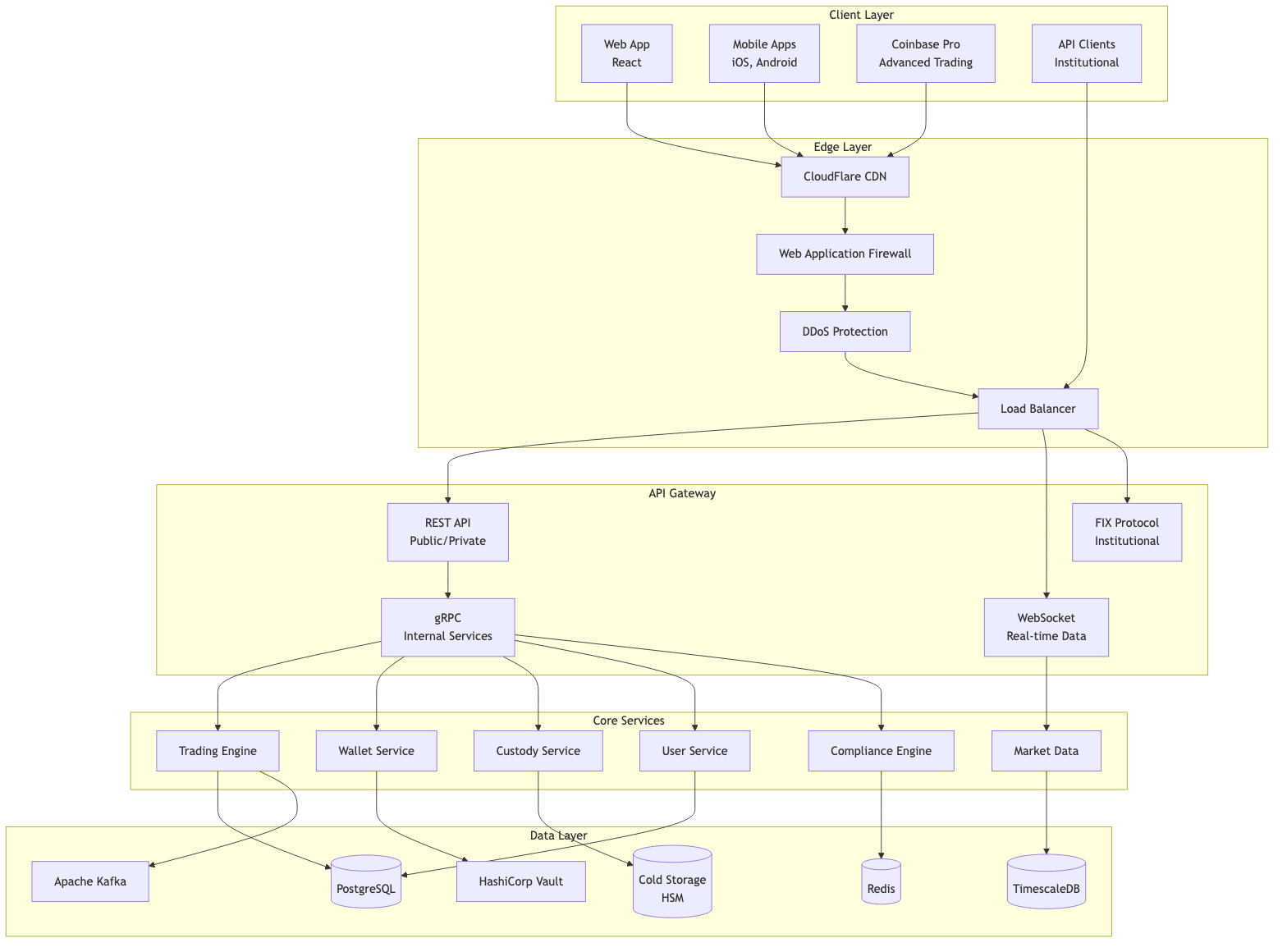
Coinbase 🏗️ Coinbase serves 110M+ verified users across 100+ countries, processing billions of dollars in cryptocurrency transactions daily. This document outlines the comprehensive architecture that enables Coinbase to deliver secure, reliable digital asset trading at massive scale.
Coinbase Pro
FIX Protocol
Coinbase Pro
FIX Protocol
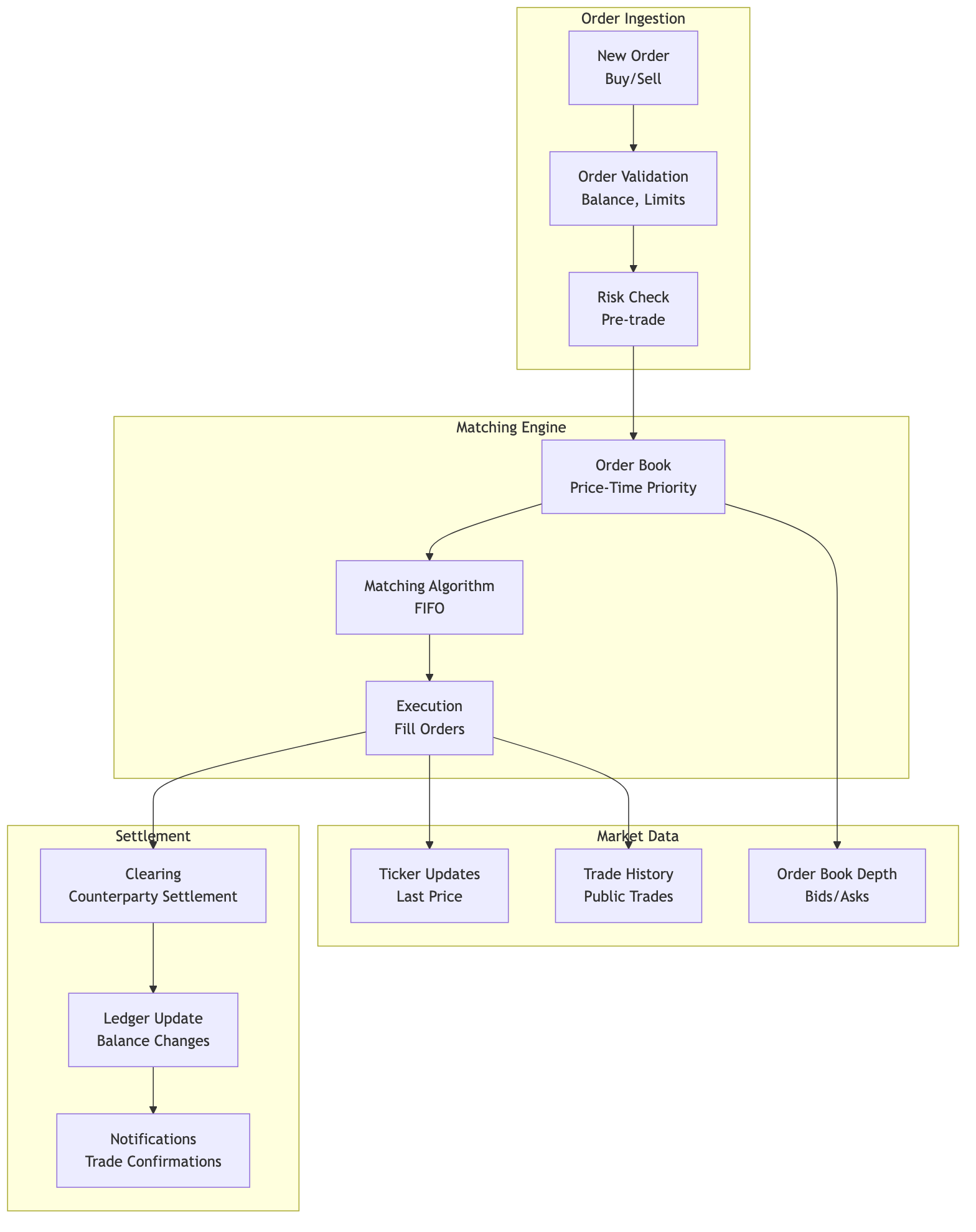
Coinbase's order matching engine processes millions of trades with microsecond latency.
Order Validation
Order Book
Clearing
Ledger Update
Notifications
Order Book Depth
Trade History
Order Validation
Order Book
Clearing
Ledger Update
Notifications
Order Book Depth
Trade History
Trading Features:
Order Types : Market, Limit, Stop, Stop-LimitMatching : Price-time priority (FIFO)Latency : Sub-millisecond matchingThroughput : 100K+ orders per second
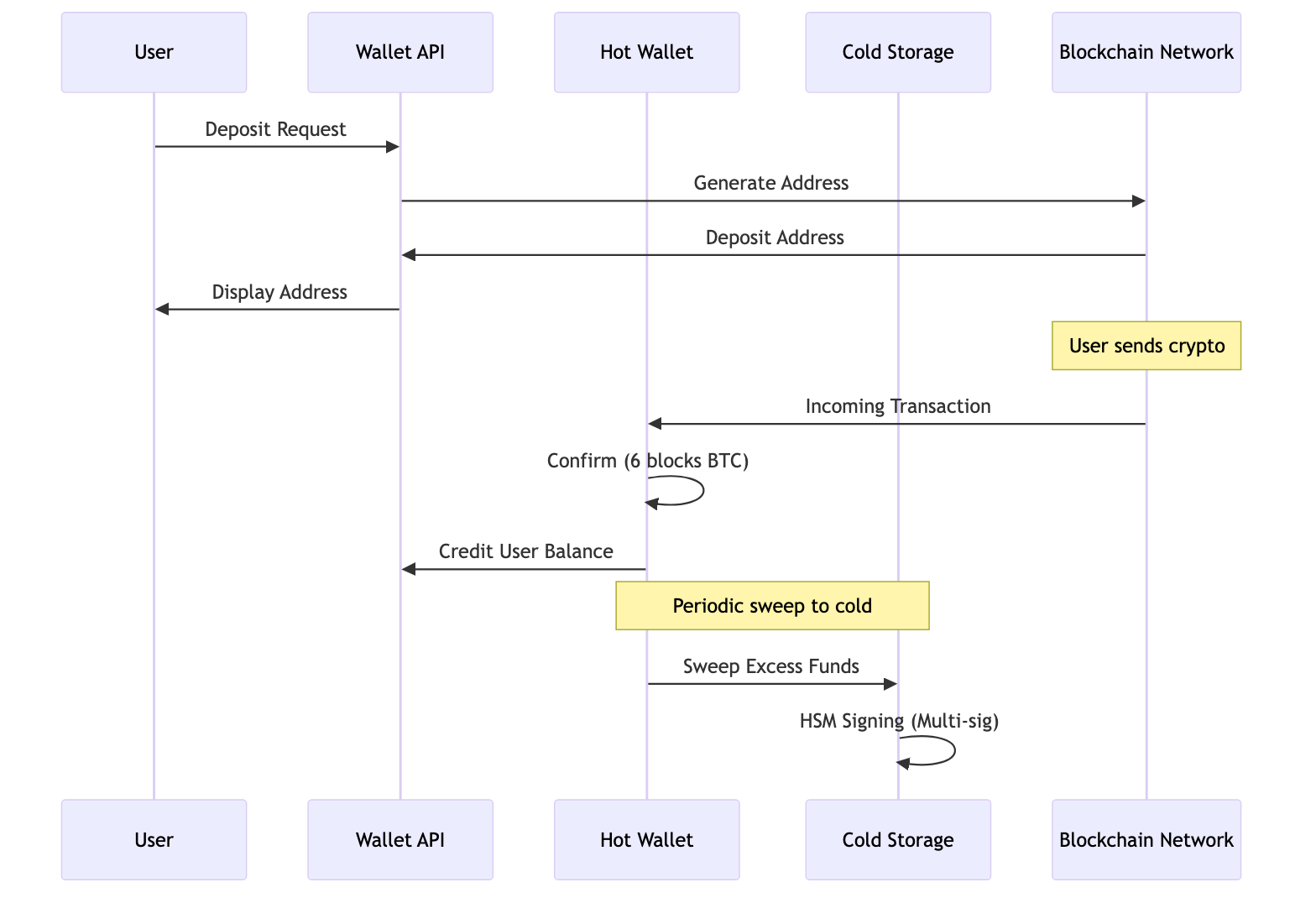
Secure cryptocurrency storage with hot and cold wallet segregation.
Blockchain Network Cold Storage Hot Wallet Wallet API User Blockchain Network Cold Storage Hot Wallet Wallet API User User sends crypto Periodic sweep to cold Deposit Request Generate Address Deposit Address Display Address Incoming Transaction Confirm (6 blocks BTC) Credit User Balance Sweep Excess Funds HSM Signing (Multi-sig) Blockchain Network Cold Storage Hot Wallet Wallet API User Blockchain Network Cold Storage Hot Wallet Wallet API User User sends crypto Periodic sweep to cold Deposit Request Generate Address Deposit Address Display Address Incoming Transaction Confirm (6 blocks BTC) Credit User Balance Sweep Excess Funds HSM Signing (Multi-sig) Wallet Architecture:
Hot Wallets : Online, for immediate withdrawals (~2% of assets)Cold Storage : Offline, HSM-secured (~98% of assets)Multi-signature : Requires multiple approvalsGeographic Distribution : Keys spread across locations
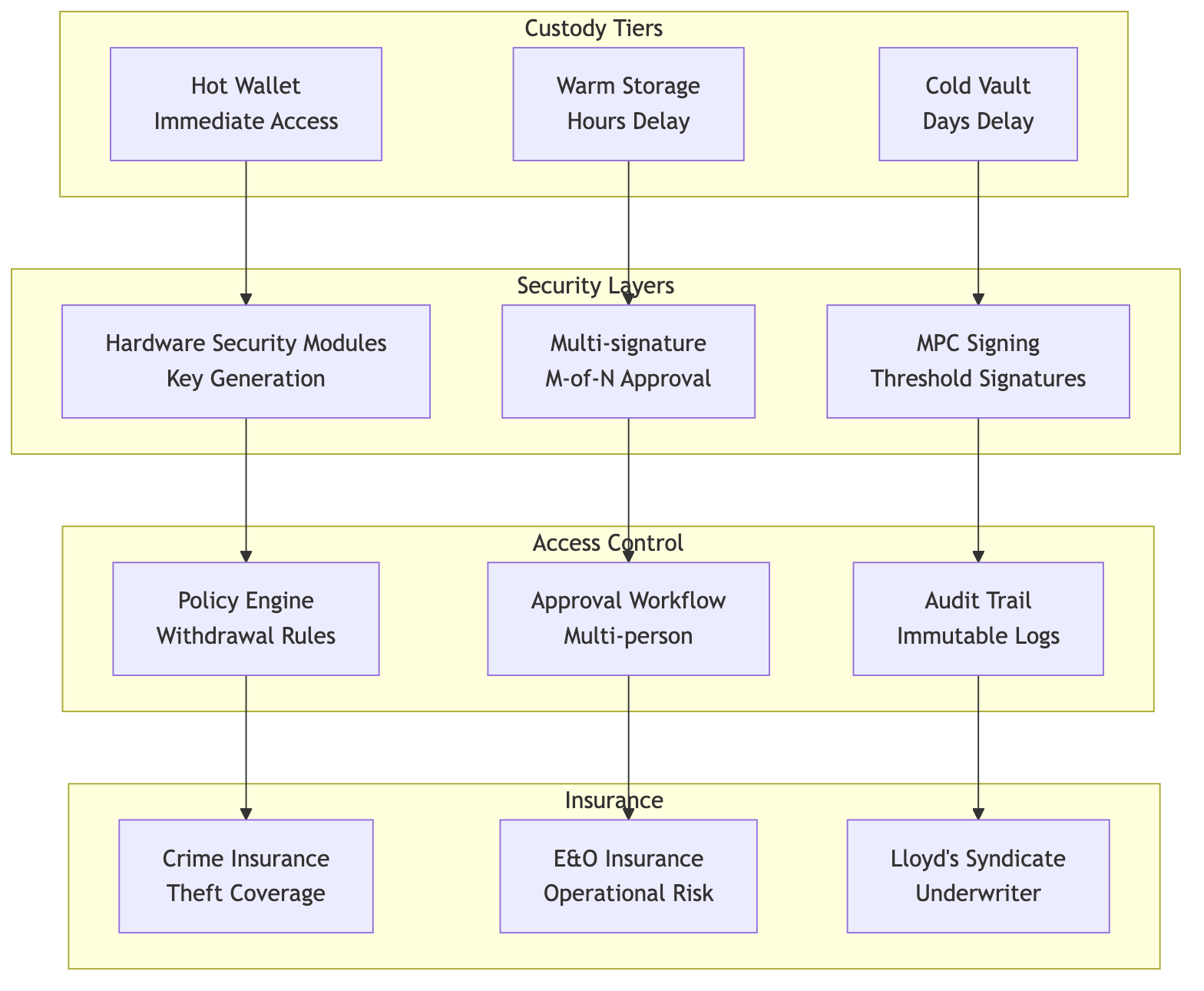
Institutional-grade custody with insurance and compliance.
Hot Wallet
Hardware Security Modules
Multi-signature
MPC Signing
Policy Engine
Approval Workflow
Audit Trail
Crime Insurance
E&O Insurance
Lloyd's Syndicate
Hot Wallet
Hardware Security Modules
Multi-signature
MPC Signing
Policy Engine
Approval Workflow
Audit Trail
Crime Insurance
E&O Insurance
Lloyd's Syndicate
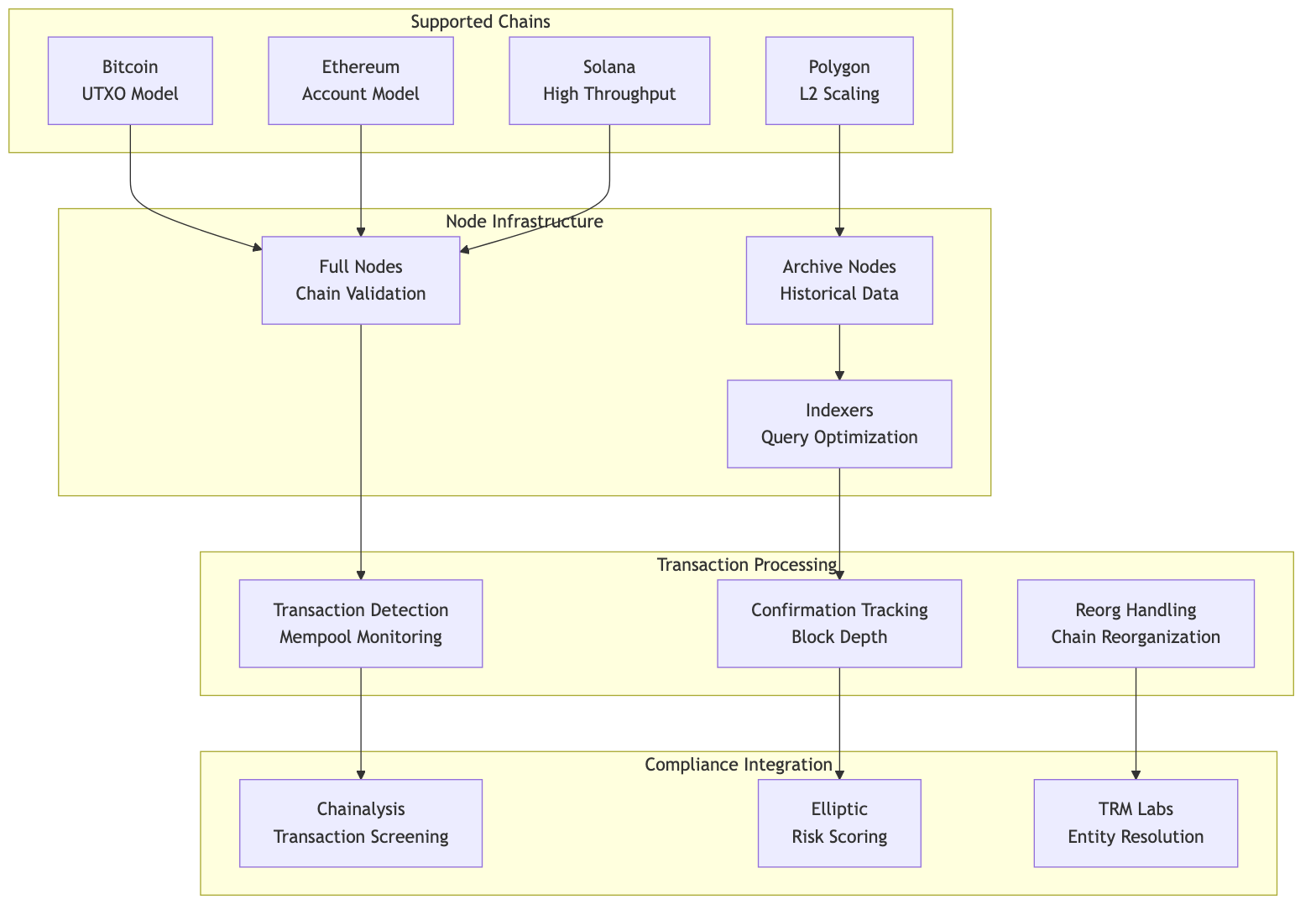
Multi-chain support with transaction monitoring.
Full Nodes
Archive Nodes
Indexers
Transaction Detection
Confirmation Tracking
Reorg Handling
Chainalysis
TRM Labs
Full Nodes
Archive Nodes
Indexers
Transaction Detection
Confirmation Tracking
Reorg Handling
Chainalysis
TRM Labs
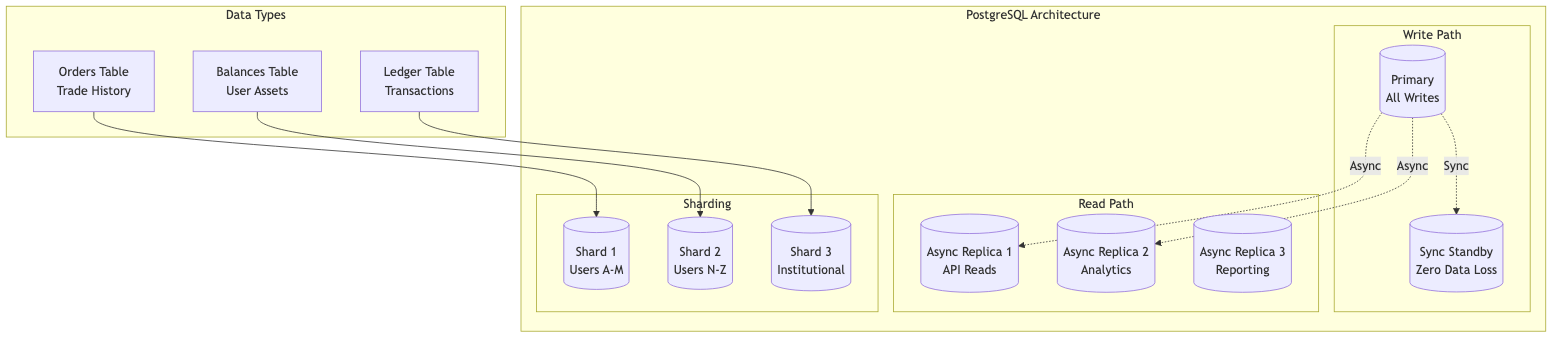
Sync Standby
Orders Table
Balances Table
Sync Standby
Orders Table
Balances Table
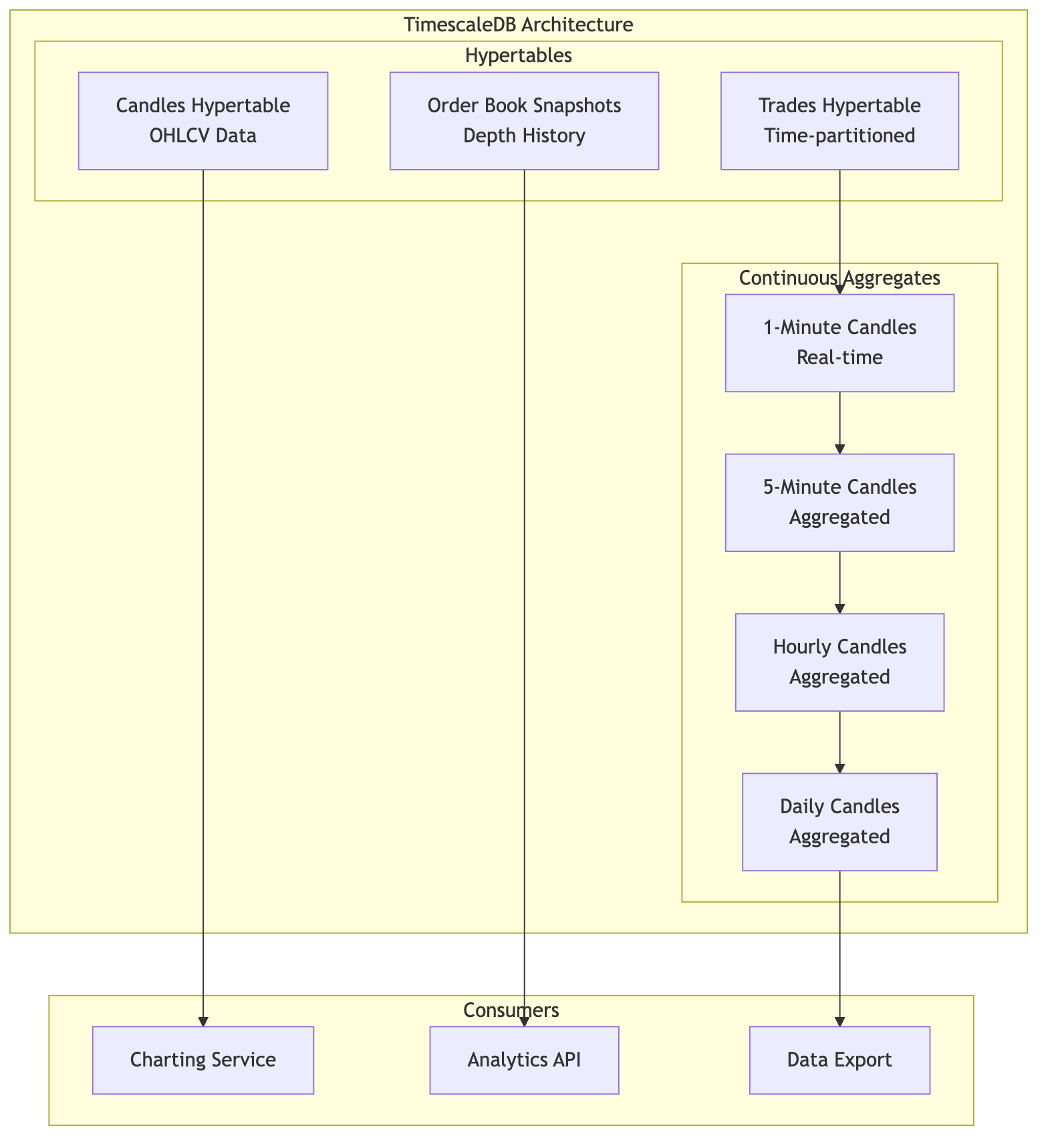
Trades Hypertable
Candles Hypertable
Order Book Snapshots
1-Minute Candles
5-Minute Candles
Trades Hypertable
Candles Hypertable
Order Book Snapshots
1-Minute Candles
5-Minute Candles
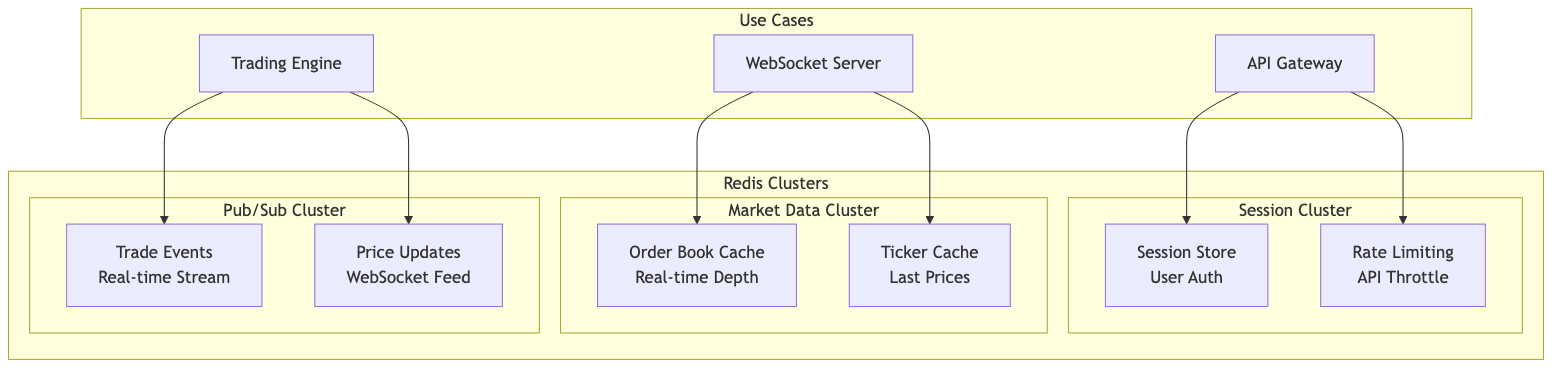
Rate Limiting
Order Book Cache
Trade Events
Price Updates
Rate Limiting
Order Book Cache
Trade Events
Price Updates
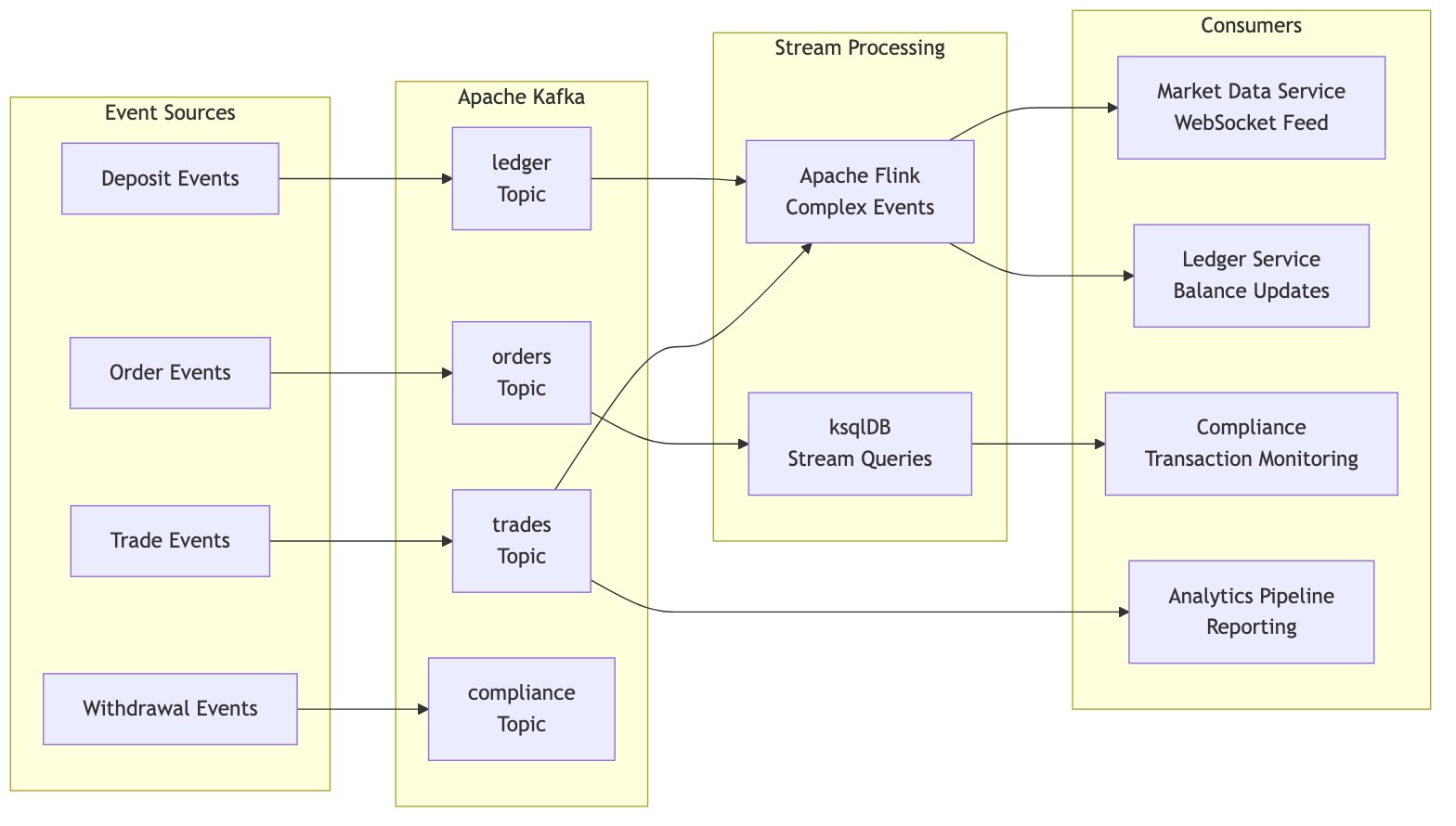
Apache Flink
Market Data Service
Ledger Service
Compliance
Analytics Pipeline
Apache Flink
Market Data Service
Ledger Service
Compliance
Analytics Pipeline
Trade Streaming : Sub-second trade distributionOrder Book Updates : Real-time depth changesBalance Updates : Instant ledger synchronizationCompliance Monitoring : Real-time transaction screening
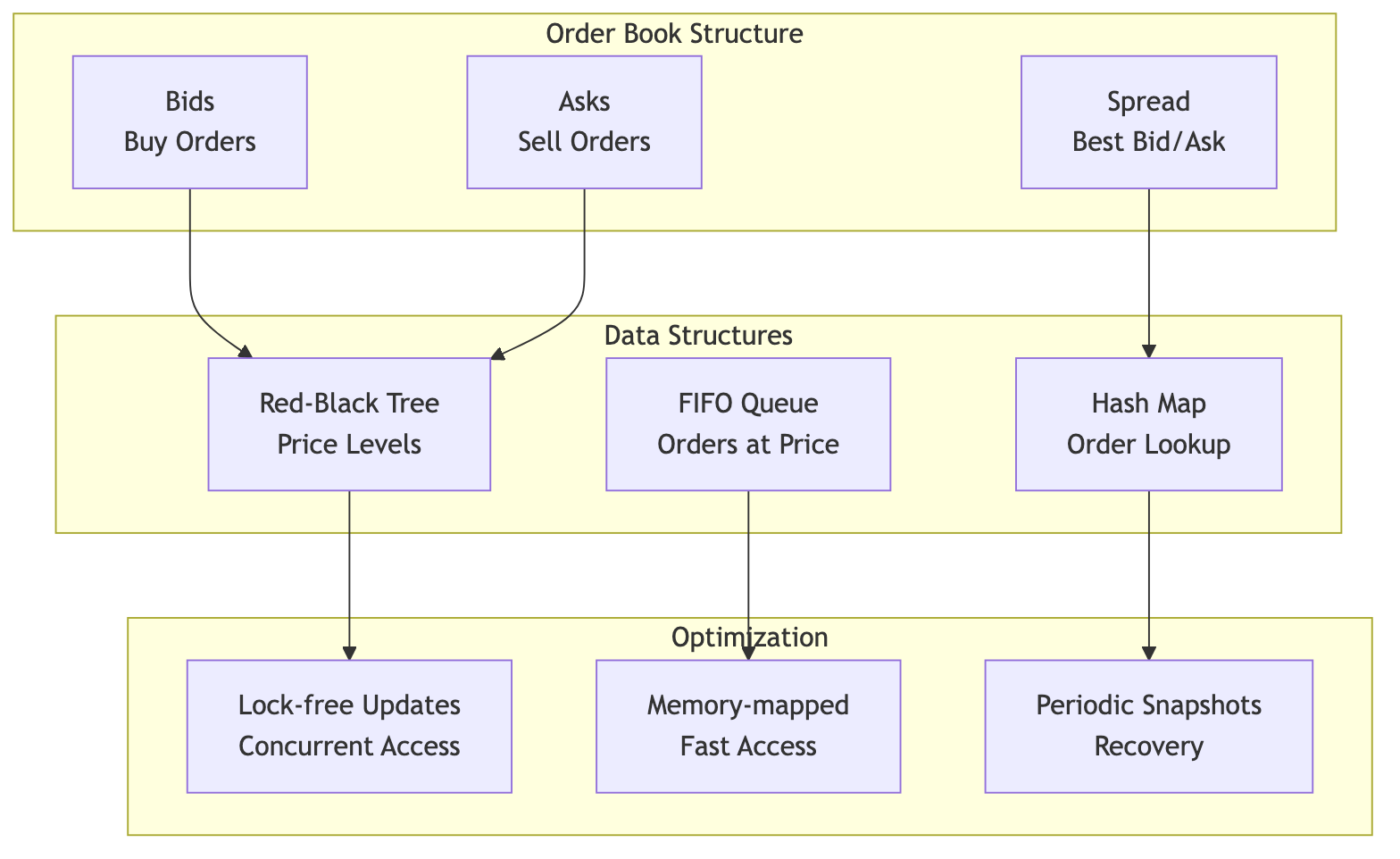
Red-Black Tree
FIFO Queue
Lock-free Updates
Periodic Snapshots
Red-Black Tree
FIFO Queue
Lock-free Updates
Periodic Snapshots
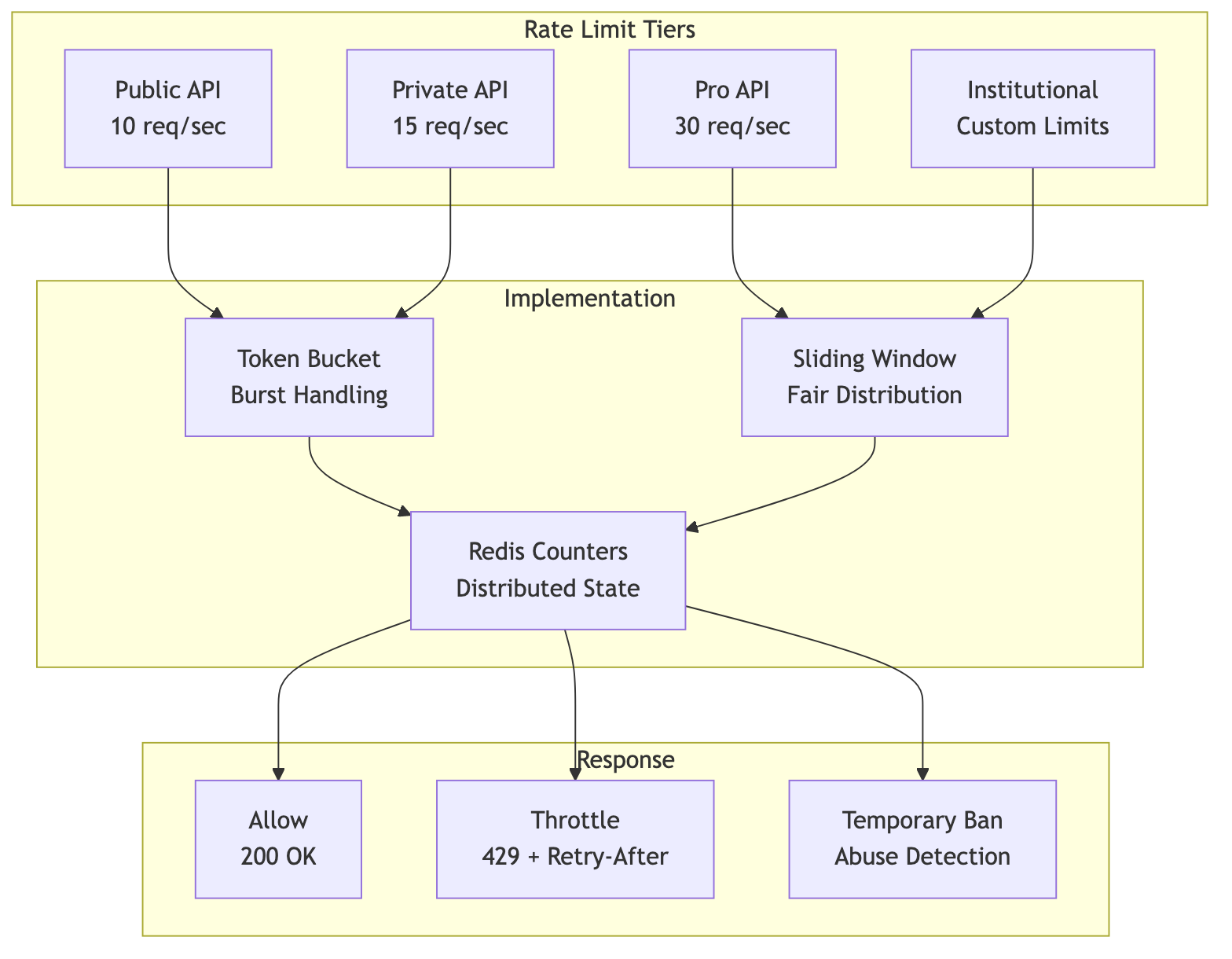
Institutional
Token Bucket
Sliding Window
Redis Counters
Throttle
Temporary Ban
Institutional
Token Bucket
Sliding Window
Redis Counters
Throttle
Temporary Ban
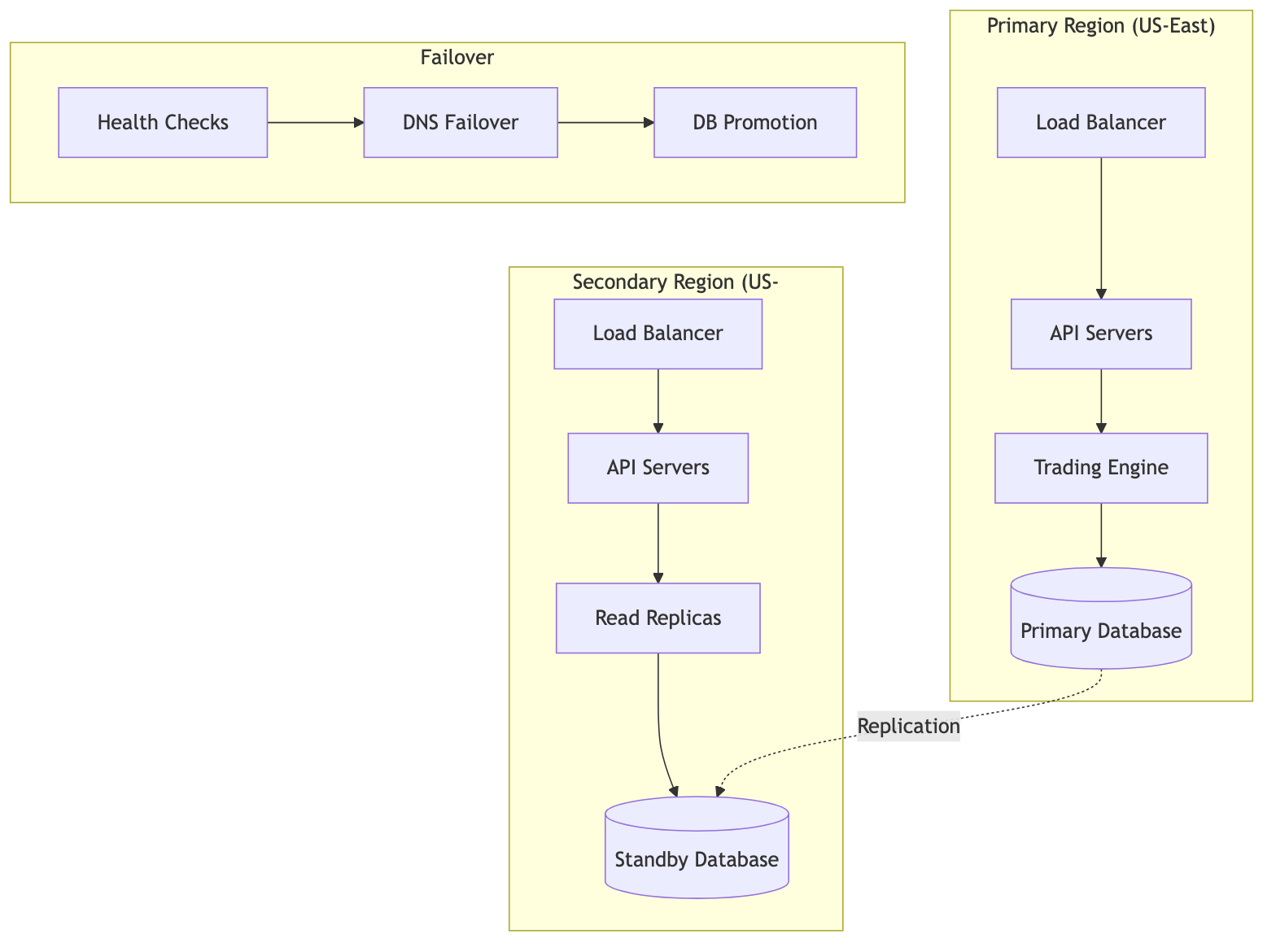
Secondary Region (US-West)
Secondary Region (US-West)
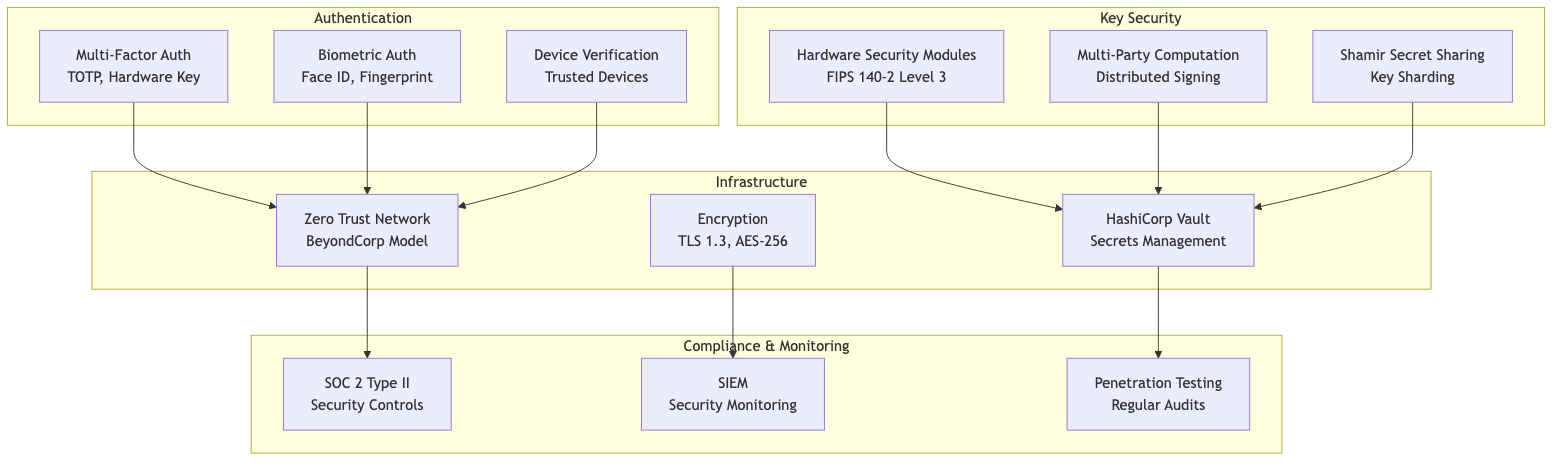
Multi-Factor Auth
Biometric Auth
Device Verification
Hardware Security Modules
Multi-Party Computation
Shamir Secret Sharing
Zero Trust Network
Encryption
HashiCorp Vault
SOC 2 Type II
Penetration Testing
Multi-Factor Auth
Biometric Auth
Device Verification
Hardware Security Modules
Multi-Party Computation
Shamir Secret Sharing
Zero Trust Network
Encryption
HashiCorp Vault
SOC 2 Type II
Penetration Testing
Air-gapped Systems : No network connectivityGeographic Distribution : Keys across multiple locationsMulti-signature : Requires multiple key holdersTime-delayed Withdrawals : Large withdrawal delays
KYC/AML : Identity verification, transaction monitoringTravel Rule : Cross-exchange information sharingSAR Filing : Suspicious activity reportingState Licenses : Money transmitter licenses
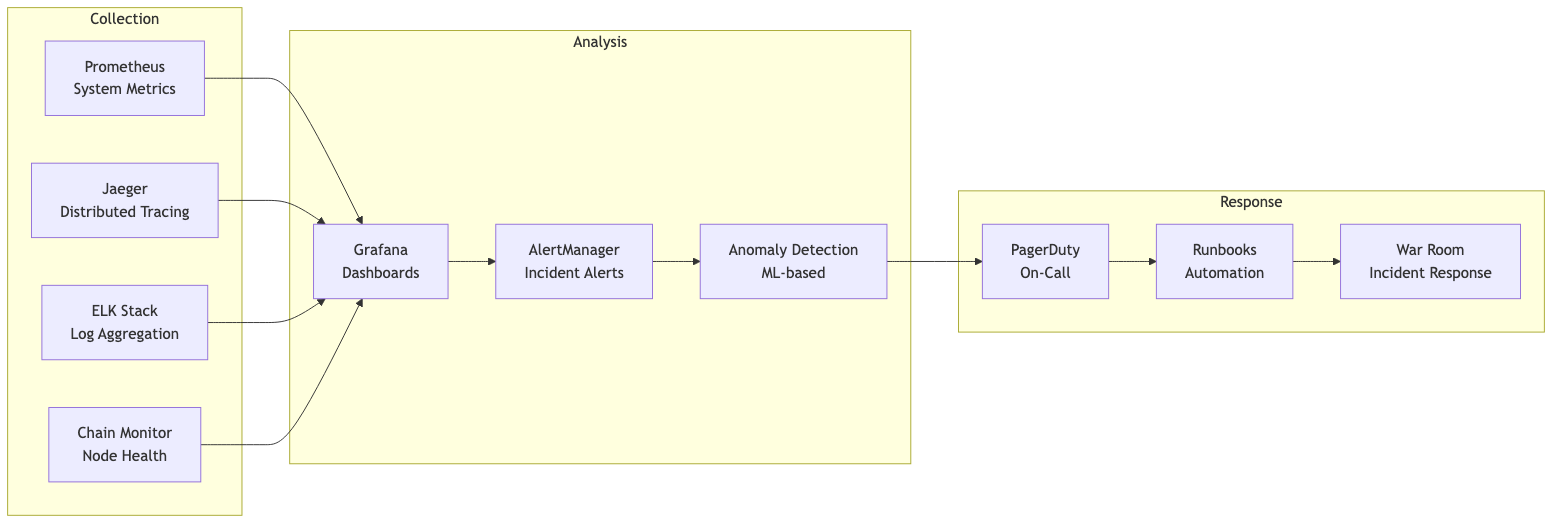
Jaeger
AlertManager
Anomaly Detection
War Room
Jaeger
AlertManager
Anomaly Detection
War Room
Trading Latency : Order-to-fill timeBlockchain Sync : Node lag behind chain tipWallet Balance : Hot wallet thresholdsAPI Availability : Uptime and error rates
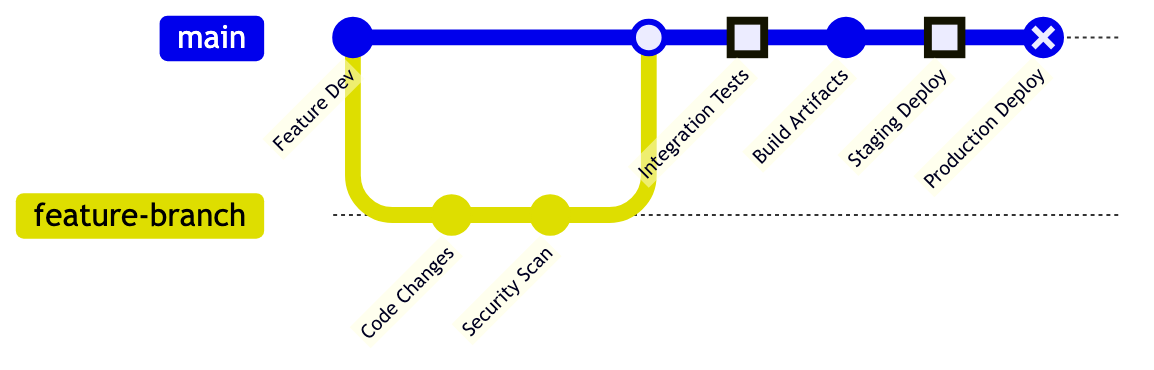
main feature-branch Feature Dev Code Changes Security Scan Integration Tests Build Artifacts Staging Deploy Production Deploy main feature-branch Feature Dev Code Changes Security Scan Integration Tests Build Artifacts Staging Deploy Production Deploy
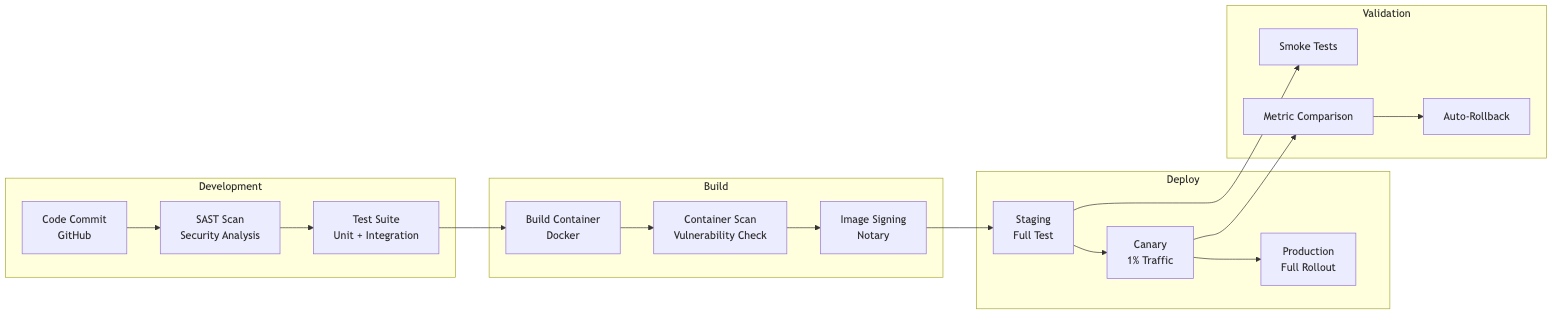
SAST Scan
Test Suite
Container Scan
SAST Scan
Test Suite
Container Scan
Kubernetes : Container orchestrationAWS/GCP : Multi-cloud deploymentTerraform : Infrastructure as codeVault : Secrets management
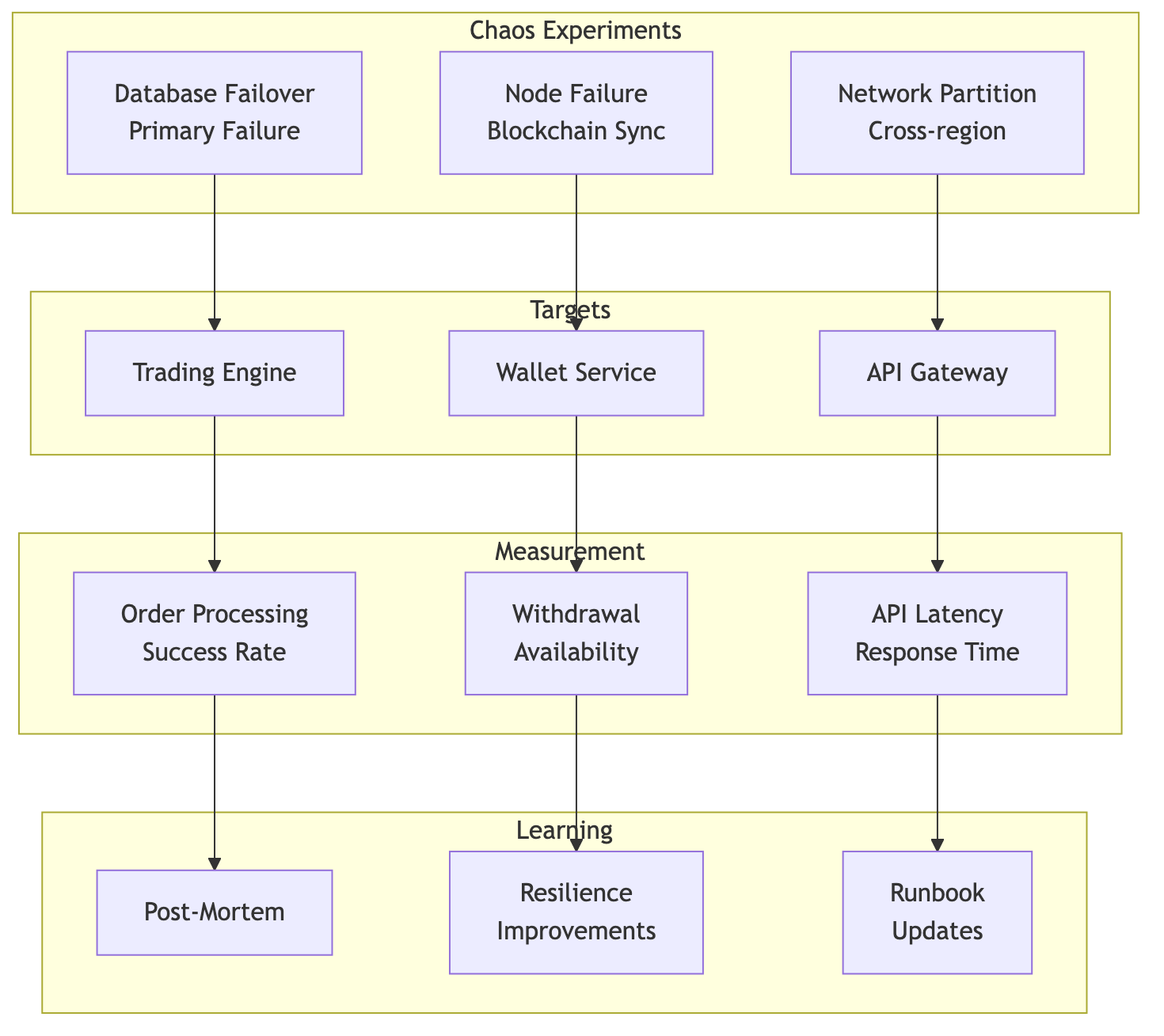
Node Failure
Database Failover
Network Partition
Order Processing
Node Failure
Database Failover
Network Partition
Order Processing
Practices:
GameDay Exercises : Quarterly disaster simulationsBlockchain Fork Handling : Chain reorganization testsHot Wallet Compromise : Security incident drillsTrading Halt : Circuit breaker testing
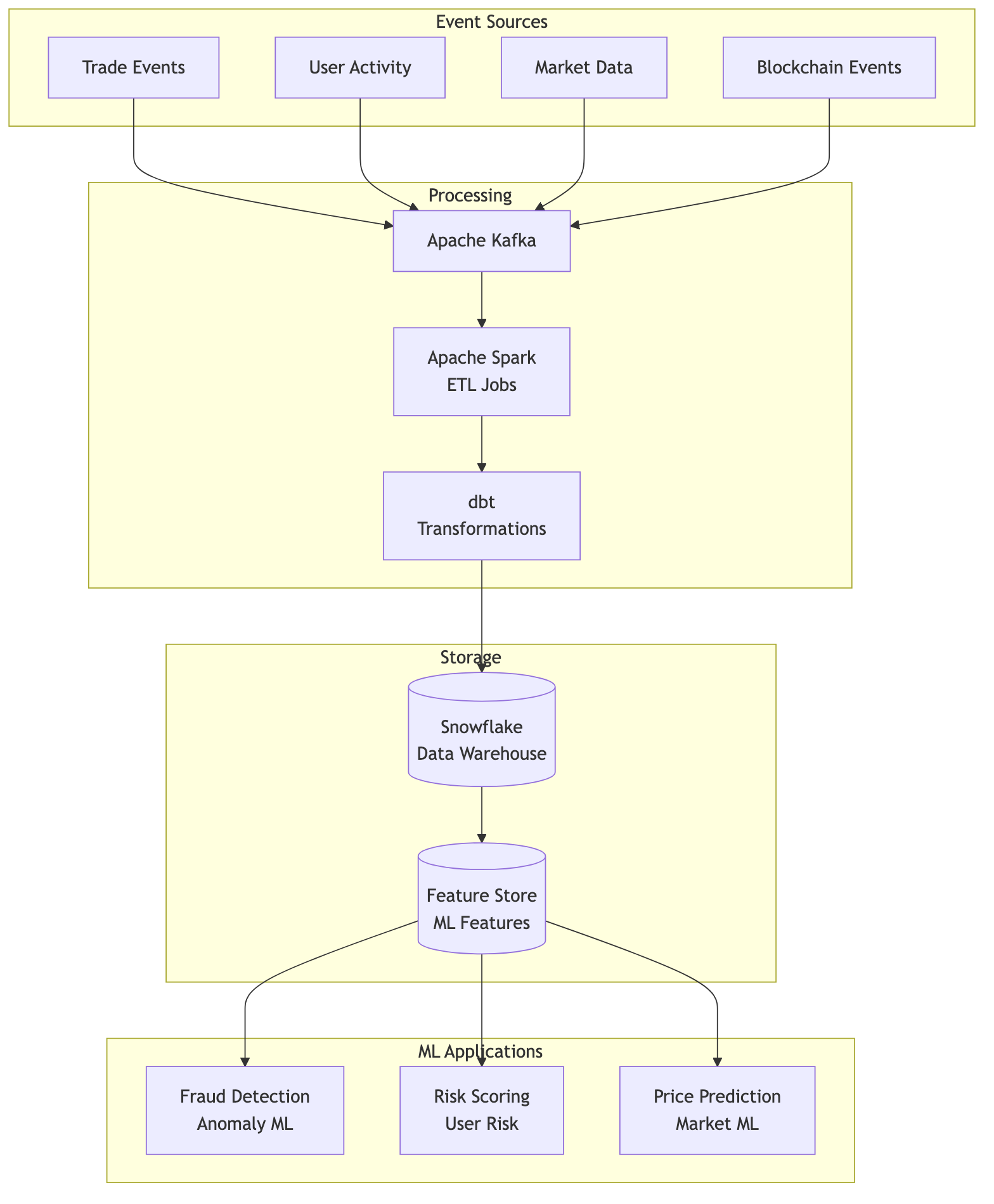
Fraud Detection
Price Prediction
Fraud Detection
Price Prediction
Fraud Detection : Suspicious transaction patternsAccount Takeover Prevention : Login anomaly detectionMarket Manipulation : Wash trading detectionRisk Scoring : User and transaction risk assessmentPrice Alerts : Intelligent notification timing
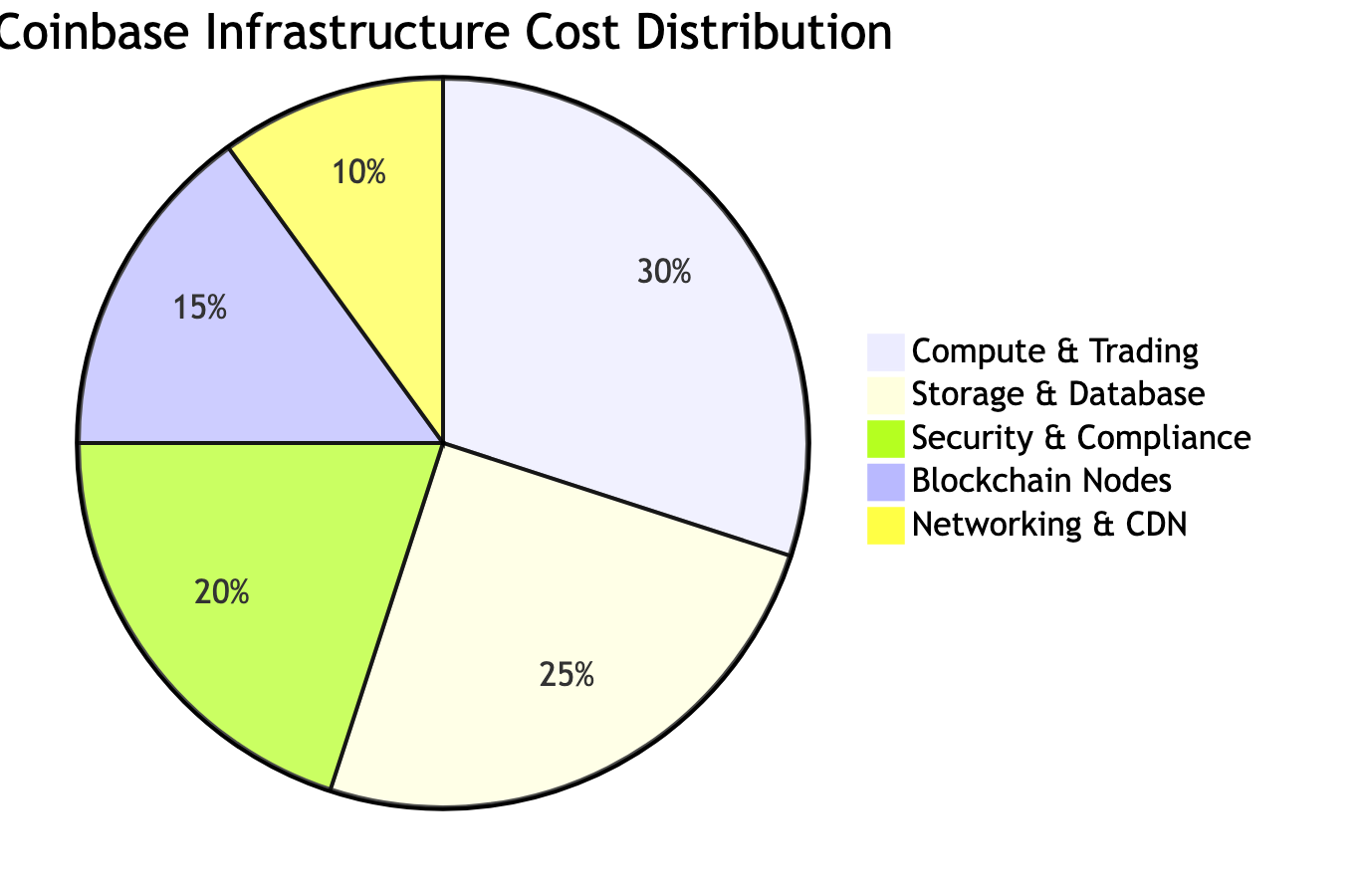
30% 25% 20% 15% 10% Coinbase Infrastructure Cost Distribution Compute & Trading Storage & Database Security & Compliance Blockchain Nodes Networking & CDN 30% 25% 20% 15% 10% Coinbase Infrastructure Cost Distribution Compute & Trading Storage & Database Security & Compliance Blockchain Nodes Networking & CDN
Reserved Instances
Spot Instances
Tiered Storage
Data Compression
Archive Policy
Shared Node Infrastructure
Pruned Nodes
Light Clients
Reserved Instances
Spot Instances
Tiered Storage
Data Compression
Archive Policy
Shared Node Infrastructure
Pruned Nodes
Light Clients
Reserved Capacity : Predictable trading infrastructure costsBlockchain Node Optimization : Shared infrastructure where possibleMarket Data Tiering : Archive old tick dataGeographic Optimization : Region-based cost efficiency
Layer 2 Scaling : Lightning Network, Optimistic RollupsDeFi Integration : Protocol integration, yield productsNFT Infrastructure : Marketplace and mintingCBDC Readiness : Central bank digital currency support
Base L2 : Ethereum Layer 2 scaling solutionInternational Expansion : New market regulatory complianceInstitutional Products : Prime brokerage servicesStaking Services : Proof-of-stake validation
Multi-Cloud : Enhanced resilience across providersEdge Computing : Reduced latency for global usersZero-Knowledge Proofs : Privacy-preserving complianceQuantum Resistance : Post-quantum cryptography
Coinbase's architecture demonstrates how to build a secure, compliant cryptocurrency exchange at scale. The combination of robust trading infrastructure, industry-leading security practices, and comprehensive compliance systems enables Coinbase to serve millions of users while maintaining regulatory trust.
The platform continues to evolve with new blockchain integrations, Layer 2 solutions, and expanded institutional services, all while maintaining the security and reliability that users expect from a regulated financial institution.
There might be iterations needed, current data is as close I could get.
 Masst Docs