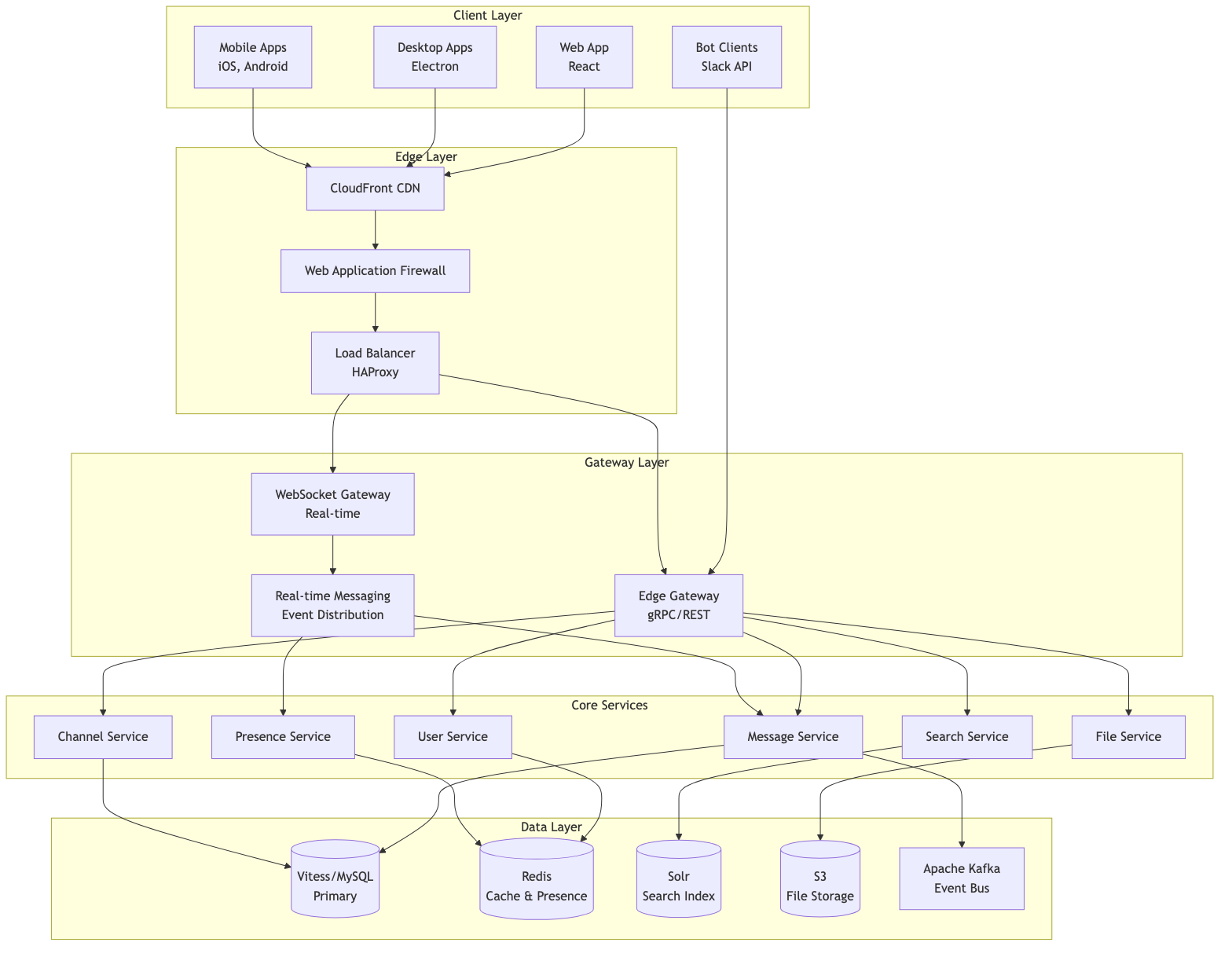
Slack 🏗️ Slack serves 20+ million daily active users across 750,000+ organizations, delivering billions of messages daily with real-time presence and sub-100ms message delivery. This document outlines the comprehensive architecture that powers enterprise team communication at scale.
WebSocket Gateway
Real-time Messaging
WebSocket Gateway
Real-time Messaging
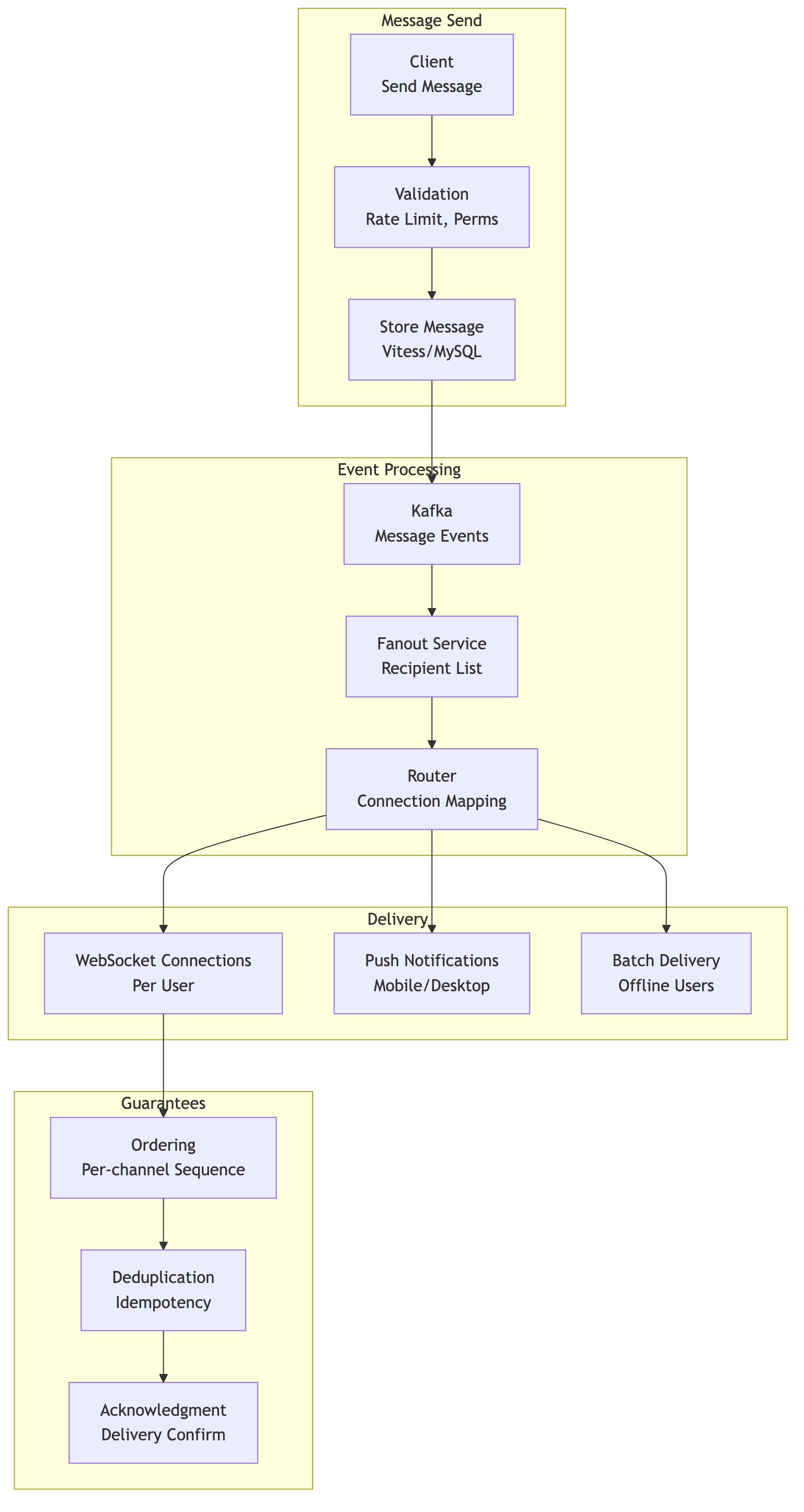
Slack's core real-time messaging system delivers billions of messages daily.
Validation
Store Message
Fanout Service
WebSocket Connections
Push Notifications
Batch Delivery
Ordering
Acknowledgment
Validation
Store Message
Fanout Service
WebSocket Connections
Push Notifications
Batch Delivery
Ordering
Acknowledgment
Real-time Features:
Sub-100ms Delivery : P99 message latencyWebSocket Connections : Persistent bi-directional channelsOrdered Delivery : Consistent message ordering per channelReconnection Handling : Seamless recovery from disconnects
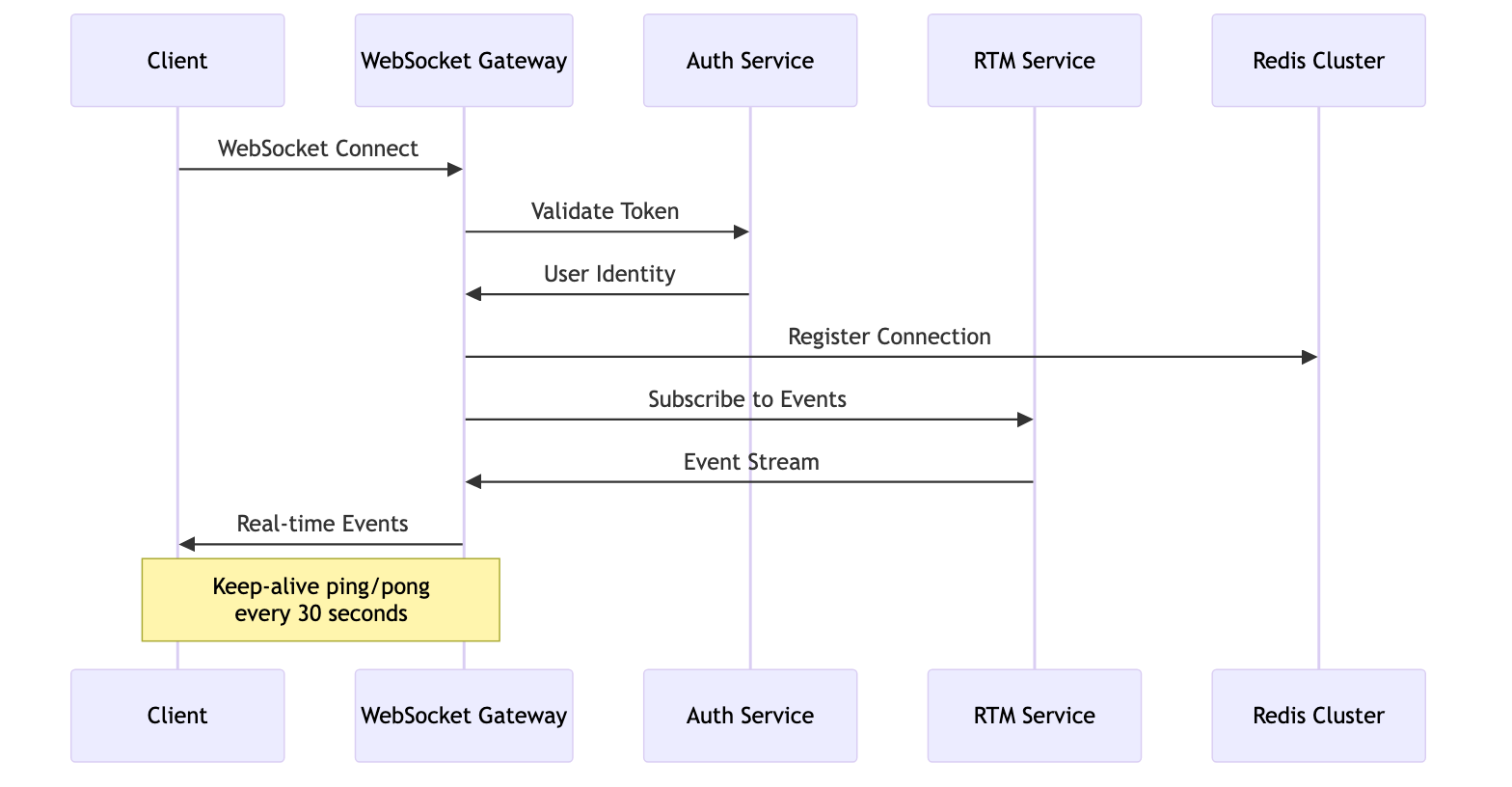
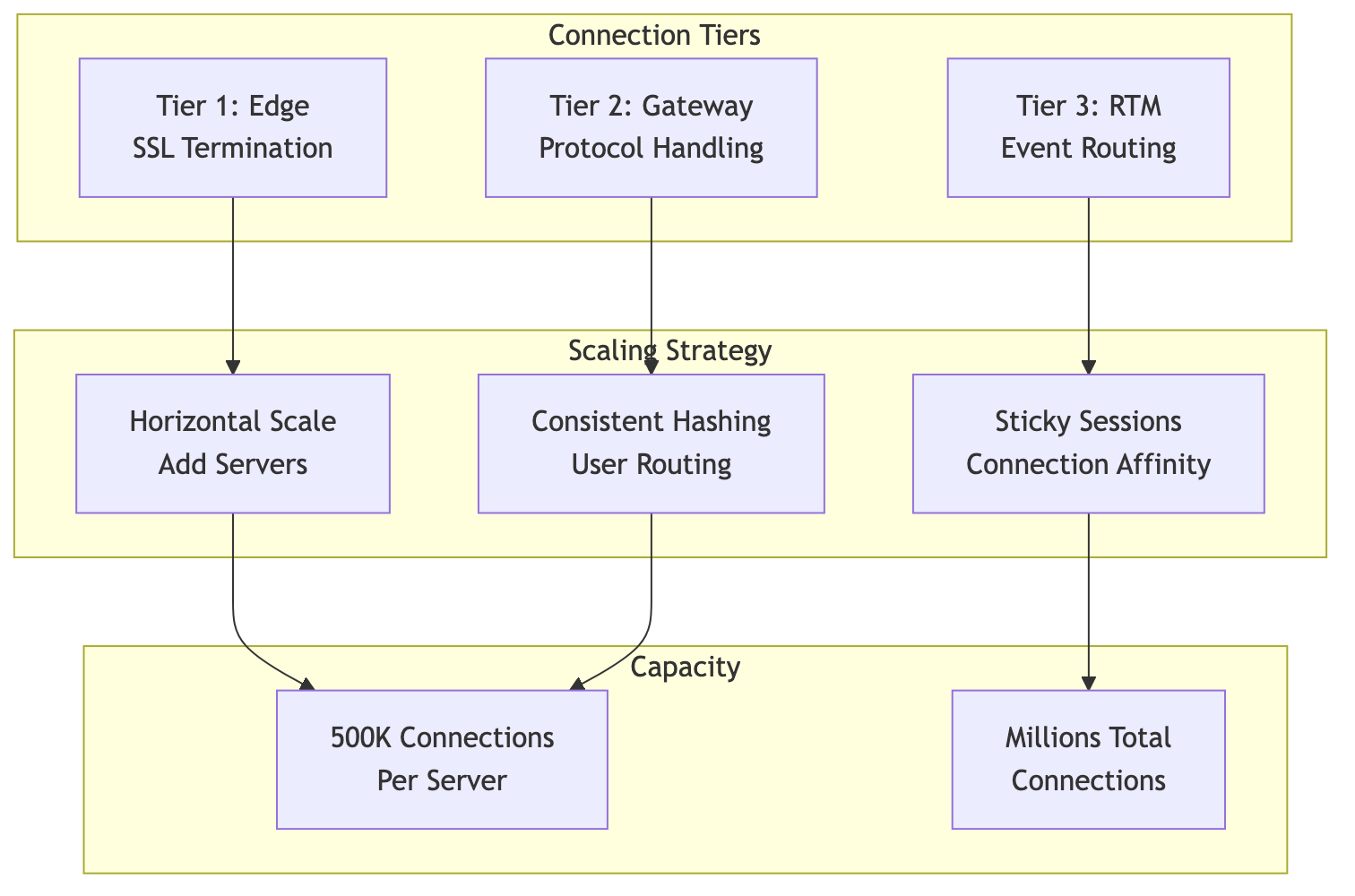
Manages millions of concurrent connections.
Redis Cluster RTM Service Auth Service WebSocket Gateway Client Redis Cluster RTM Service Auth Service WebSocket Gateway Client Keep-alive ping/pong every 30 seconds WebSocket Connect Validate Token User Identity Register Connection Subscribe to Events Event Stream Real-time Events Redis Cluster RTM Service Auth Service WebSocket Gateway Client Redis Cluster RTM Service Auth Service WebSocket Gateway Client Keep-alive ping/pong every 30 seconds WebSocket Connect Validate Token User Identity Register Connection Subscribe to Events Event Stream Real-time Events Gateway Architecture:
Connection Management : 500K+ connections per serverProtocol : WebSocket with custom binary protocolHeartbeat : Keep-alive for connection healthGraceful Degradation : Fallback to long-polling
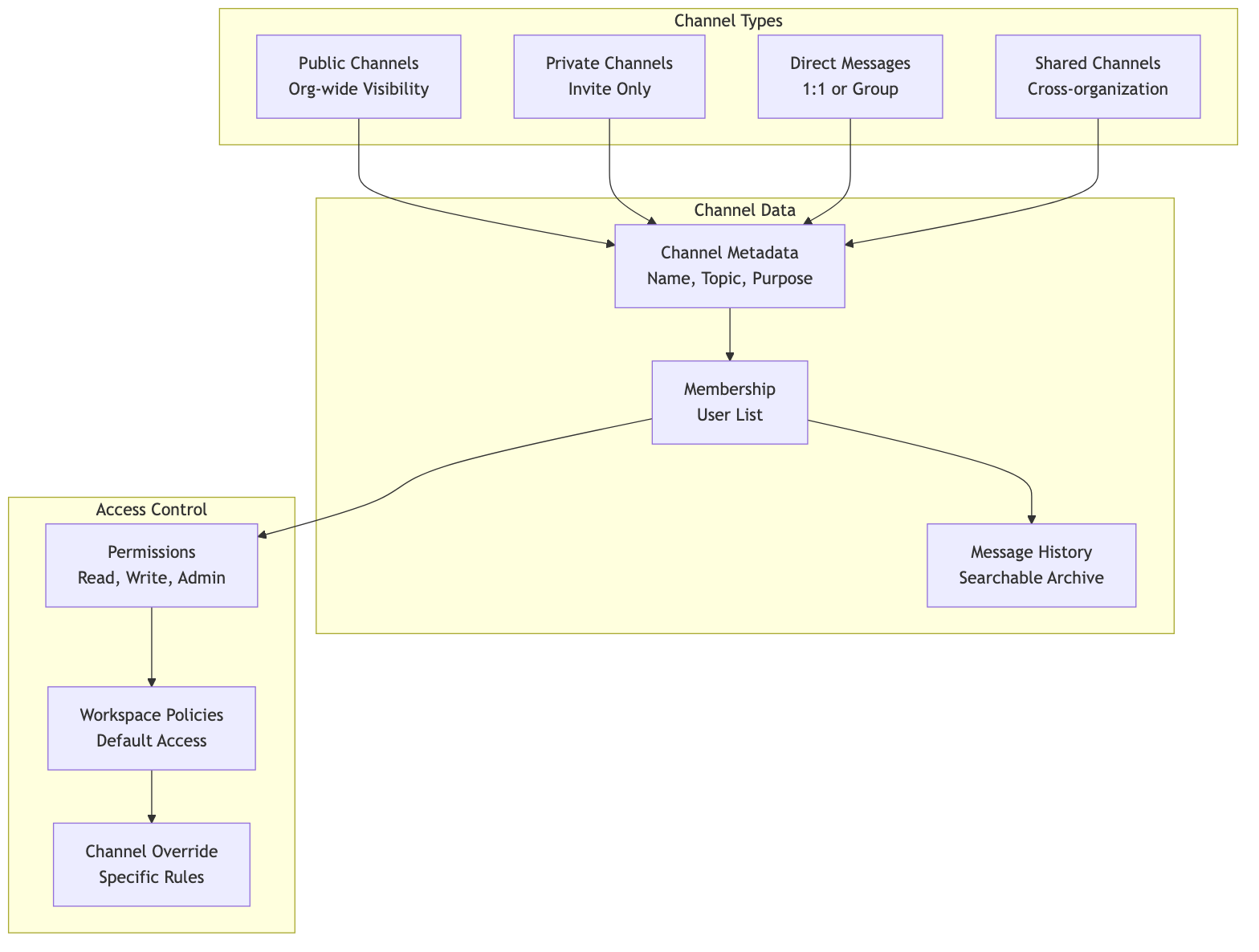
Supports channels with 10K+ members efficiently.
Public Channels
Private Channels
Direct Messages
Shared Channels
Channel Metadata
Message History
Permissions
Workspace Policies
Channel Override
Public Channels
Private Channels
Direct Messages
Shared Channels
Channel Metadata
Message History
Permissions
Workspace Policies
Channel Override
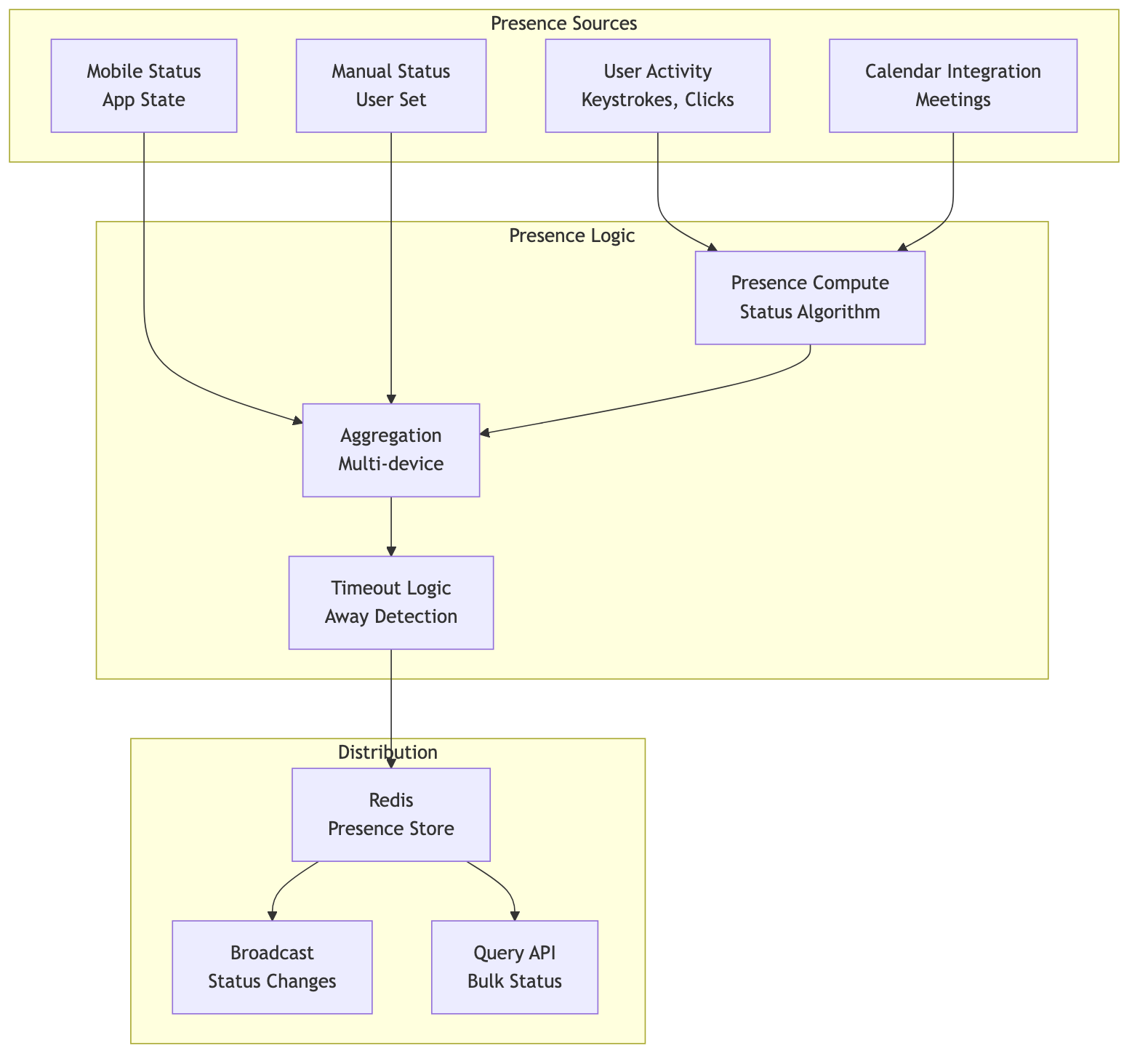
Real-time user status across the platform.
User Activity
Calendar Integration
Presence Compute
Timeout Logic
User Activity
Calendar Integration
Presence Compute
Timeout Logic
Presence Features:
Real-time Updates : Instant status propagationMulti-device : Aggregate presence across devicesCustom Status : Emoji and text statusDND Mode : Notification suppression
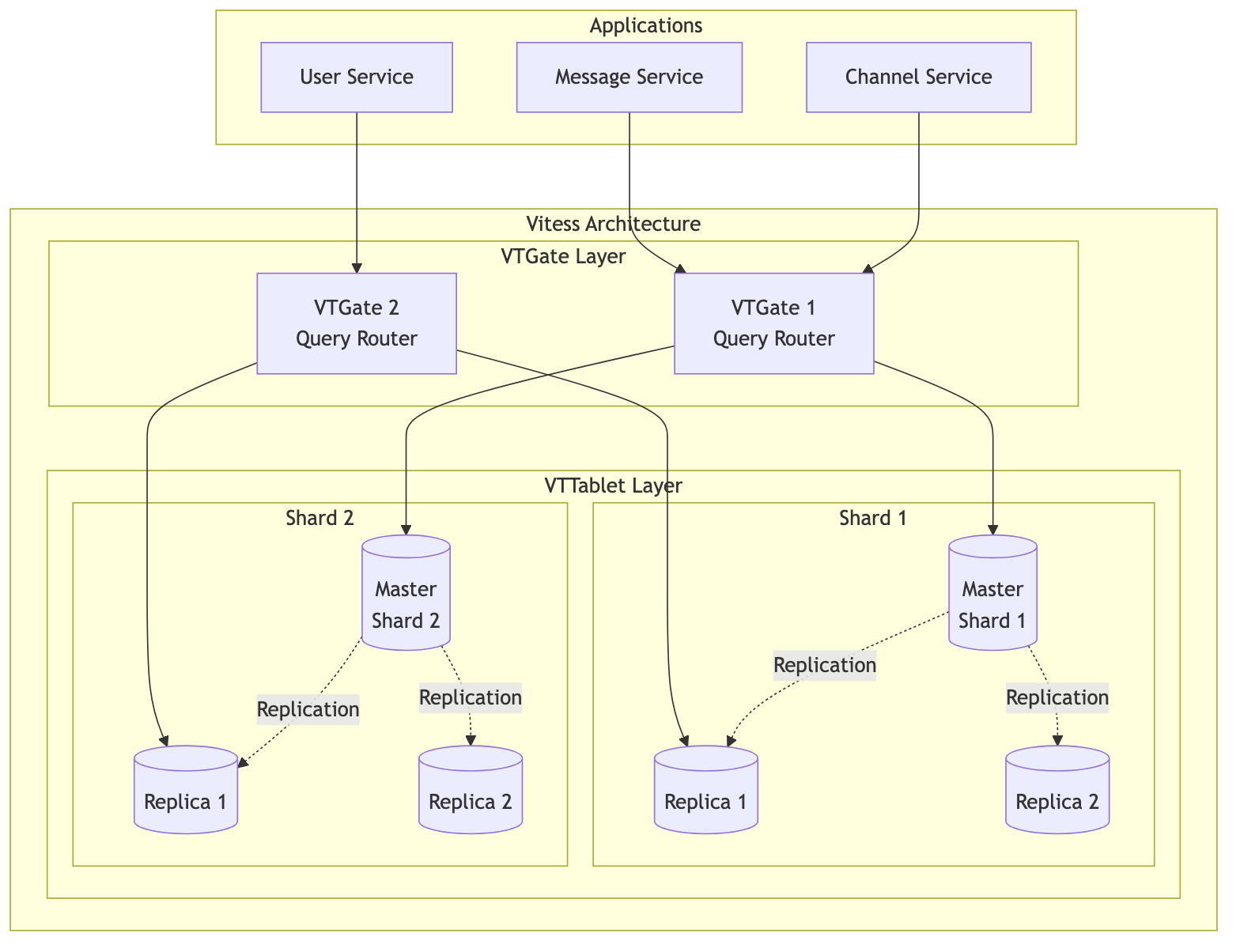
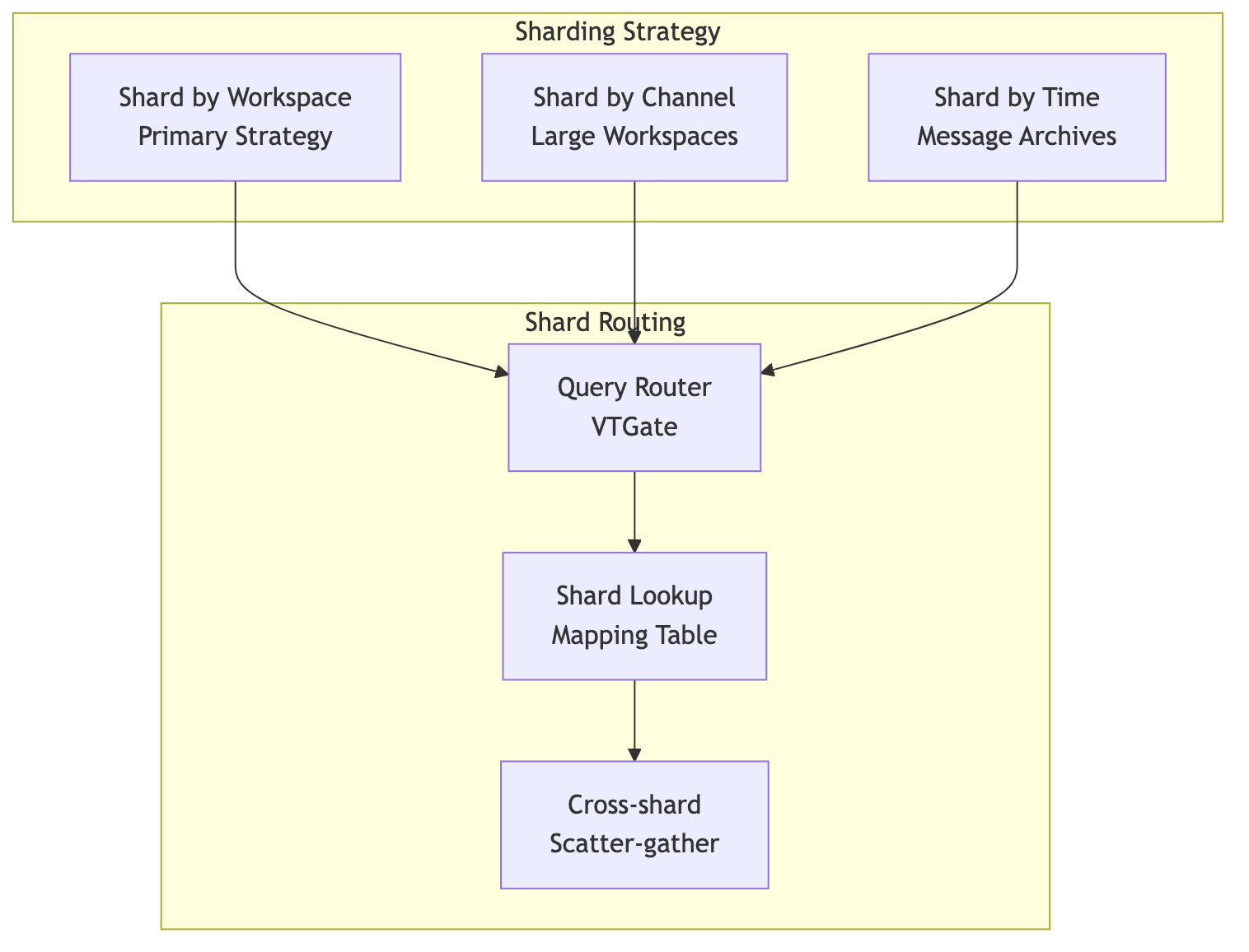
Vitess Benefits:
Horizontal Scaling : Shard by workspace/channelConnection Pooling : Efficient MySQL connectionsQuery Routing : Automatic shard selectionOnline Resharding : Zero-downtime splits
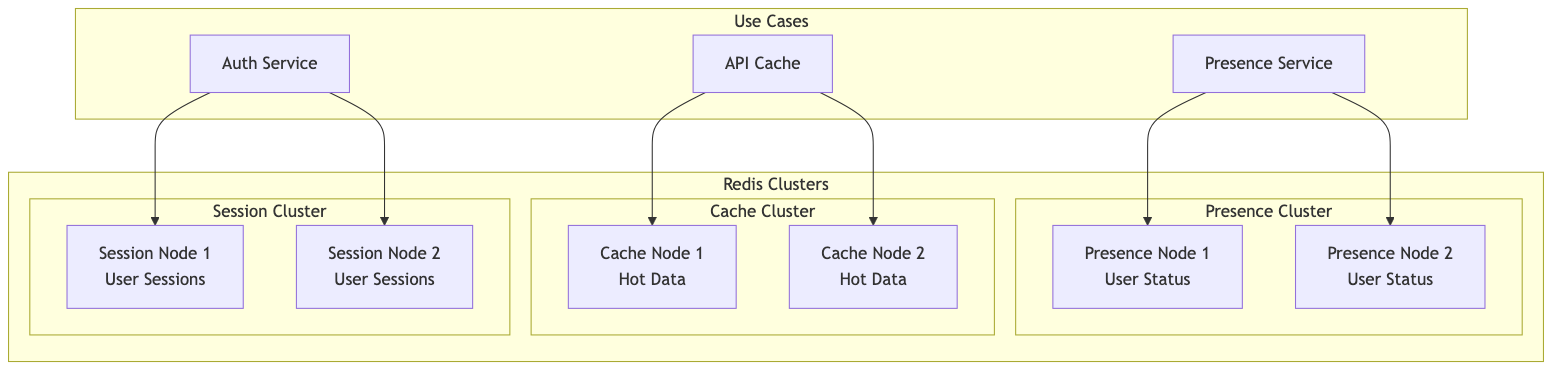
Presence Node 1
Presence Node 2
Session Node 1
Session Node 2
Presence Node 1
Presence Node 2
Session Node 1
Session Node 2
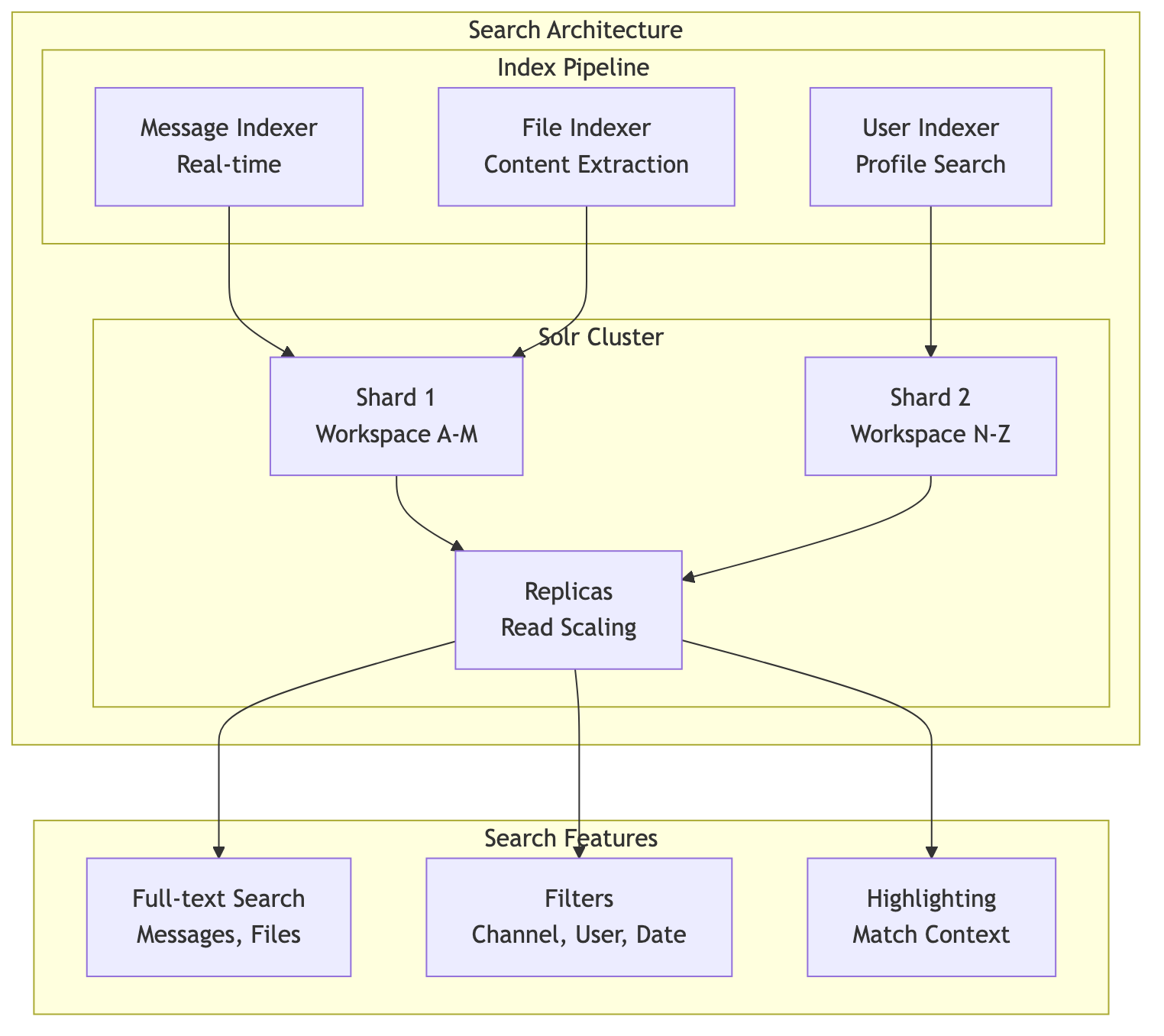
File Indexer
User Indexer
Full-text Search
Filters
Highlighting
File Indexer
User Indexer
Full-text Search
Filters
Highlighting
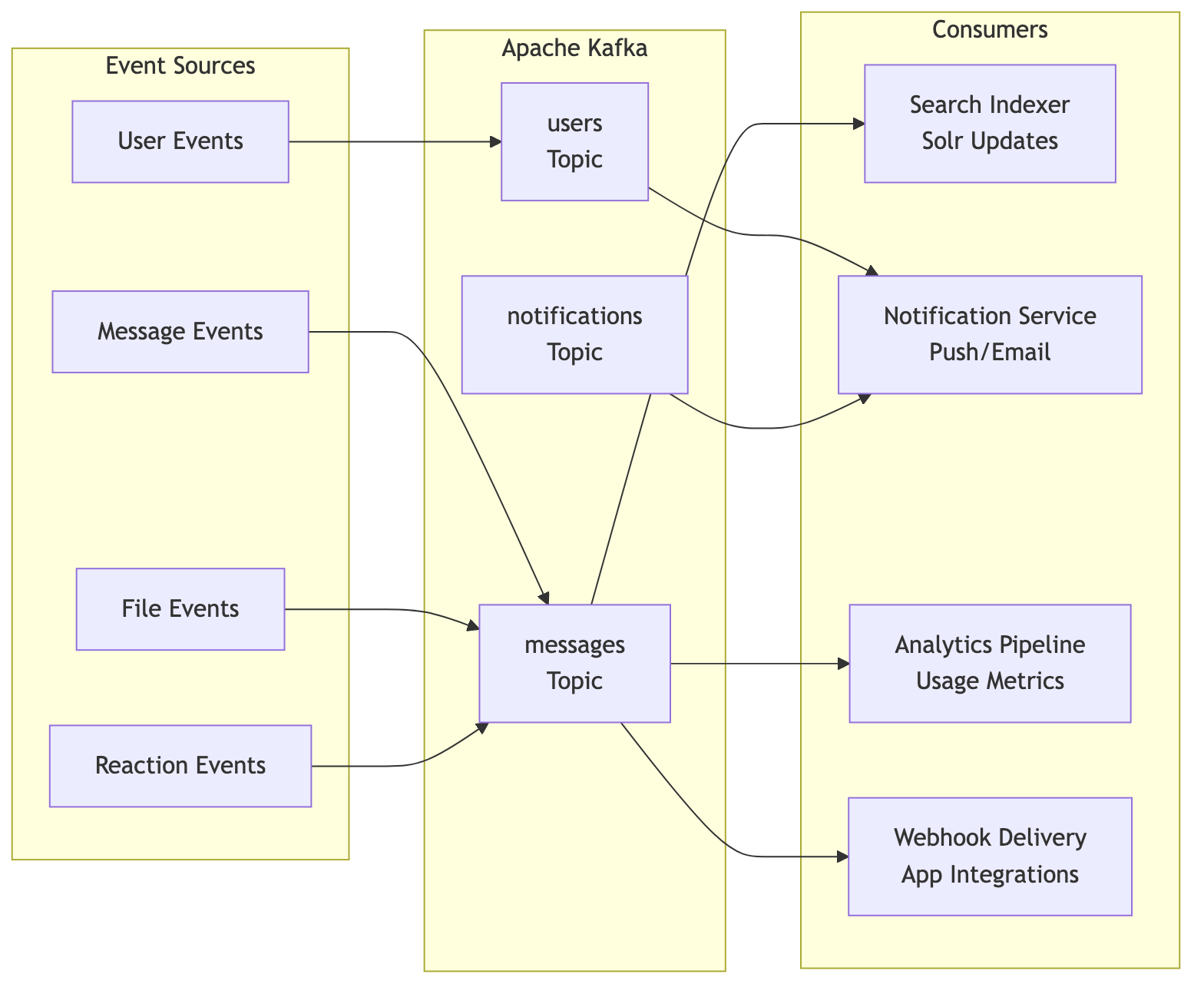
Search Indexer
Notification Service
Analytics Pipeline
Webhook Delivery
Search Indexer
Notification Service
Analytics Pipeline
Webhook Delivery
Kafka : Millions of events per secondReal-time Indexing : Sub-second search updatesWebhook Delivery : Reliable app notificationsAnalytics : Real-time usage tracking
Tier 1: Edge
Tier 2: Gateway
Horizontal Scale
Consistent Hashing
Sticky Sessions
500K Connections
Millions Total
Tier 1: Edge
Tier 2: Gateway
Horizontal Scale
Consistent Hashing
Sticky Sessions
500K Connections
Millions Total
Announcements
Lazy Loading
Notification Only
> 1000 Members
Batched Fanout
Priority Queue
Announcements
Lazy Loading
Notification Only
> 1000 Members
Batched Fanout
Priority Queue
Shard by Workspace
Shard by Channel
Shard by Time
Shard Lookup
Cross-shard
Shard by Workspace
Shard by Channel
Shard by Time
Shard Lookup
Cross-shard
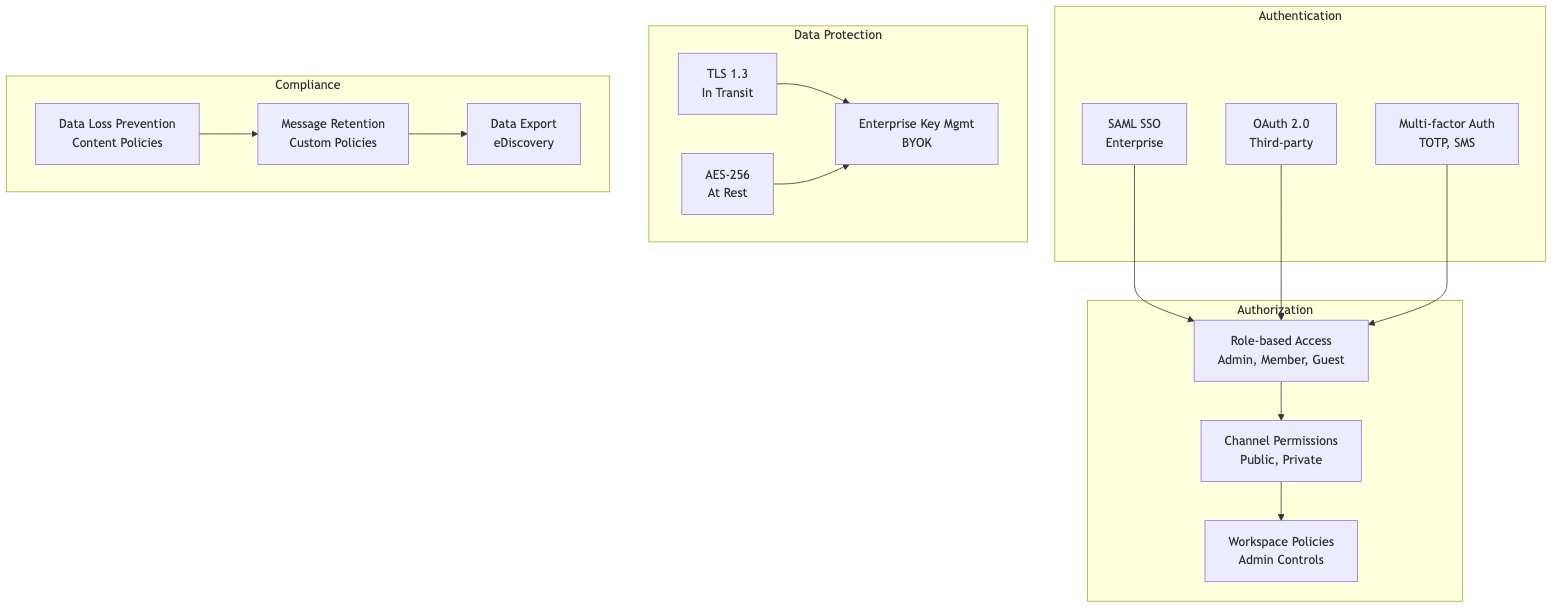
Data Loss Prevention
Message Retention
Multi-factor Auth
Role-based Access
Channel Permissions
Workspace Policies
Data Loss Prevention
Message Retention
Multi-factor Auth
Role-based Access
Channel Permissions
Workspace Policies
Enterprise Key Management : Customer-controlled keysData Residency : Region-specific data storageAudit Logs : Comprehensive activity trackingDLP Integration : Third-party DLP support
SOC 2 Type II : Security controls auditGDPR : European data protectionHIPAA : Healthcare compliance (Enterprise Grid)FedRAMP : Government authorization
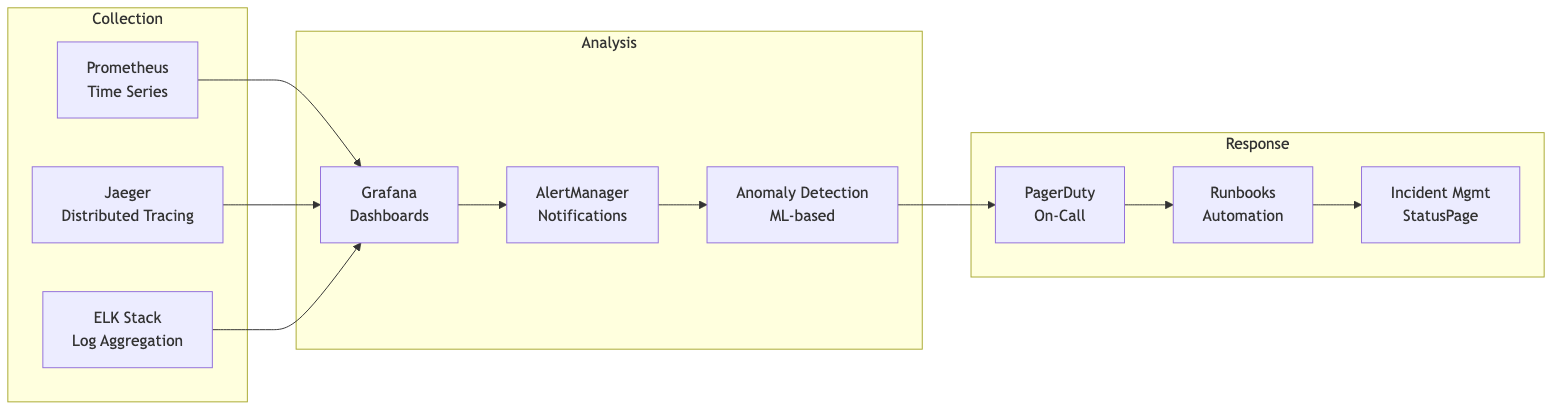
Jaeger
AlertManager
Anomaly Detection
Jaeger
AlertManager
Anomaly Detection
Message Delivery Latency : P50, P95, P99WebSocket Connection Health : Success rate, reconnectionsAPI Latency : Endpoint-level response timesSearch Latency : Query response times
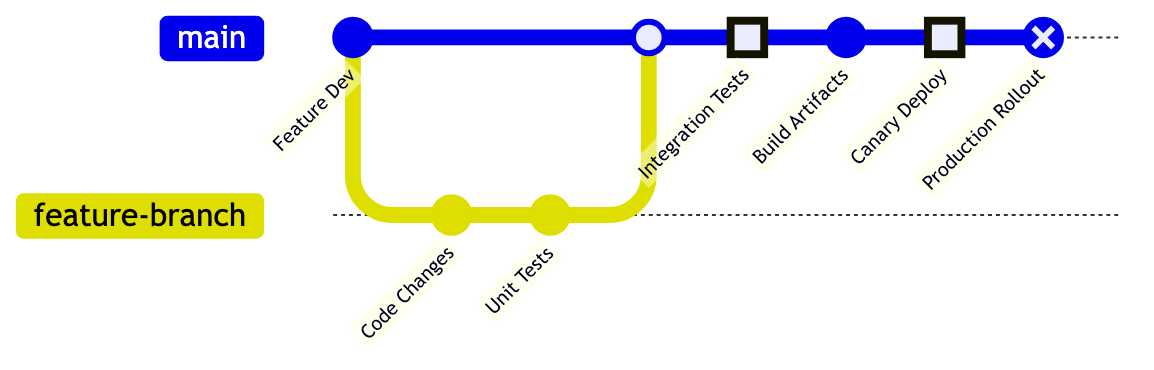
main feature-branch Feature Dev Code Changes Unit Tests Integration Tests Build Artifacts Canary Deploy Production Rollout main feature-branch Feature Dev Code Changes Unit Tests Integration Tests Build Artifacts Canary Deploy Production Rollout
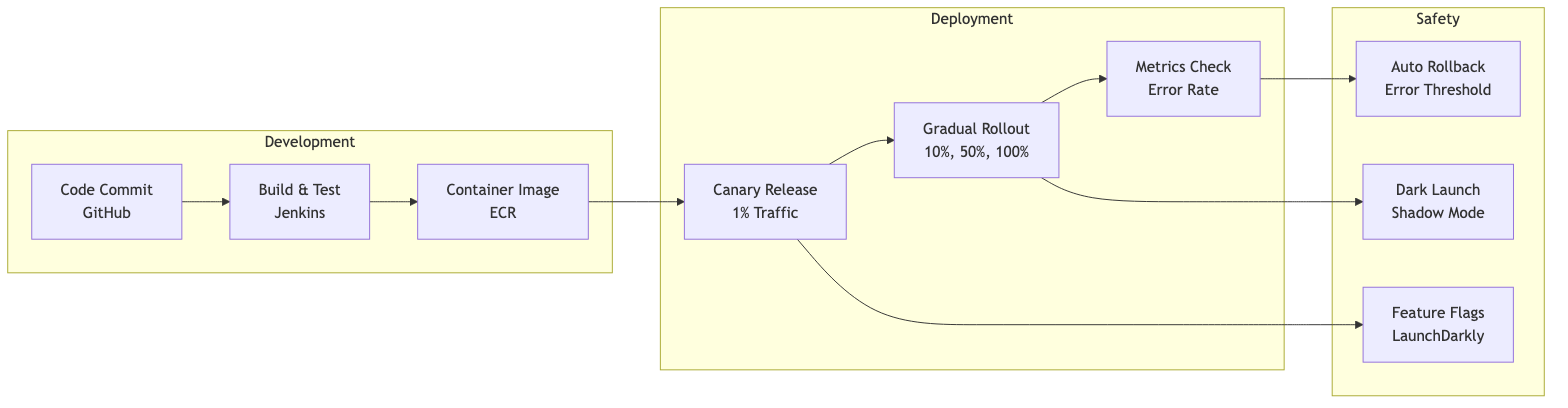
Gradual Rollout
Auto Rollback
Feature Flags
Gradual Rollout
Auto Rollback
Feature Flags
Kubernetes : Container orchestrationAWS : Primary cloud providerTerraform : Infrastructure as codeConsul : Service discovery
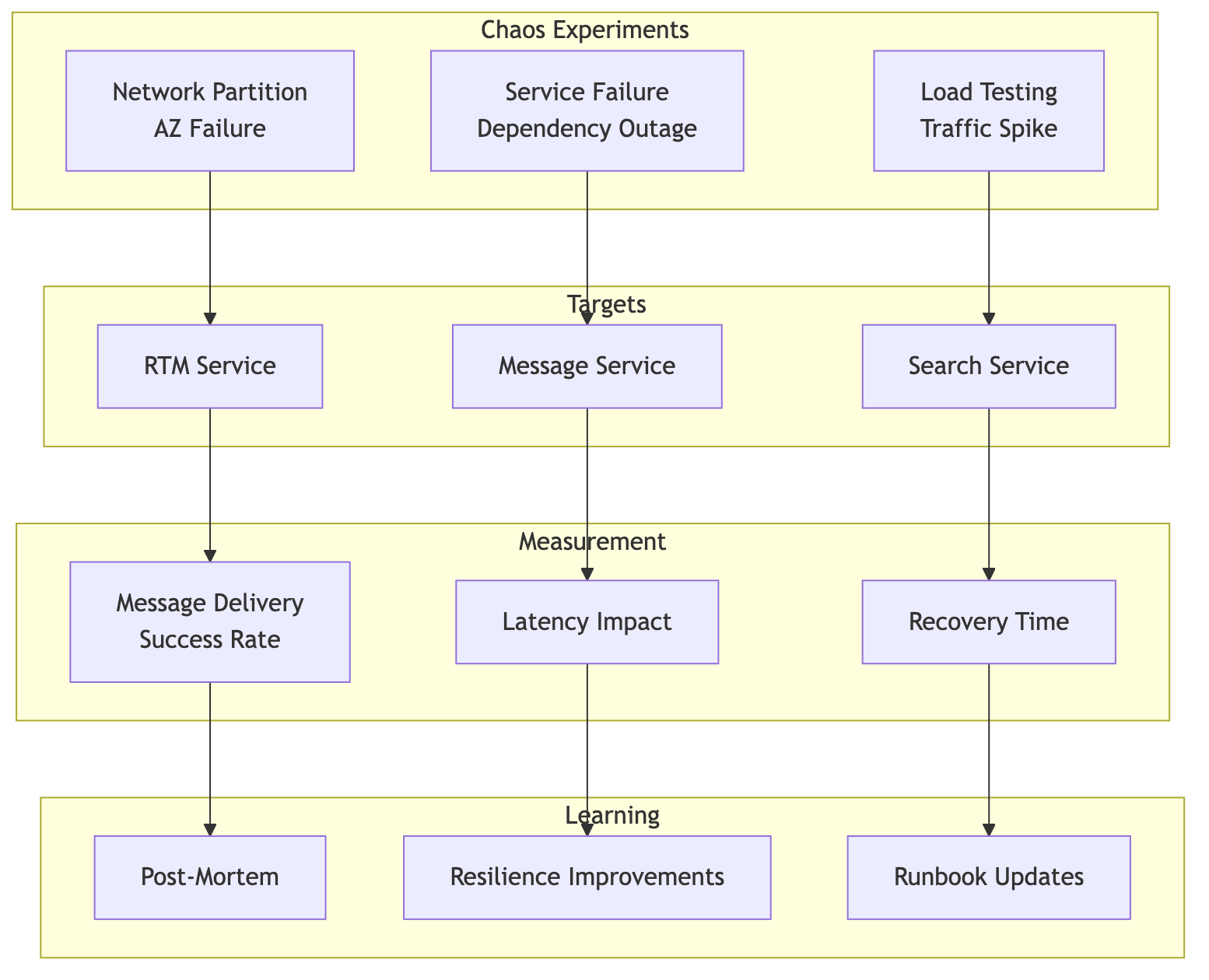
Network Partition
Service Failure
Load Testing
Message Delivery
Network Partition
Service Failure
Load Testing
Message Delivery
Practices:
GameDay Exercises : Quarterly failure simulationsChaos Monkey : Random service terminationLoad Testing : 10x normal traffic simulationAZ Failover : Regular availability zone drills
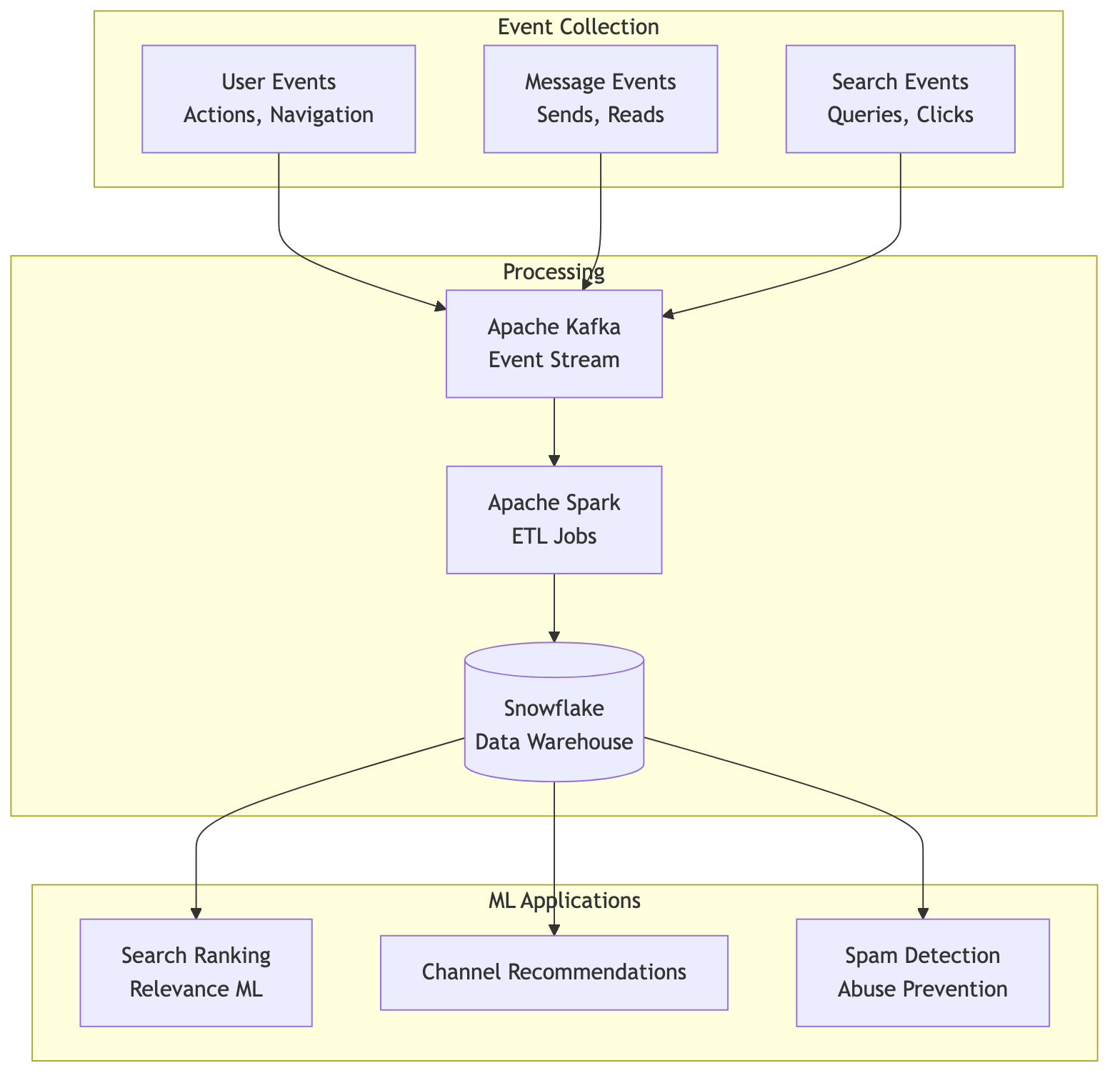
User Events
Message Events
Search Events
Search Ranking
Spam Detection
User Events
Message Events
Search Events
Search Ranking
Spam Detection
Search Ranking : Personalized result orderingChannel Suggestions : Recommend relevant channelsSpam Detection : Automated abuse preventionSmart Notifications : Intelligent alert timingEmoji Predictions : Suggested reactions
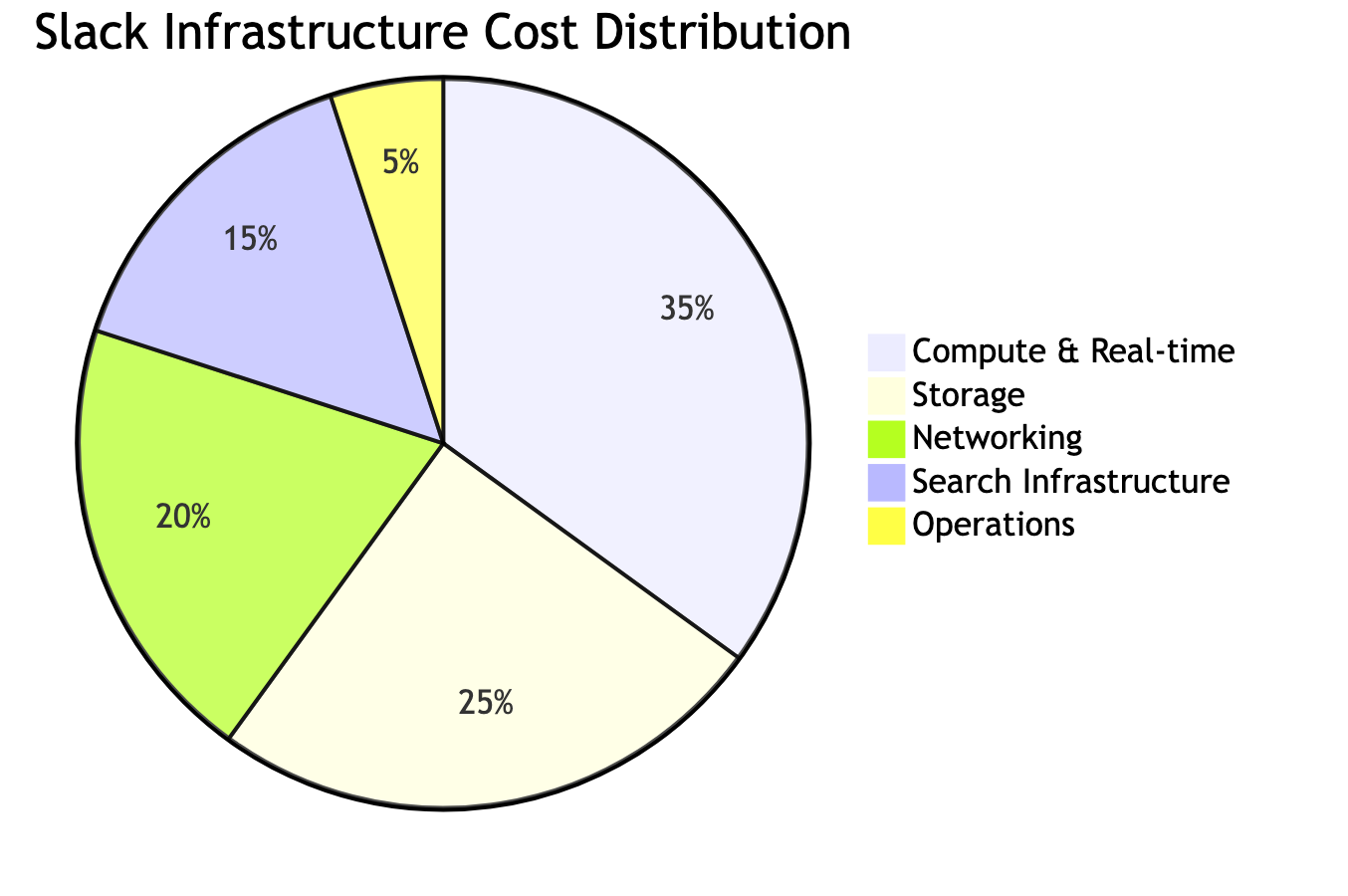
35% 25% 20% 15% 5% Slack Infrastructure Cost Distribution Compute & Real-time Storage Networking Search Infrastructure Operations 35% 25% 20% 15% 5% Slack Infrastructure Cost Distribution Compute & Real-time Storage Networking Search Infrastructure Operations
Spot Instances
Reserved Capacity
Auto-scaling
Tiered Storage
Archive Policy
Protocol Optimization
Batch API Calls
Spot Instances
Reserved Capacity
Auto-scaling
Tiered Storage
Archive Policy
Protocol Optimization
Batch API Calls
Message Compression : 40% storage reductionConnection Multiplexing : Efficient WebSocket usageTiered Storage : Archive old messages to cold storageReserved Instances : Predictable baseline costs
WebRTC Integration : Native audio/video callsAI Assistance : Smart message suggestionsWorkflow Automation : No-code automation toolsEdge Computing : Lower latency for global users
Salesforce Integration : Deeper CRM integrationCanvas : Rich document collaborationClips : Async video messagingHuddles : Lightweight audio calls
Multi-Cloud : Resilience through cloud diversityGlobal Expansion : New regions for data residencyZero-Trust Security : Enhanced security modelSustainable Computing : Carbon-neutral operations
Slack's architecture demonstrates how to build a real-time collaboration platform at scale. The combination of WebSocket-based real-time messaging, Vitess-powered database sharding, and efficient presence tracking enables Slack to deliver reliable communication for millions of teams.
The platform continues to evolve with deeper enterprise integrations, enhanced AI capabilities, and improved collaboration features, all while maintaining the real-time responsiveness that users depend on for productive teamwork.
There might be iterations needed, current data is as close I could get.
 Masst Docs