
Architecture
Service Mesh
Understanding service mesh for microservices communication.
3 min readConcepts · System Design
What is a Service Mesh?
A Service Mesh is a dedicated infrastructure layer that handles service-to-service communication. It manages traffic, security, and observability without changing application code.
Without vs With Service Mesh
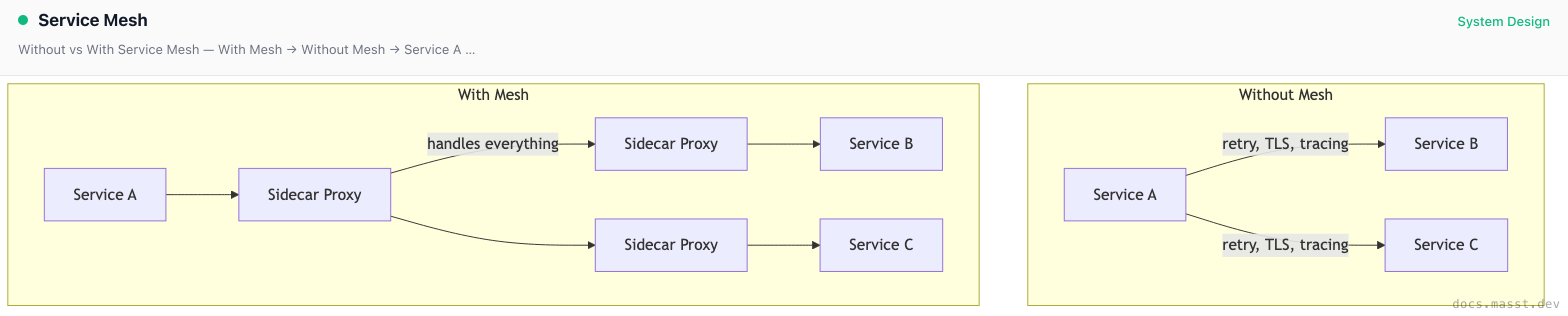
Architecture
Sidecar Pattern
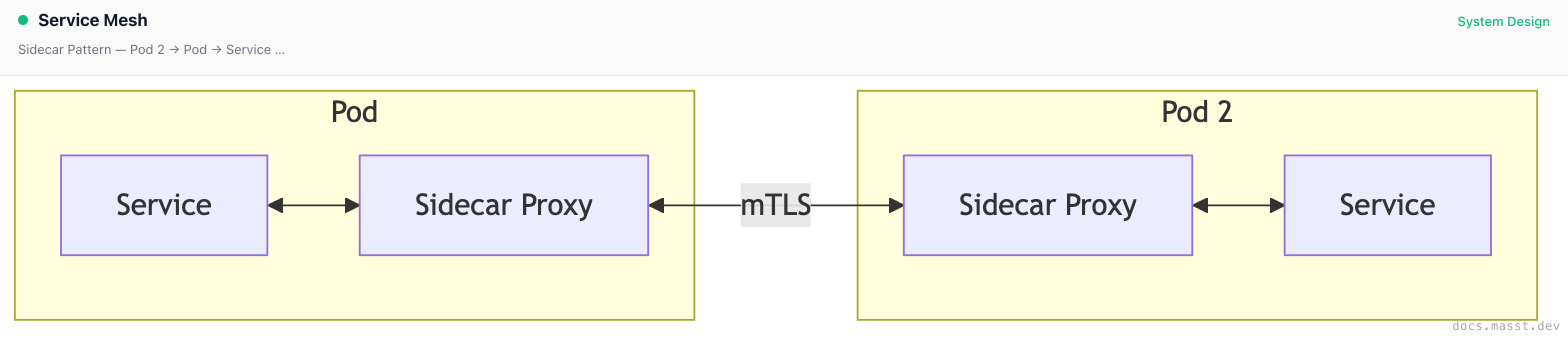
Every service instance gets a sidecar proxy. All traffic flows through the proxy.
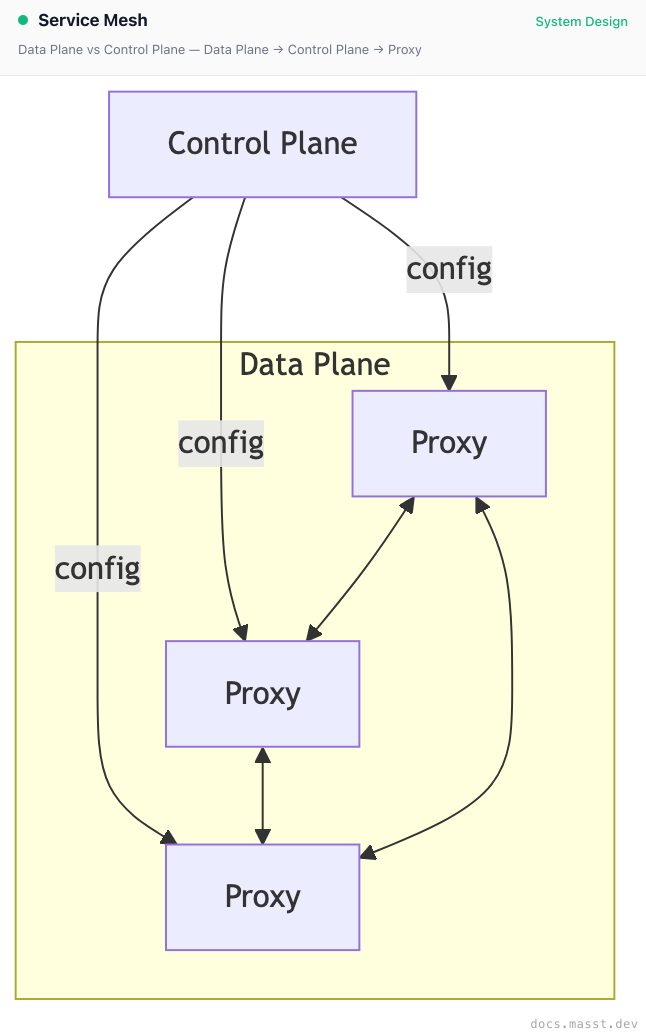
Data Plane vs Control Plane
| Component | Role |
|---|---|
| Data Plane | Sidecar proxies handling actual traffic |
| Control Plane | Manages proxy configuration and policies |
Key Features
| Feature | Description |
|---|---|
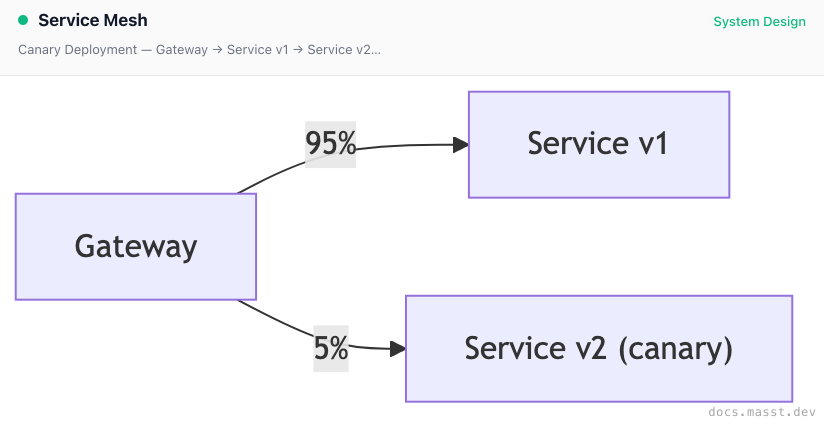
| Traffic management | Load balancing, routing, canary deployments |
| Security | mTLS, authorization policies |
| Observability | Metrics, tracing, logging |
| Resilience | Retries, timeouts, circuit breaking |
| Rate limiting | Control request rates between services |
Traffic Management
Canary Deployment
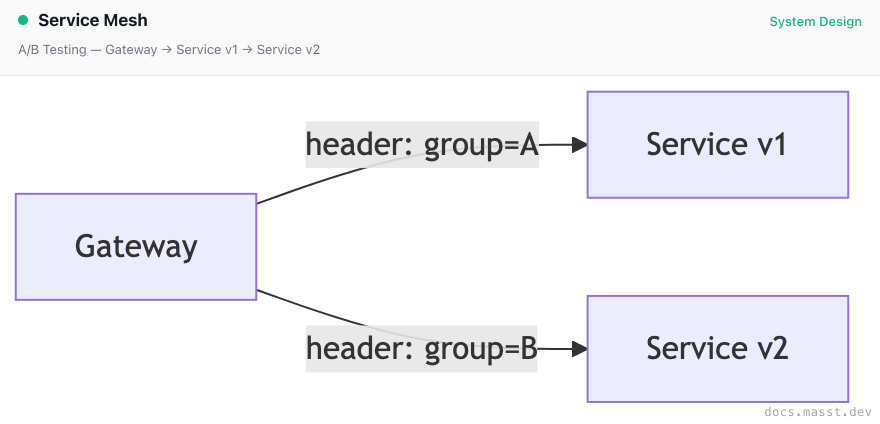
A/B Testing
Security: Mutual TLS
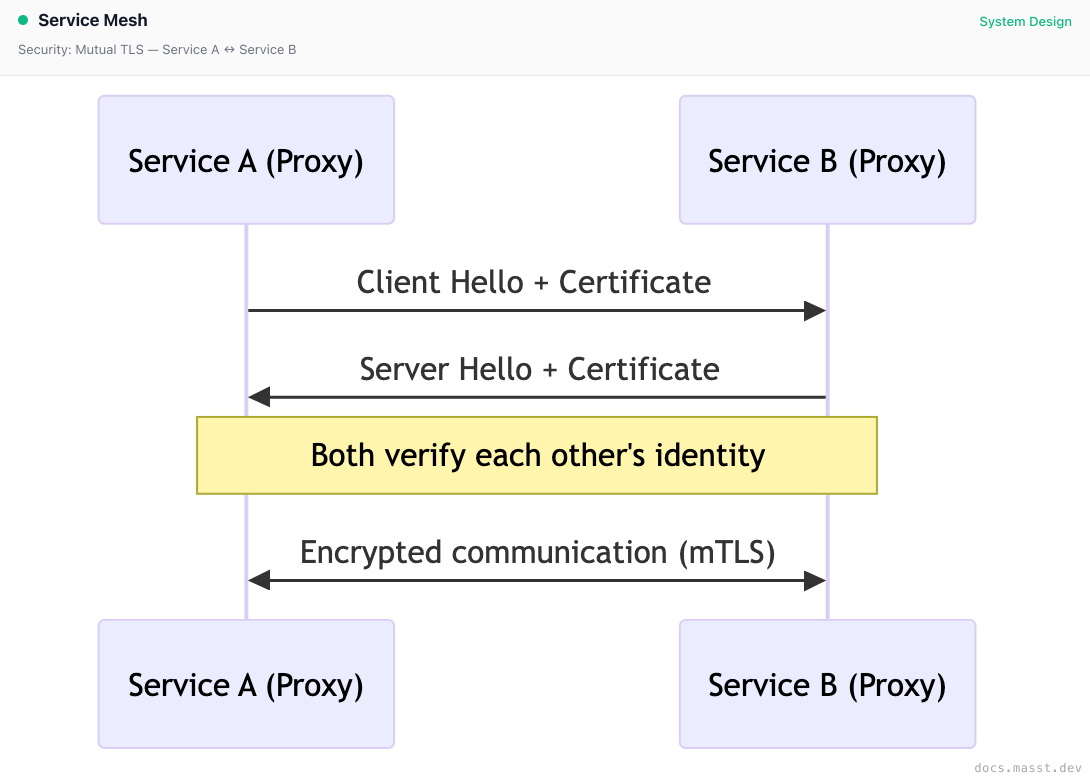
All service-to-service traffic is encrypted and authenticated automatically.
Popular Service Meshes
| Mesh | Proxy | Notes |
|---|---|---|
| Istio | Envoy | Most popular, feature-rich |
| Linkerd | linkerd2-proxy | Lightweight, Rust-based |
| Consul Connect | Envoy / built-in | HashiCorp ecosystem |
| AWS App Mesh | Envoy | AWS-managed |
Service Mesh vs API Gateway
| Aspect | API Gateway | Service Mesh |
|---|---|---|
| Scope | North-south (external → internal) | East-west (internal → internal) |
| Position | Edge of network | Between all services |
| Focus | External API management | Internal service communication |
| Auth | API keys, OAuth | mTLS, RBAC |
When to Use
Good fit:
- Many microservices (50+)
- Need consistent security policies
- Complex traffic routing requirements
- Polyglot services (different languages)
Avoid when:
- Few services (< 10)
- Monolithic architecture
- Team unfamiliar with Kubernetes
- Latency is extremely critical
Trade-offs
| Pros | Cons |
|---|---|
| Zero code changes for cross-cutting concerns | Added latency (proxy hop) |
| Consistent security (mTLS everywhere) | Operational complexity |
| Rich observability out of the box | Resource overhead (sidecar per pod) |
| Language-agnostic | Steep learning curve |
Interview Tips
- Explain sidecar proxy pattern
- Distinguish data plane vs control plane
- Compare with API gateway (north-south vs east-west)
- Discuss mTLS for zero-trust networking
- Know when to use (many services) vs when to avoid (simple setups)
Finished reading?
Mark it done to track your progress in Concepts.