
Building Blocks
Heartbeat
Understanding heartbeat mechanisms for failure detection in distributed systems.
3 min readConcepts · System Design
What is a Heartbeat?
A Heartbeat is a periodic signal sent between nodes in a distributed system to indicate they are alive and functioning. If a node stops sending heartbeats, other nodes assume it has failed.
How It Works
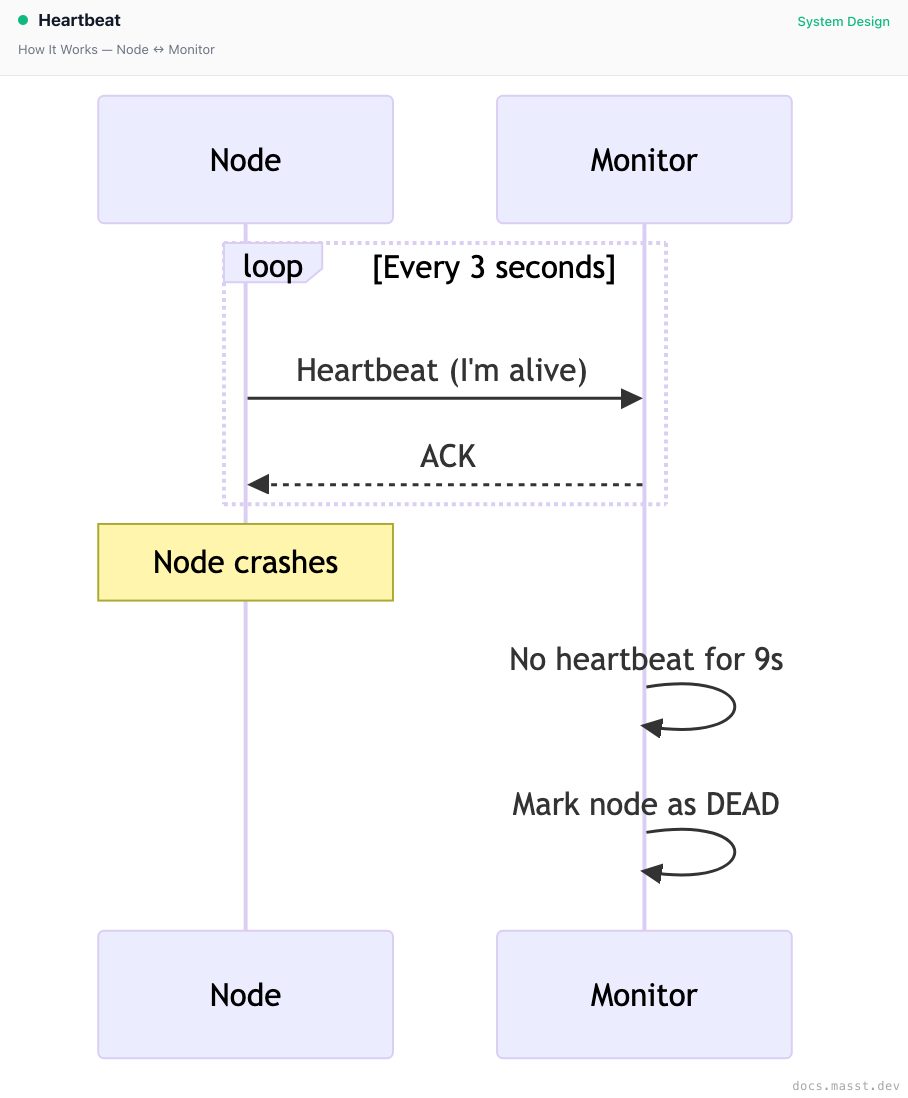
Heartbeat Types
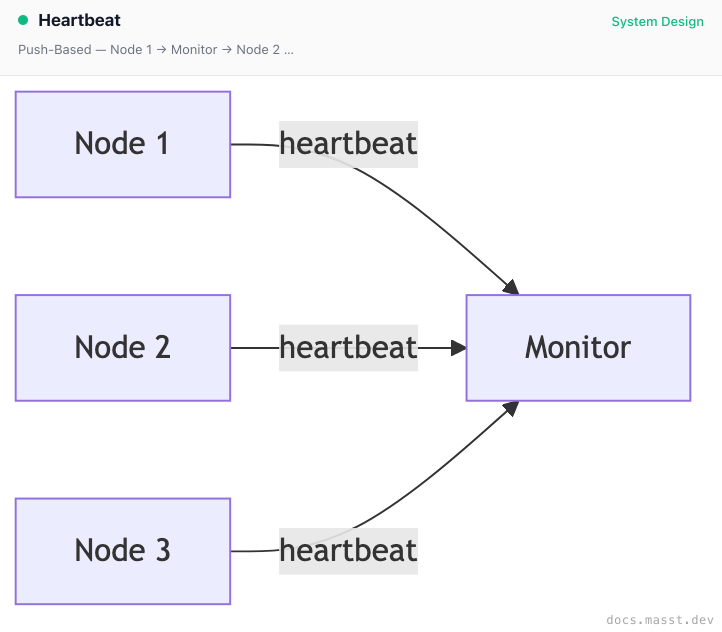
Push-Based
Node sends heartbeats to monitor:
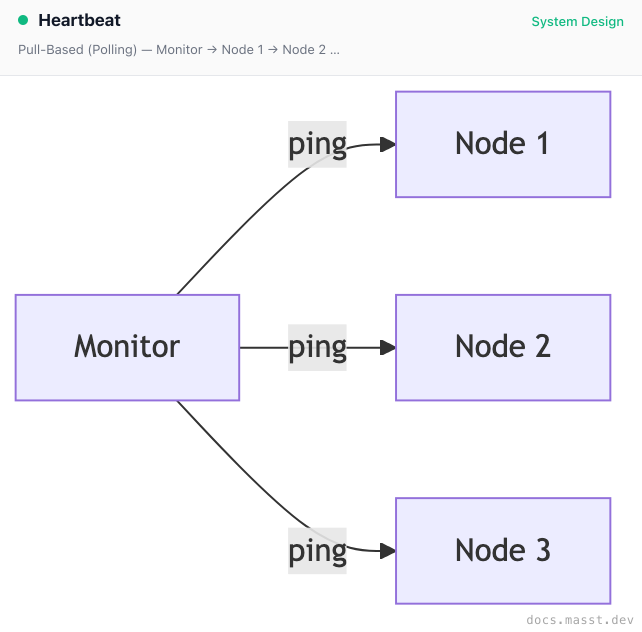
Pull-Based (Polling)
Monitor polls nodes for status:
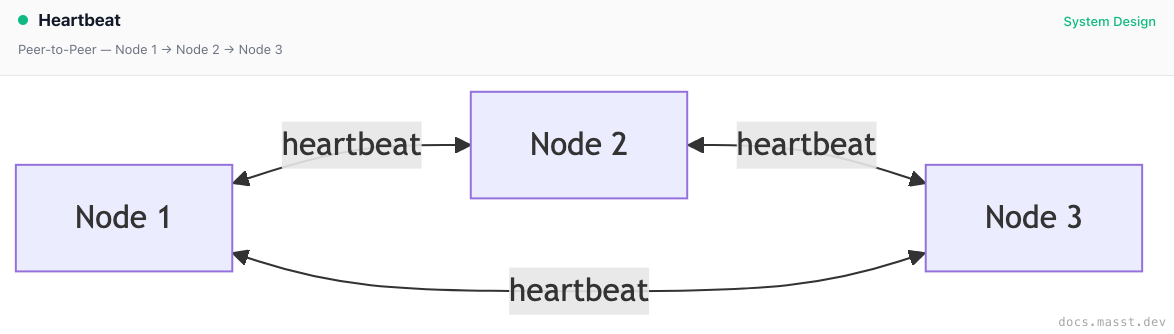
Peer-to-Peer
Nodes monitor each other:
Key Parameters
| Parameter | Description | Typical Value |
|---|---|---|
| Interval | Time between heartbeats | 1-5 seconds |
| Timeout | Missed beats before failure | 3x interval |
| Grace period | Buffer before action | 5-15 seconds |
Failure Detection
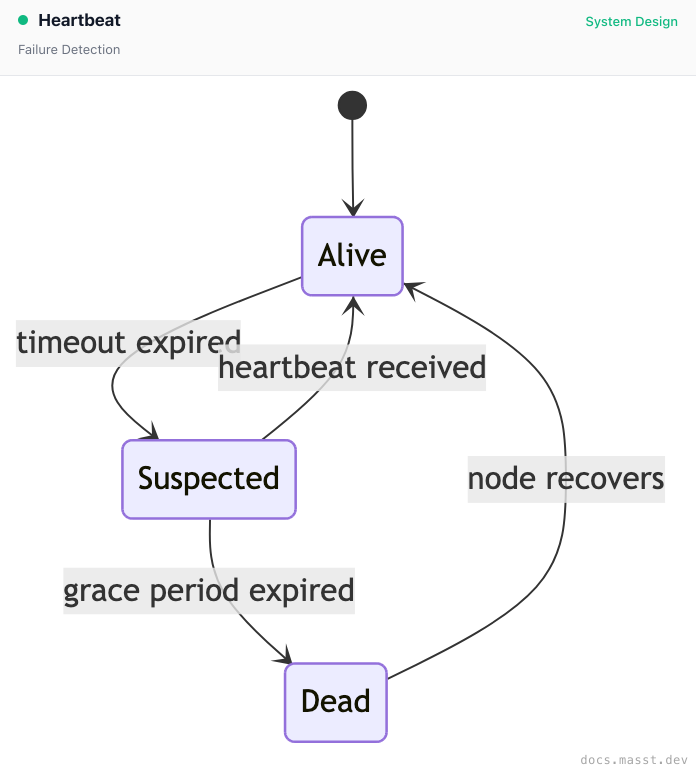
False Positives
A slow network can cause false failure detection:
| Cause | Mitigation |
|---|---|
| Network partition | Increase timeout |
| GC pause | Use longer grace period |
| CPU overload | Adaptive thresholds |
| Packet loss | Require multiple missed beats |
Heartbeat with Metadata
Heartbeats often carry useful information:
{
  "node_id": "node-3",
  "timestamp": 1710432000,
  "status": "healthy",
  "cpu_usage": 45,
  "memory_usage": 72,
  "active_connections": 1250,
  "version": "2.1.0"
}
This enables load balancers and orchestrators to make routing decisions.
Real-World Examples
| System | Mechanism |
|---|---|
| Kubernetes | kubelet → API server (10s default) |
| ZooKeeper | Session heartbeats (ephemeral nodes) |
| Cassandra | Gossip protocol (1s interval) |
| Redis Sentinel | PING/PONG every 1s |
| Consul | TCP/HTTP health checks |
Heartbeat vs Health Check
| Aspect | Heartbeat | Health Check |
|---|---|---|
| Direction | Node → Monitor | Monitor → Node |
| Content | "I'm alive" | "Are you healthy?" |
| Depth | Liveness only | Liveness + readiness |
| Overhead | Low | Higher (runs checks) |
Best Practices
- Set timeout > 2x interval to tolerate occasional delays
- Include metadata for smarter load balancing
- Use adaptive timeouts based on network conditions
- Avoid single monitor — use distributed failure detection
- Distinguish slow from dead — don't kill overloaded nodes
Interview Tips
- Explain push vs pull heartbeat models
- Discuss false positive problem and mitigations
- Know typical intervals (1-5s) and timeout multipliers
- Mention use in leader election and cluster membership
- Give examples: Kubernetes, ZooKeeper, Cassandra gossip
Finished reading?
Mark it done to track your progress in Concepts.