
Building Blocks
Write-Through
Write-through caching writes to cache and database synchronously. Strong consistency, simpler reads, slower writes — when to use it.
2 min readConcepts · System Design
What is Write-Through?
Write-Through is a caching pattern where writes go to both the cache and the database synchronously. The cache acts as the main interface for both reads and writes.
How It Works
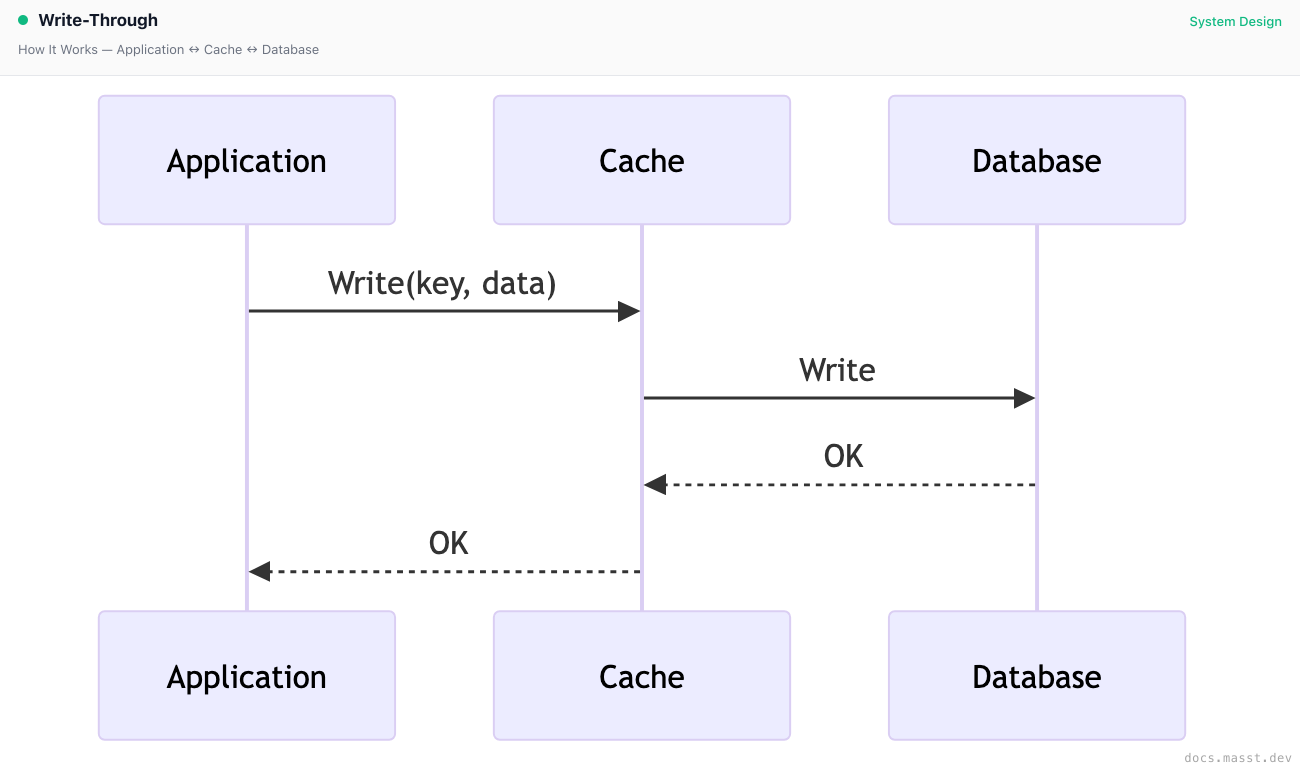
Both cache and database are updated before returning success.
Read Flow
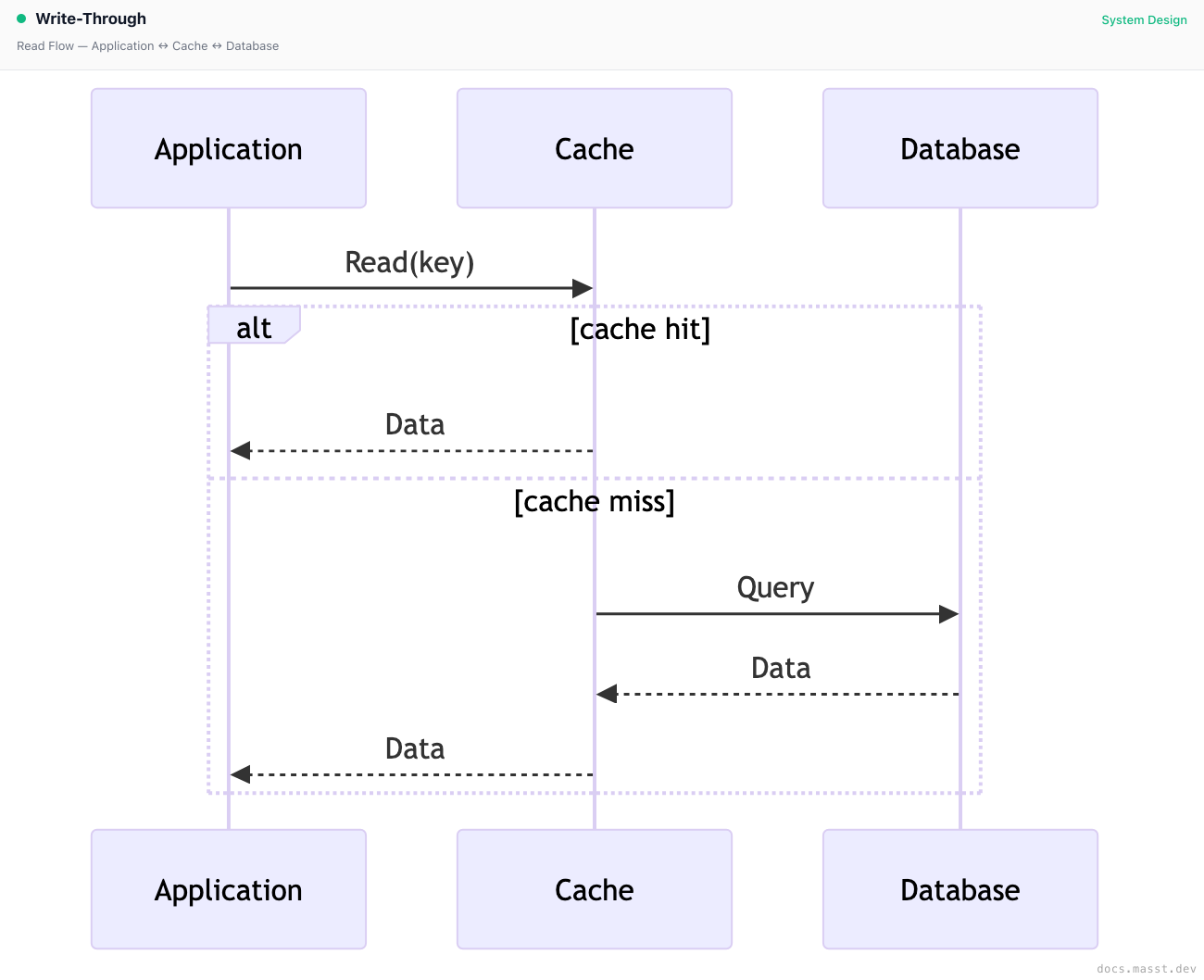
Advantages
| Benefit | Description |
|---|---|
| Cache always consistent | Writes update cache immediately |
| No stale data | Cache reflects DB state |
| Simple reads | Always read from cache |
| Data durability | DB always has latest |
Disadvantages
| Drawback | Description |
|---|---|
| Higher write latency | Must write to both |
| Cache may have unused data | Writes cached even if never read |
| Write amplification | Every write hits DB and cache |
Use Cases
Good for:
- Data that's frequently read after write
- Strong consistency requirements
- Applications where write latency is acceptable
Not ideal for:
- Write-heavy workloads
- Data rarely read after write
- Latency-sensitive writes
Comparison
| Aspect | Write-Through | Cache-Aside |
|---|---|---|
| Write latency | Higher | Lower |
| Cache consistency | Always consistent | May be stale briefly |
| Cache population | On every write | On read (lazy) |
| Complexity | Cache handles writes | App manages both |
Interview Tips
- Explain synchronous write to both cache and DB
- Discuss latency trade-off vs consistency benefit
- Compare with write-behind (async) pattern
- Mention when write-through is appropriate
Finished reading?
Mark it done to track your progress in Concepts.