
Architecture
API Gateway
Understanding API gateways in microservices architecture.
3 min readConcepts · System Design
What is an API Gateway?
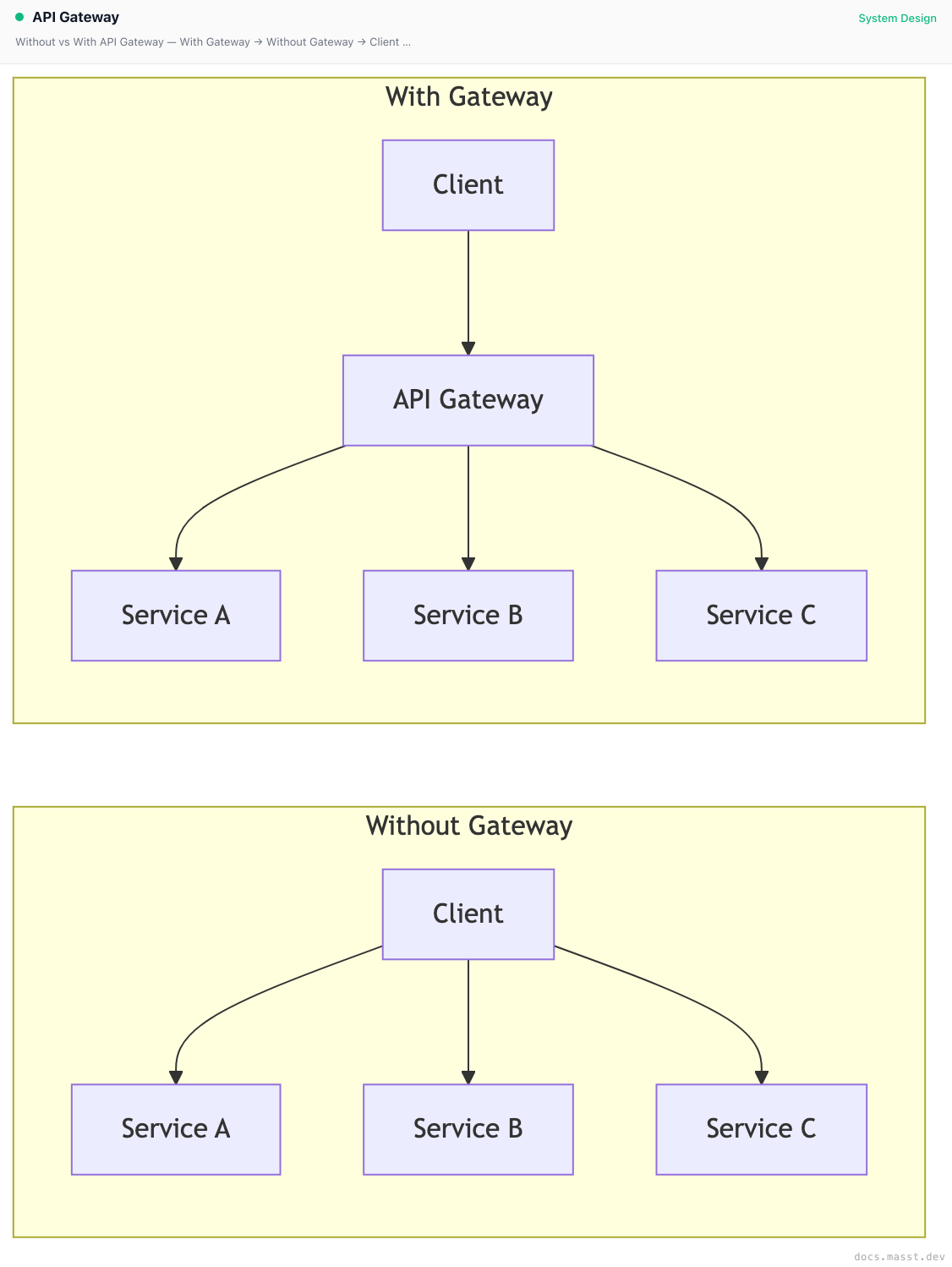
An API Gateway is a single entry point for all client requests. It handles cross-cutting concerns like authentication, rate limiting, and request routing.
Without vs With API Gateway
Key Functions
| Function | Description |
|---|---|
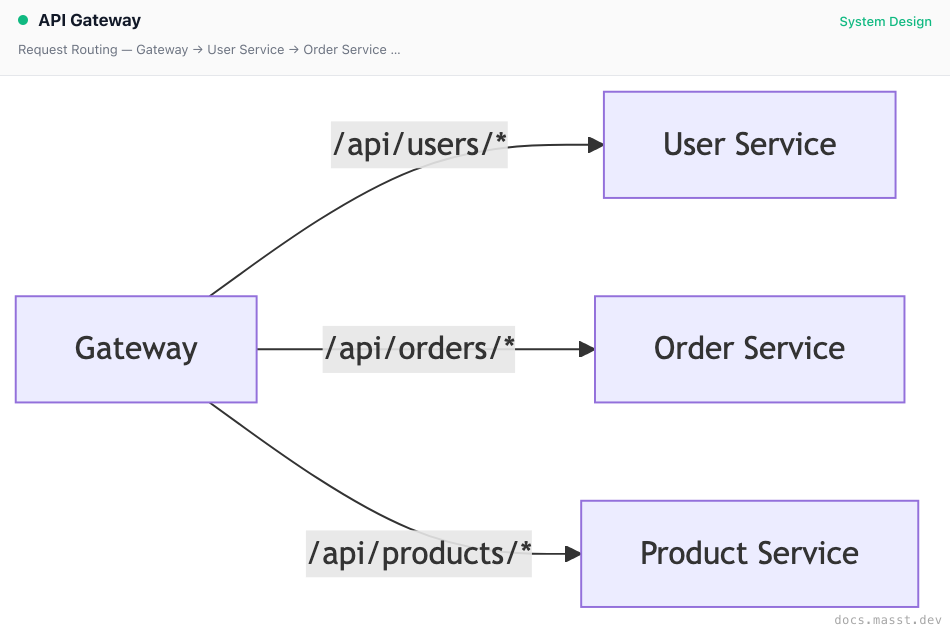
| Routing | Route requests to appropriate services |
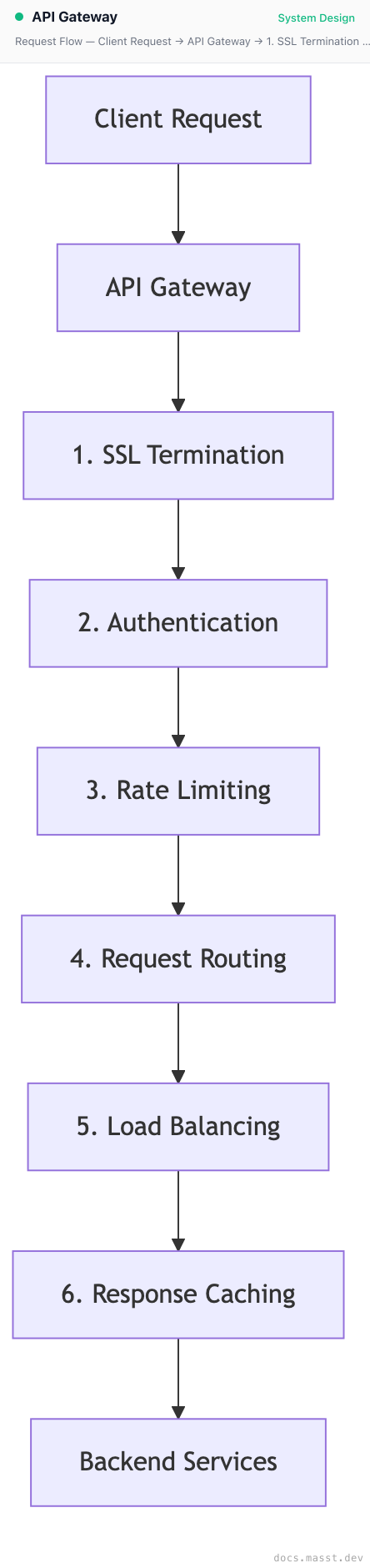
| Authentication | Verify identity (JWT, OAuth) |
| Authorization | Check permissions |
| Rate Limiting | Prevent abuse |
| Load Balancing | Distribute traffic |
| Caching | Cache responses |
| Request Transformation | Modify requests/responses |
| SSL Termination | Handle HTTPS |
| Monitoring | Log and trace requests |
Request Flow
Patterns
Request Routing
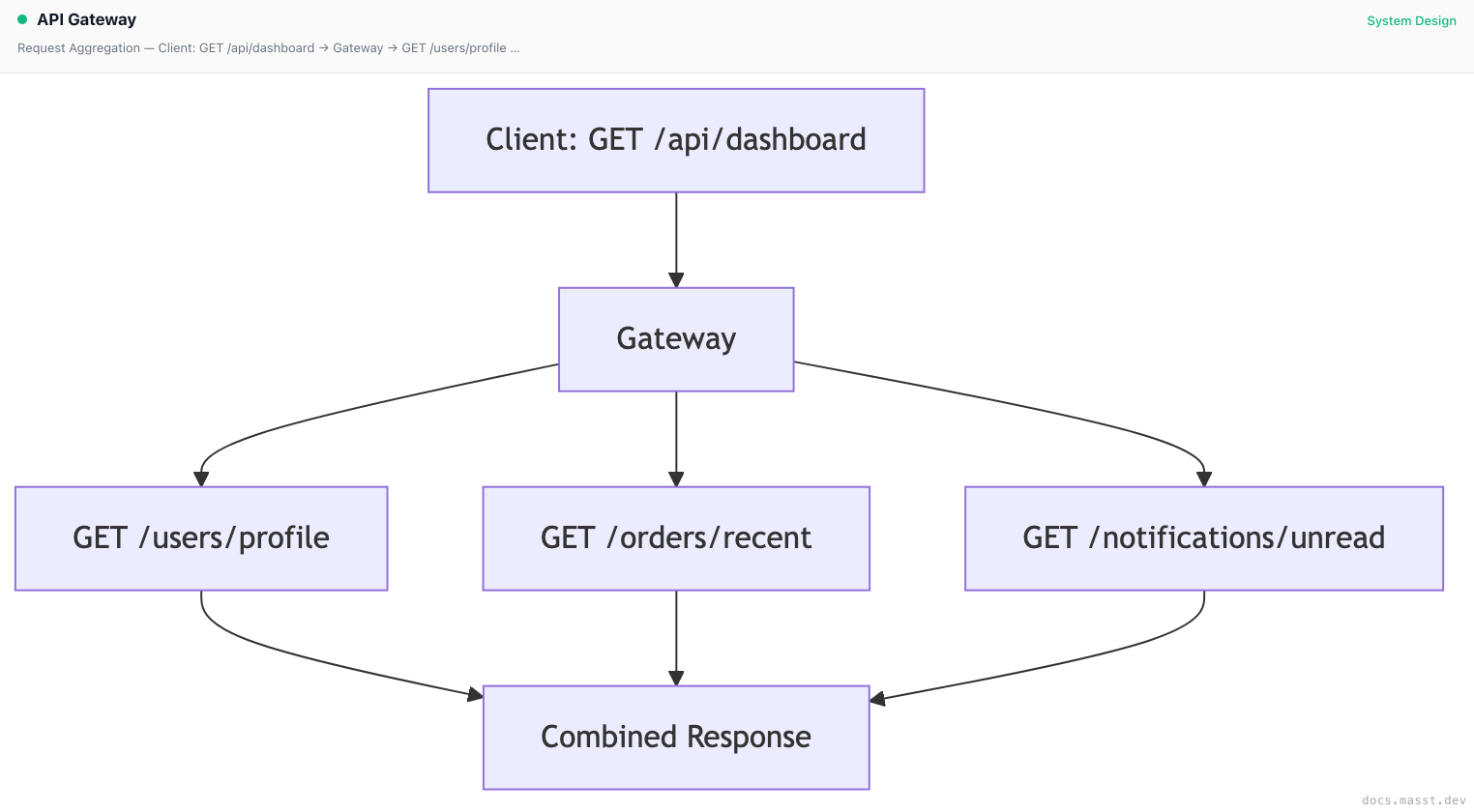
Request Aggregation
Combine multiple service calls into one response:
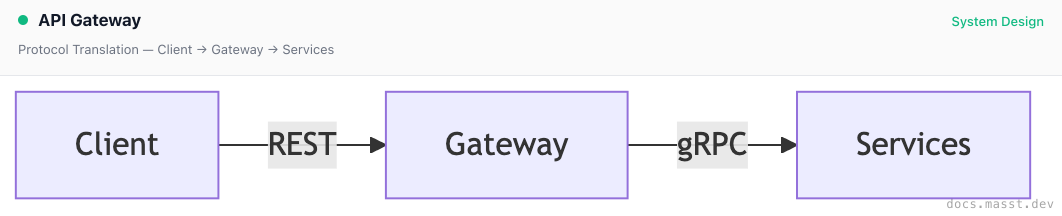
Protocol Translation
Popular API Gateways
| Gateway | Type | Features |
|---|---|---|
| Kong | Open source | Plugin ecosystem |
| AWS API Gateway | Managed | AWS integration |
| NGINX | Web server | High performance |
| Envoy | Service mesh | Advanced routing |
| Traefik | Container-native | Auto-discovery |
Rate Limiting Strategies
| Strategy | Description |
|---|---|
| Token Bucket | Tokens refill over time |
| Leaky Bucket | Constant rate output |
| Fixed Window | Count per time window |
| Sliding Window | Rolling time window |
Considerations
Pros
- Single entry point
- Centralized cross-cutting concerns
- Protocol translation
- Response aggregation
Cons
- Single point of failure
- Added latency
- Additional complexity
- Can become bottleneck
Interview Tips
- Explain the main functions (routing, auth, rate limiting)
- Discuss aggregation pattern for BFF (Backend for Frontend)
- Know popular solutions: Kong, AWS API Gateway
- Mention as potential bottleneck/SPOF
- Compare with service mesh
Finished reading?
Mark it done to track your progress in Concepts.