
Design Patterns
Idempotency
Understanding idempotency for safe retries and reliable systems.
3 min readConcepts · System Design
What is Idempotency?
An operation is idempotent if performing it multiple times produces the same result as performing it once. This is critical for building reliable distributed systems where retries and duplicate messages are common.
Examples
| Operation | Idempotent? | Why |
|---|---|---|
| GET /users/123 | Yes | Reading doesn't change state |
| DELETE /users/123 | Yes | Deleting twice = same result |
| PUT /users/123 (name: "Alice") | Yes | Sets to same value each time |
| POST /orders | No | Creates new order each time |
| Increment counter | No | Each call changes the value |
Why Idempotency Matters
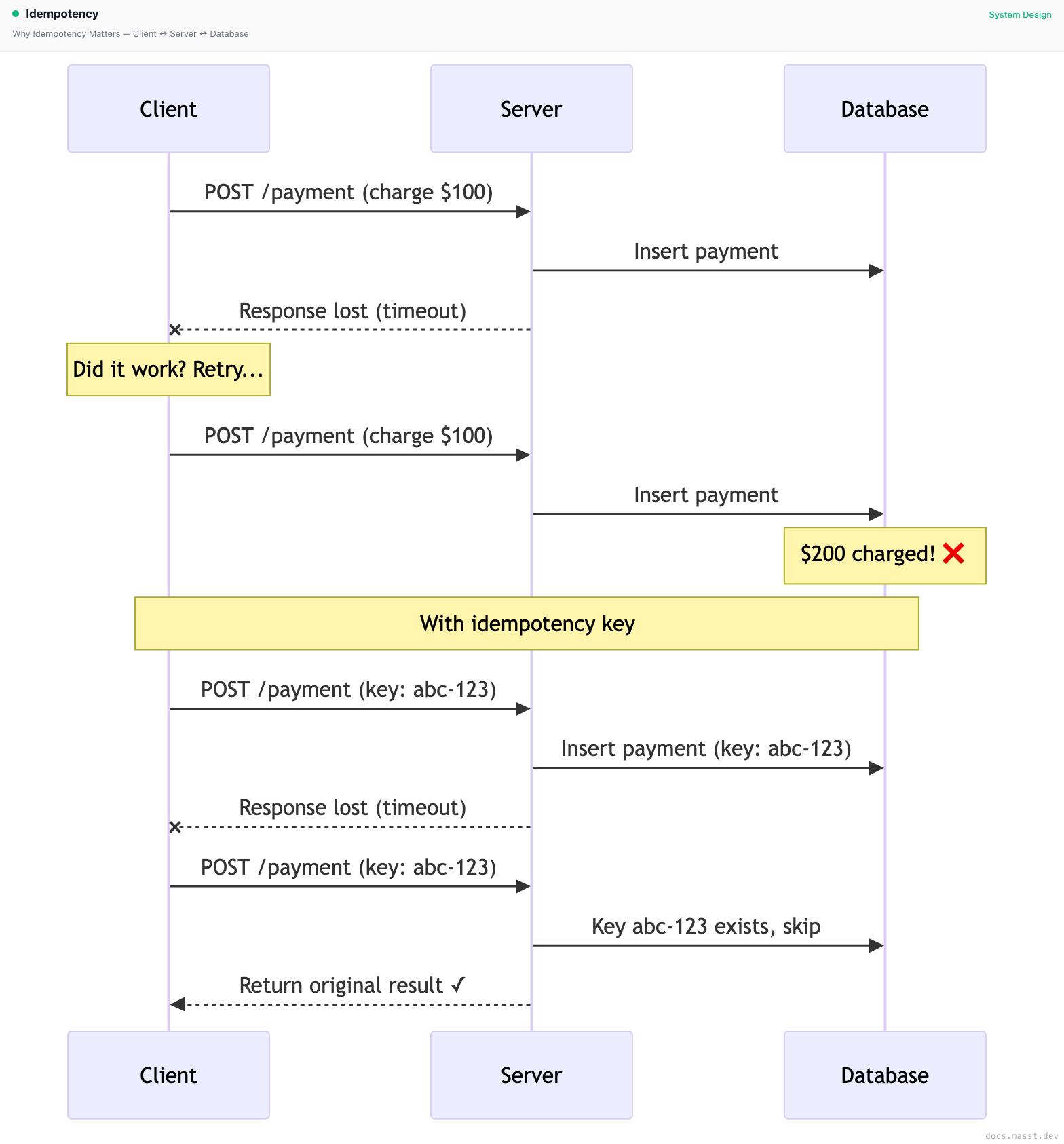
Idempotency Keys
How It Works
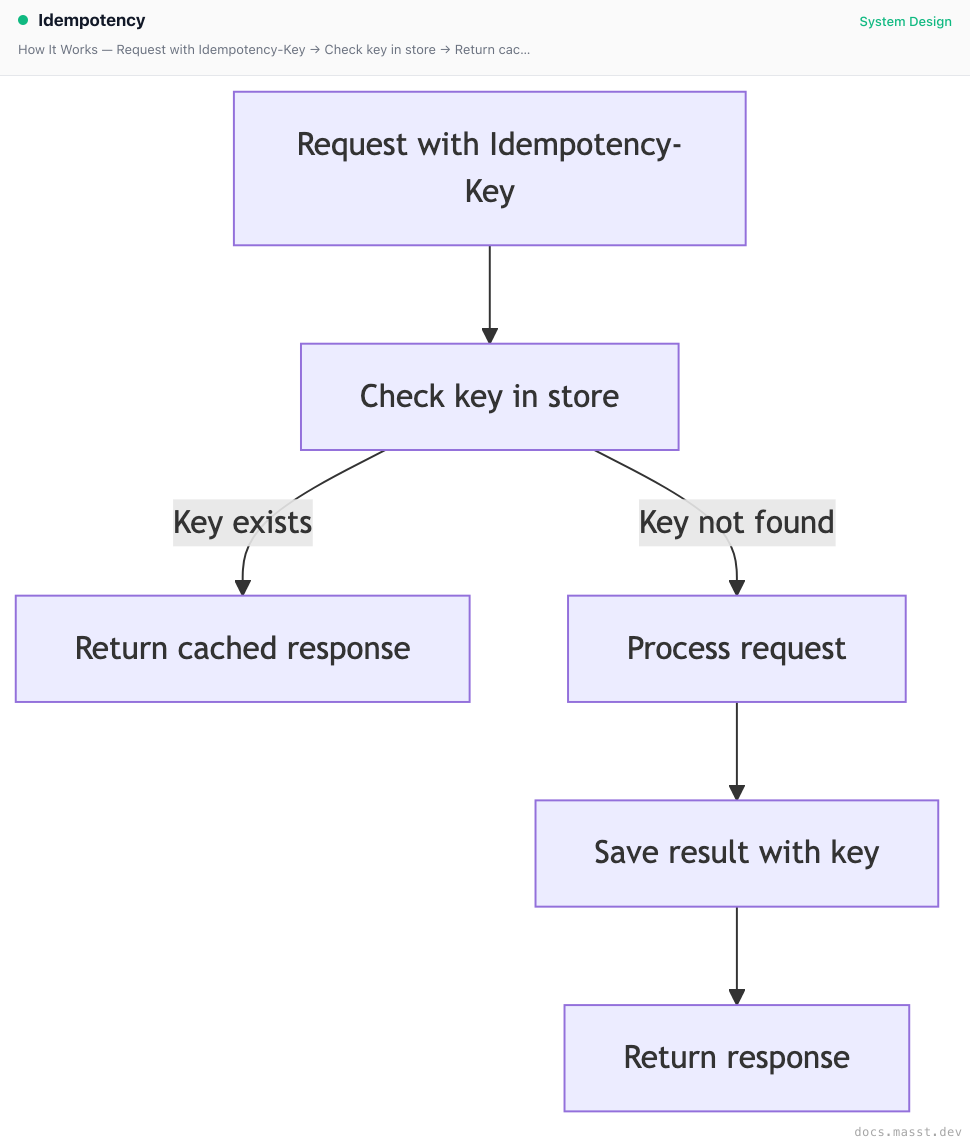
Implementation
async function handlePayment(req, res) {
  const idempotencyKey = req.headers['idempotency-key'];

  // Check if we've seen this request before
  const existing = await redis.get(`idem:${idempotencyKey}`);
  if (existing) {
    return res.json(JSON.parse(existing));
  }

  // Process the payment
  const result = await processPayment(req.body);

  // Store the result (TTL: 24 hours)
  await redis.set(
    `idem:${idempotencyKey}`,
    JSON.stringify(result),
    'EX', 86400
  );

  return res.json(result);
}
Making Operations Idempotent
Database Writes
-- Non-idempotent: creates duplicate
INSERT INTO payments (user_id, amount) VALUES (1, 100);

-- Idempotent: uses unique constraint
INSERT INTO payments (user_id, amount, idempotency_key)
VALUES (1, 100, 'abc-123')
ON CONFLICT (idempotency_key) DO NOTHING;
Message Processing

Strategies
| Strategy | How | Best For |
|---|---|---|
| Idempotency Key | Client-generated unique key | API requests |
| Natural Key | Use business identifier | Order processing |
| Upsert | INSERT ON CONFLICT UPDATE | Database writes |
| Deduplication table | Track processed IDs | Message consumers |
| Conditional write | Check version/ETag | Concurrent updates |
Common Patterns
Stripe's Approach
POST /v1/charges
Idempotency-Key: unique-key-123
Content-Type: application/json

{
    "amount": 2000,
    "currency": "usd"
}- Keys expire after 24 hours
- Responses are cached and replayed
- Different request body with same key returns error
At-Least-Once + Idempotency
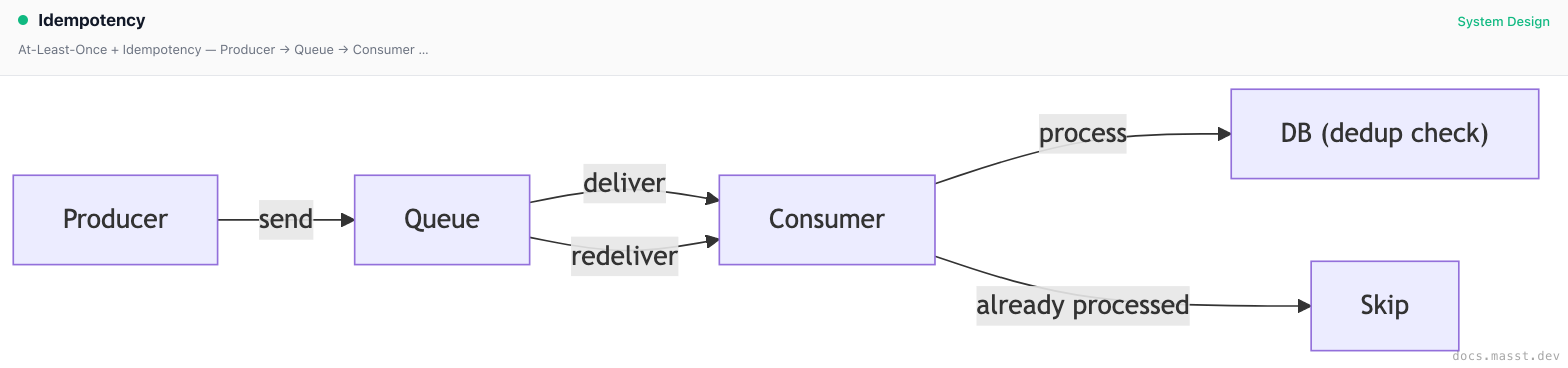
Guarantees exactly-once semantics even with at-least-once delivery.
Best Practices
- Generate keys client-side using UUIDs
- Store results with TTL (don't keep forever)
- Validate request body matches for same key
- Make the check atomic with the operation
- Use natural keys when available (order ID, transaction ID)
Interview Tips
- Explain why idempotency matters for retries
- Know HTTP method idempotency (GET, PUT, DELETE = yes; POST = no)
- Describe idempotency key pattern (Stripe example)
- Discuss at-least-once + deduplication = exactly-once
- Mention database strategies (upsert, unique constraints)
Finished reading?
Mark it done to track your progress in Concepts.