
Amazon
How Amazon serves 300M+ customers — e-commerce platform architecture, microservices, search, recommendations, and 99.99% availability.
Interview practice: try designing this yourself before reading. Go to the exercise ↓
High-Level Architecture
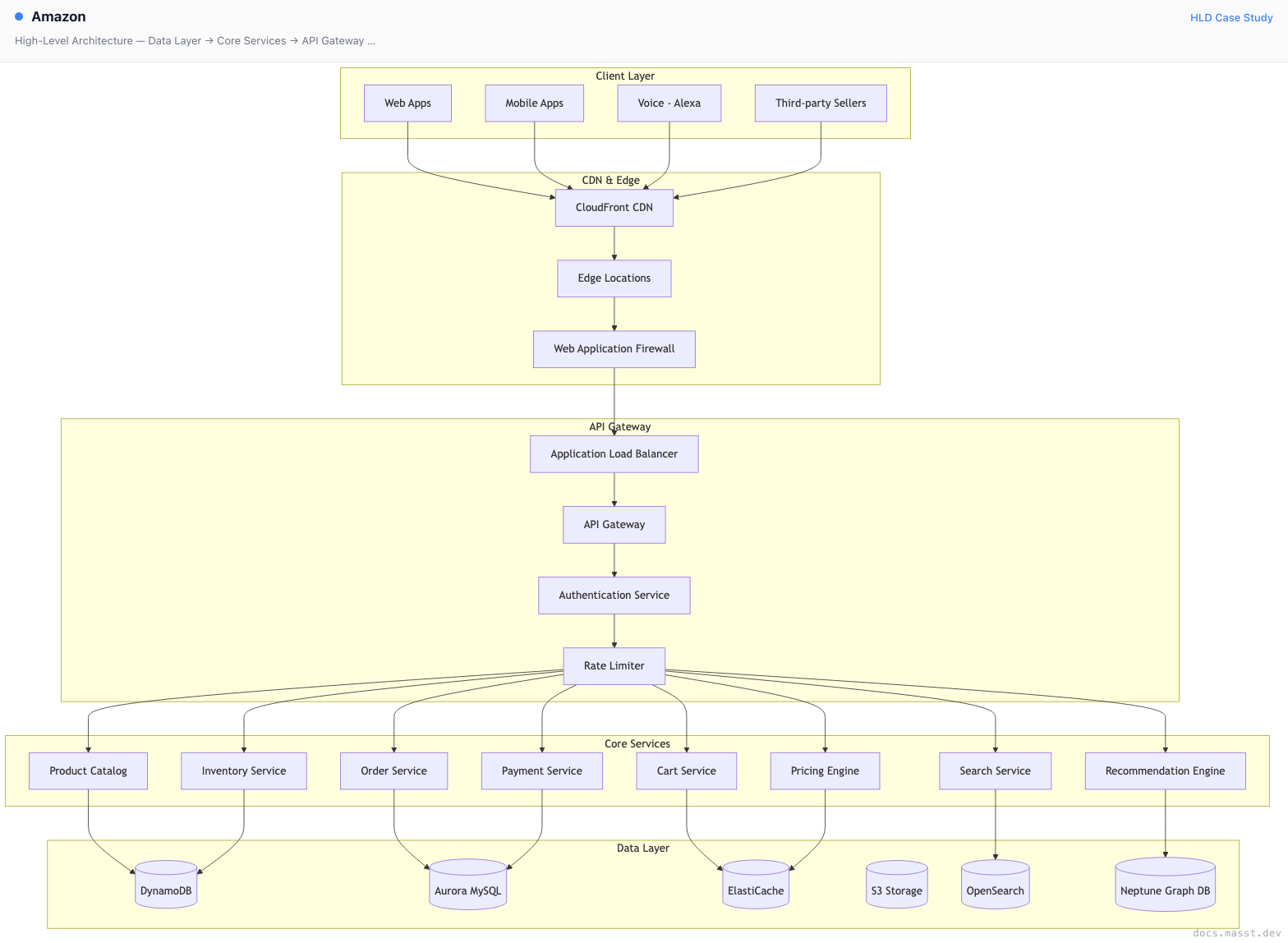
Core Components
1. Product Catalog Service
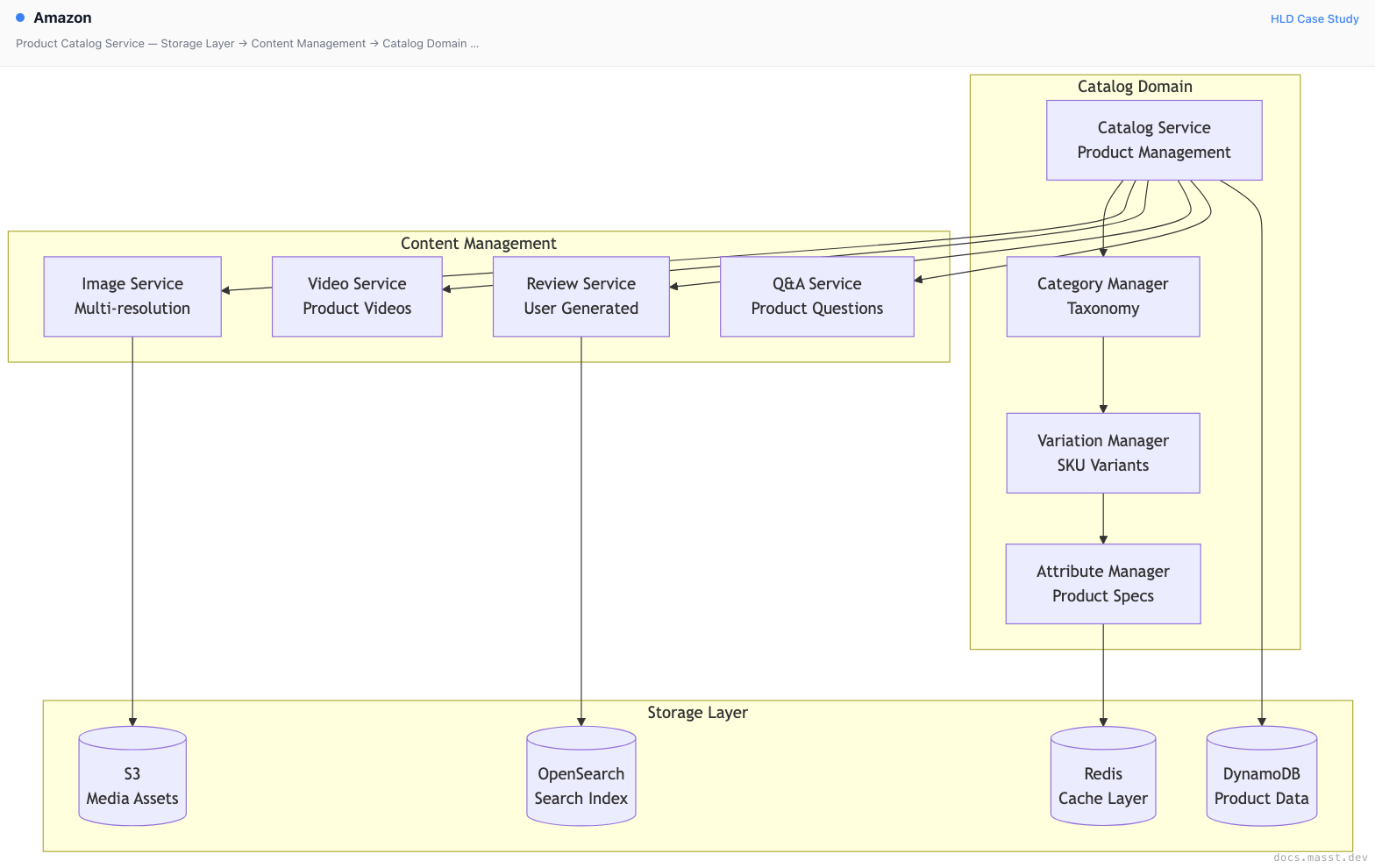
Key Features:
- 350+ million products across global marketplaces
- Real-time inventory synchronization
- Multi-marketplace product variants
- Rich media support (360° images, videos)
- Technologies: Java, DynamoDB, S3, OpenSearch
2. Search & Discovery Engine
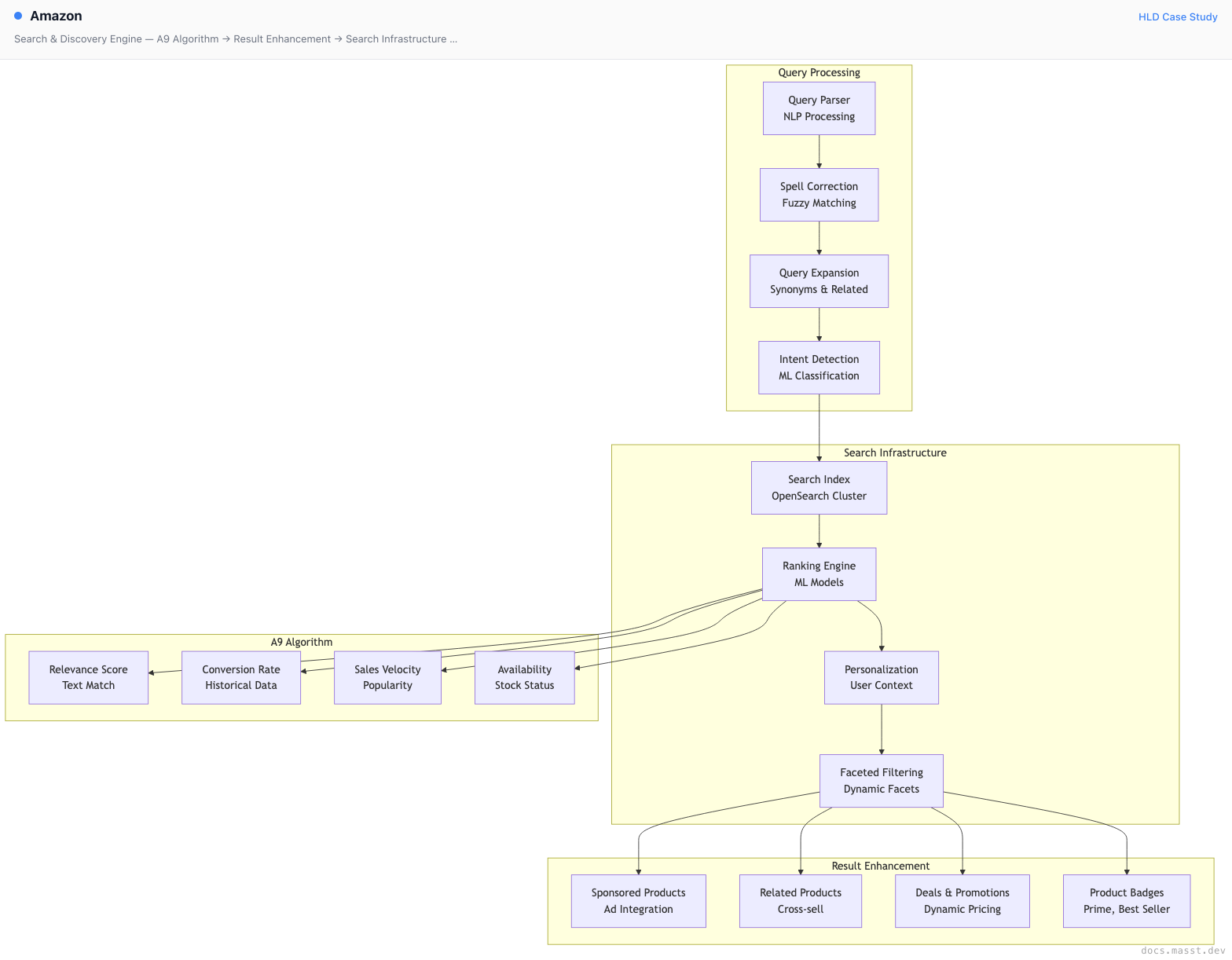
A9 Search Algorithm:
- Text relevance matching with NLP
- Conversion rate optimization
- Sales velocity and popularity scoring
- Inventory availability weighting
- Personalization based on user history
3. Shopping Cart & Checkout
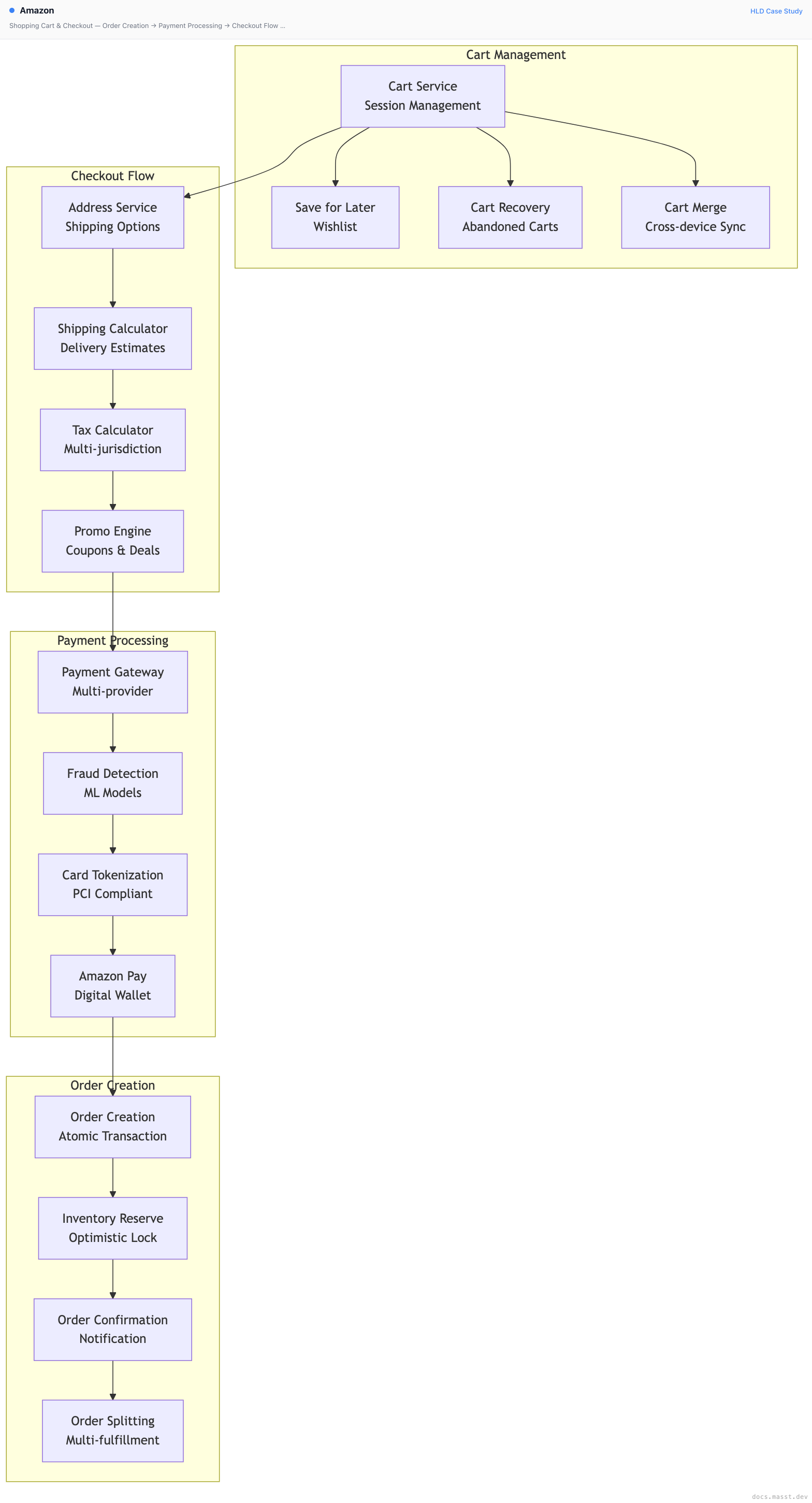
Checkout Features:
- One-click ordering with saved preferences
- Real-time inventory verification
- Dynamic shipping options (Prime, Same-day)
- Multi-payment method support
- Fraud prevention with ML models
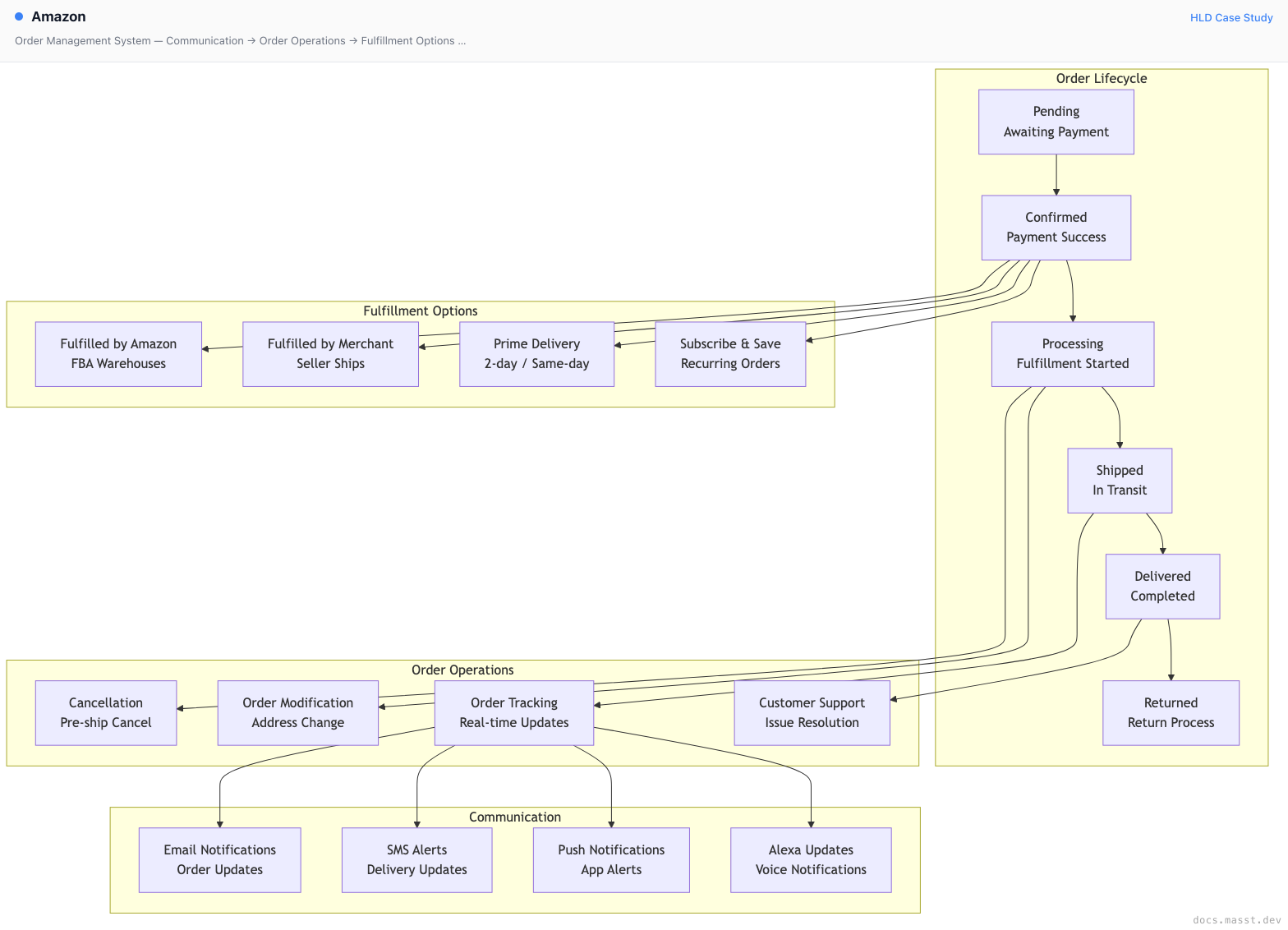
4. Order Management System
5. Inventory Management
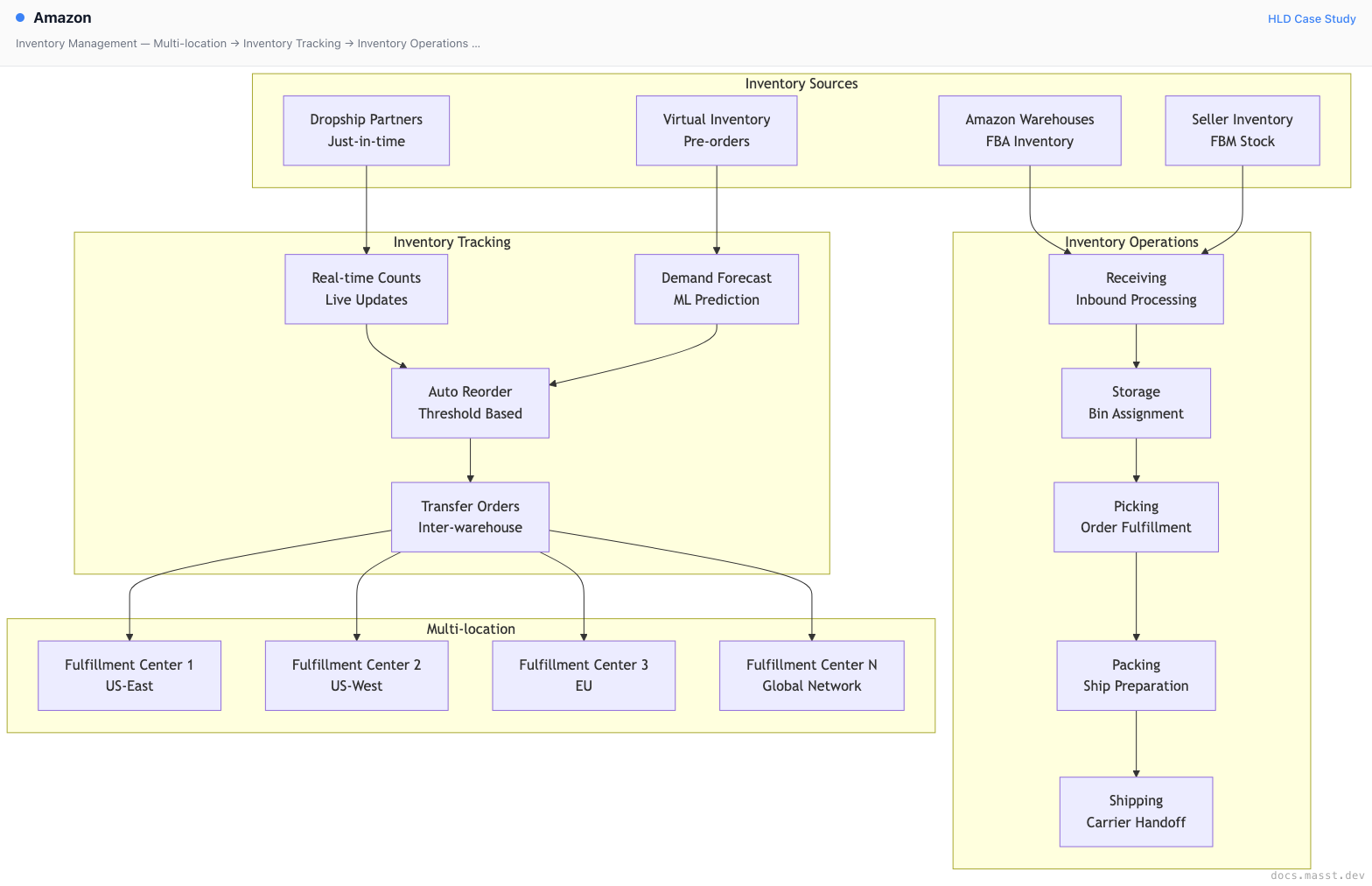
Inventory Features:
- 175+ fulfillment centers globally
- Real-time inventory synchronization
- Predictive demand forecasting
- Multi-channel inventory allocation
- Automated replenishment
6. Recommendation Engine
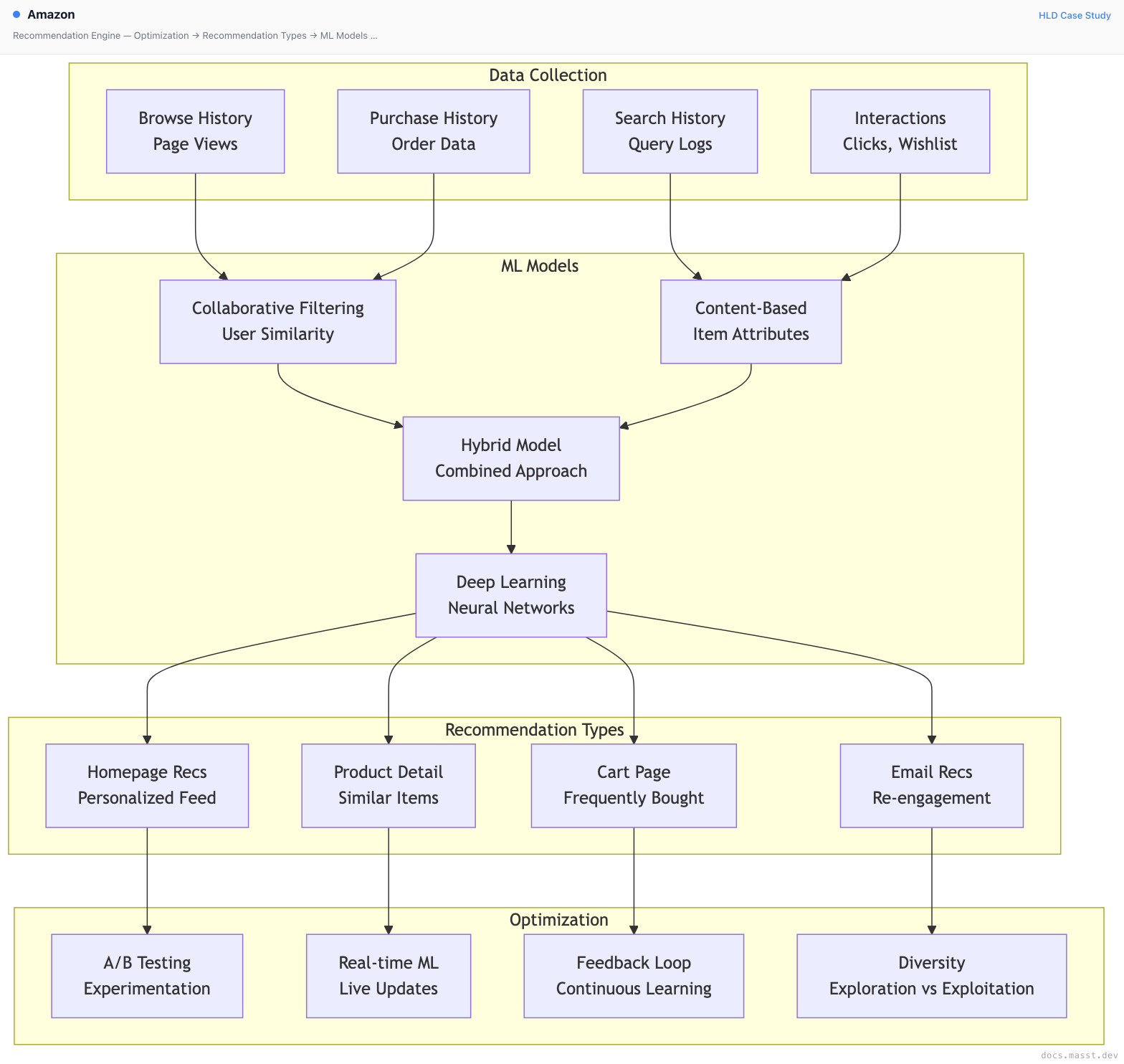
Recommendation Algorithms:
- Item-to-item collaborative filtering
- User-based recommendations
- "Customers who bought X also bought Y"
- Personalized rankings based on behavior
- Real-time model updates
Data Architecture
1. DynamoDB (Primary NoSQL)

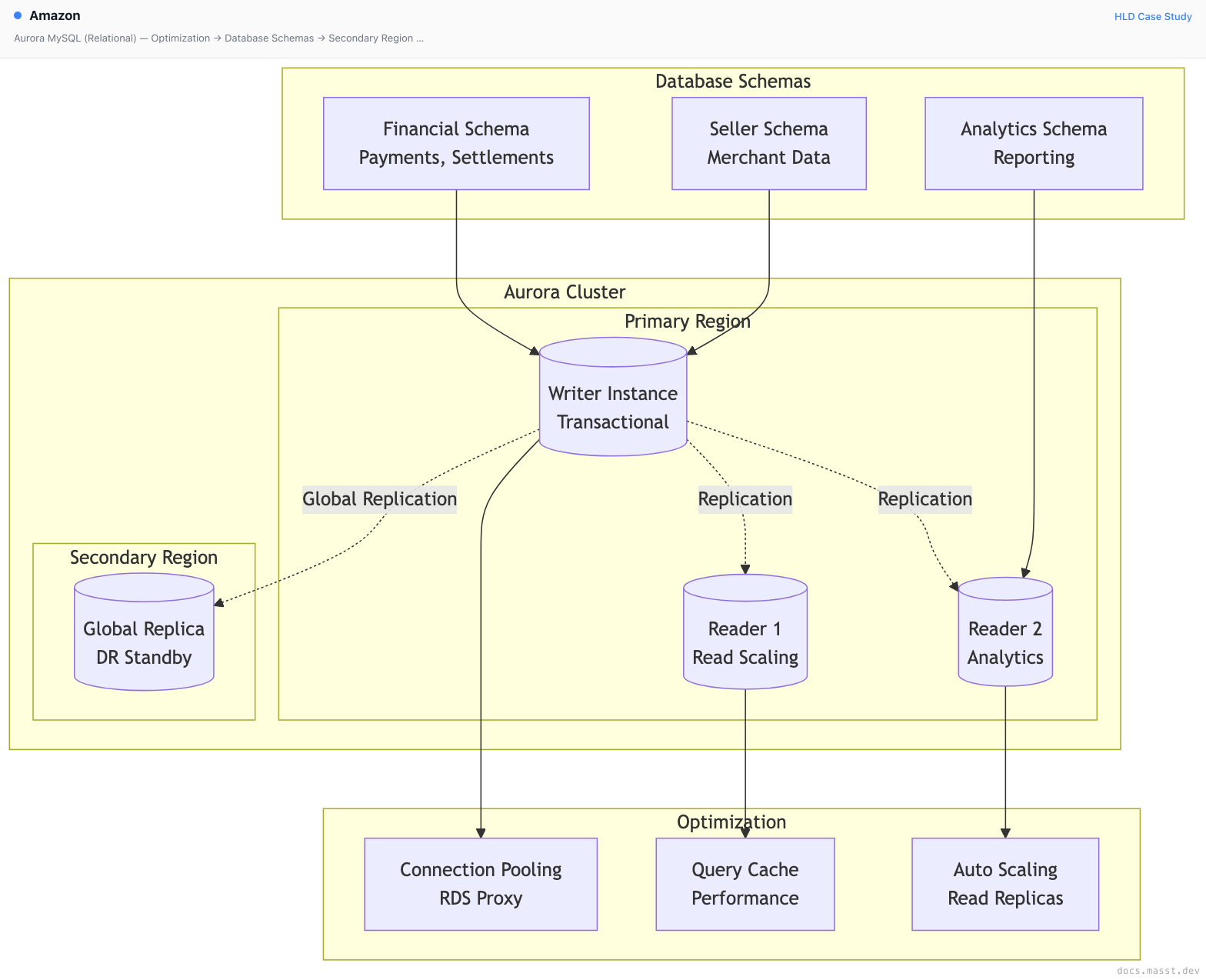
2. Aurora MySQL (Relational)
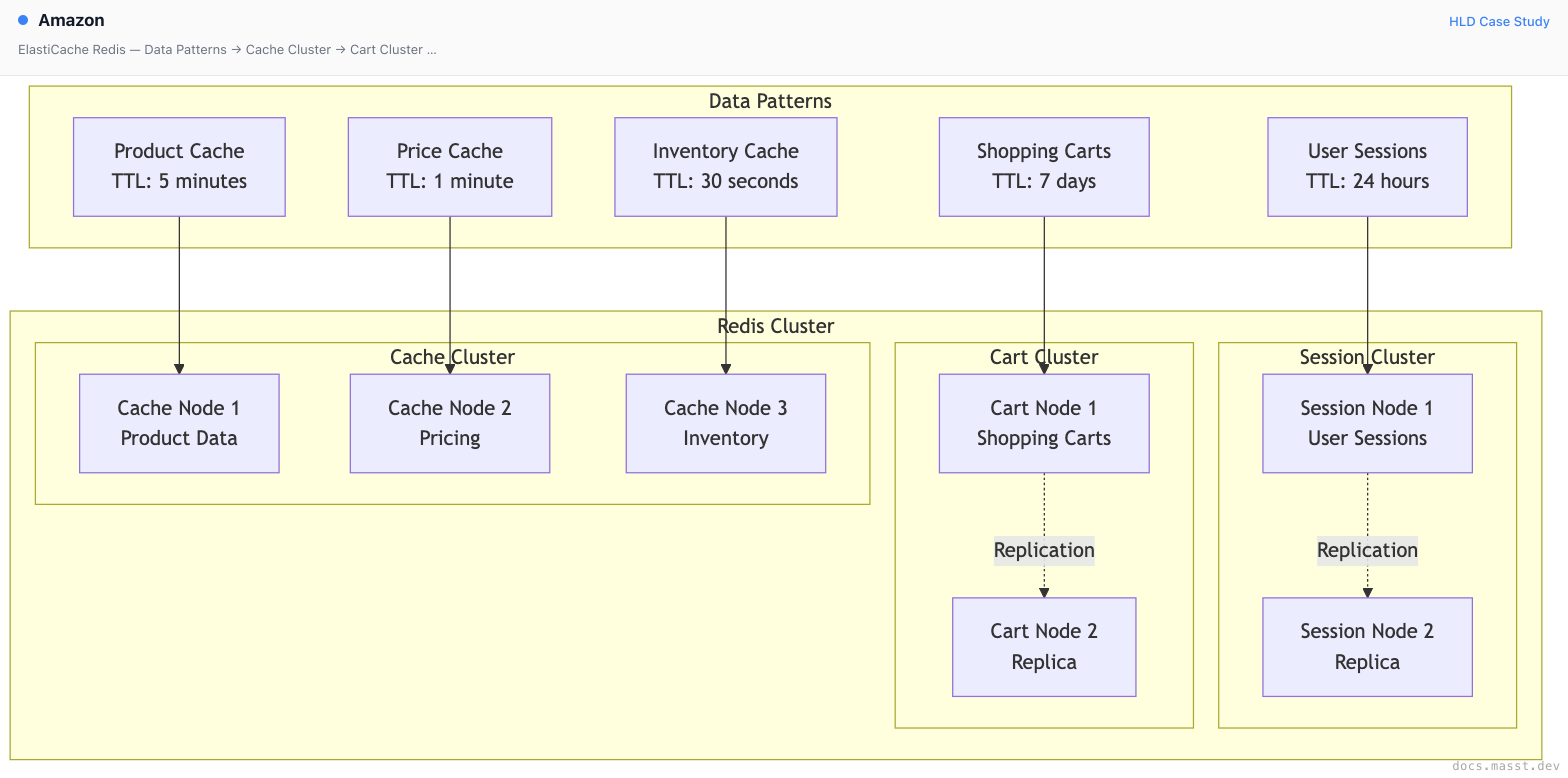
3. ElastiCache Redis
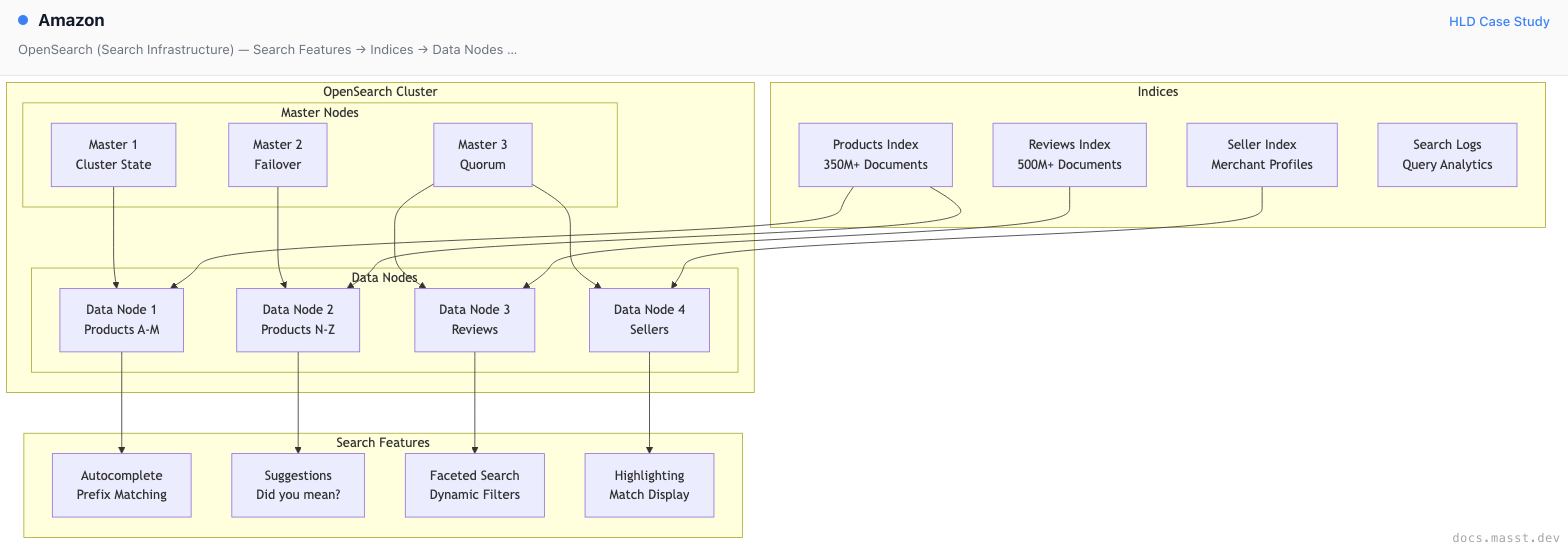
4. OpenSearch (Search Infrastructure)
Fulfillment Architecture
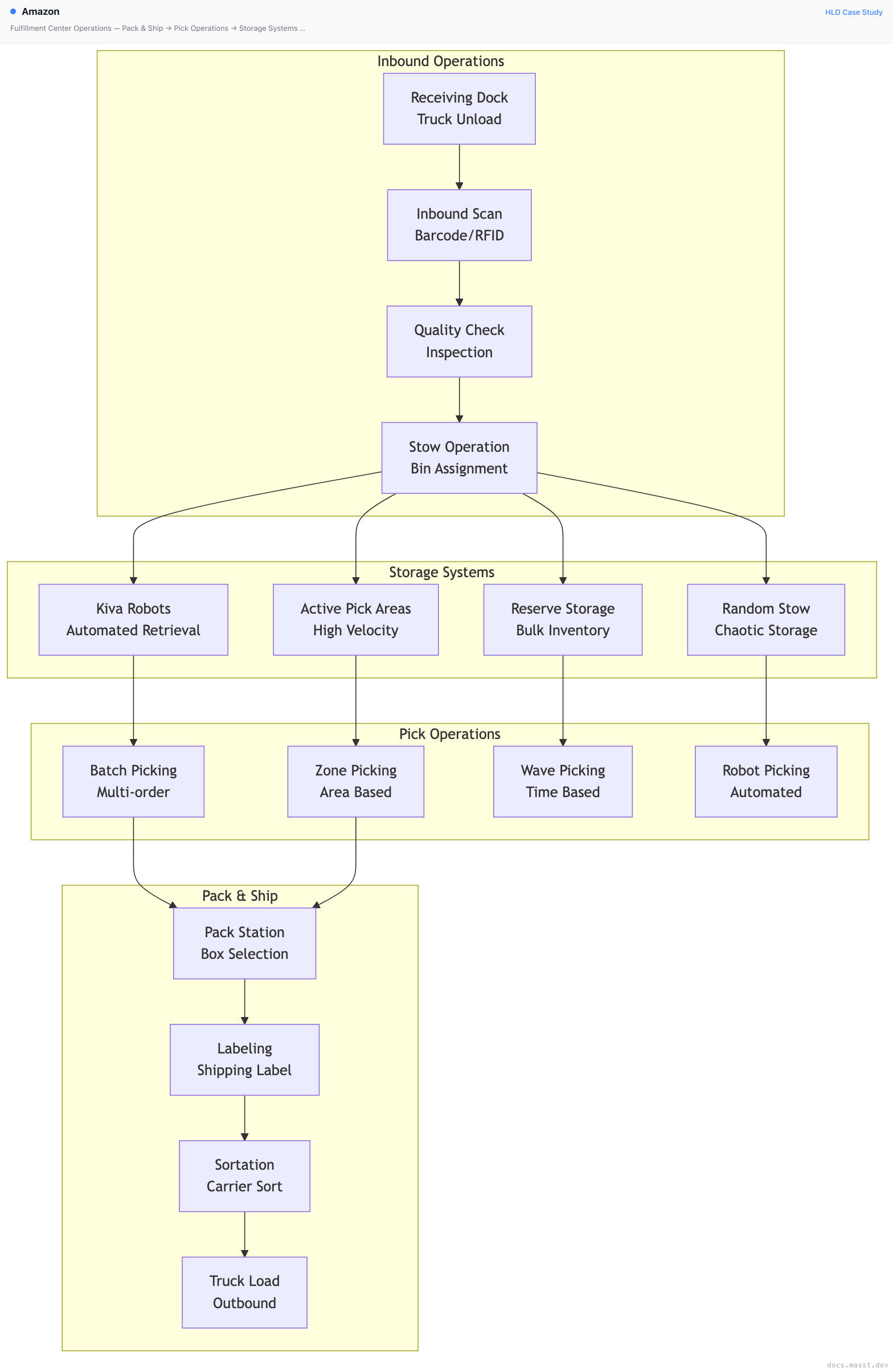
1. Fulfillment Center Operations
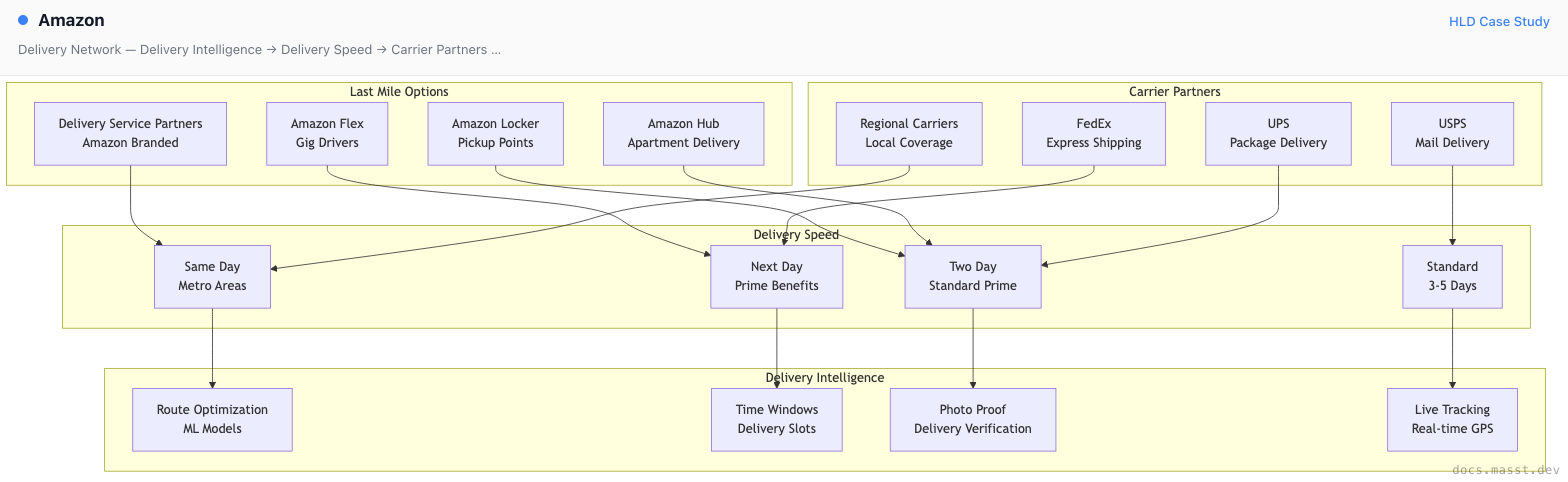
2. Delivery Network
Scalability & Performance
1. Auto-Scaling Architecture
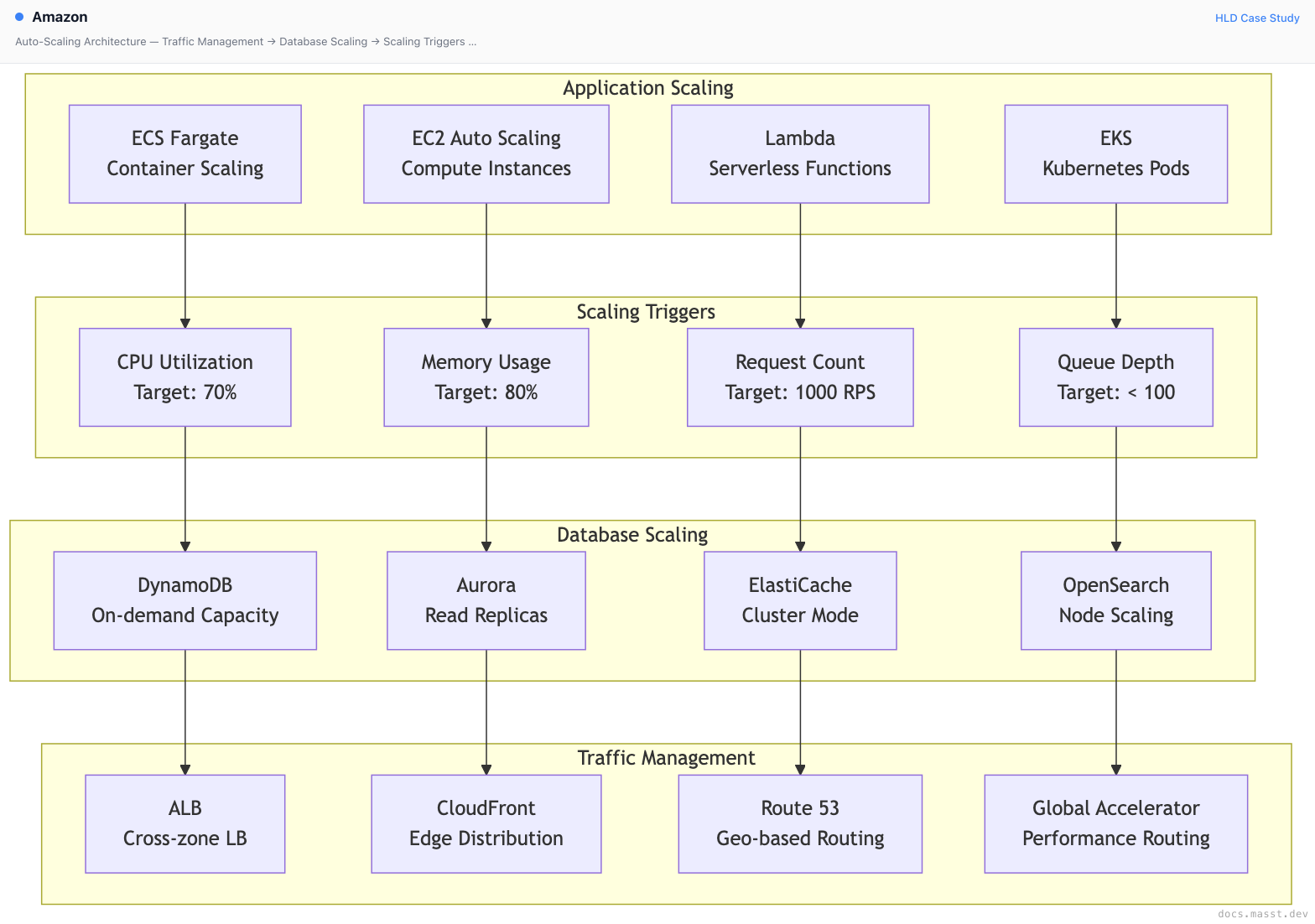
2. Caching Strategy
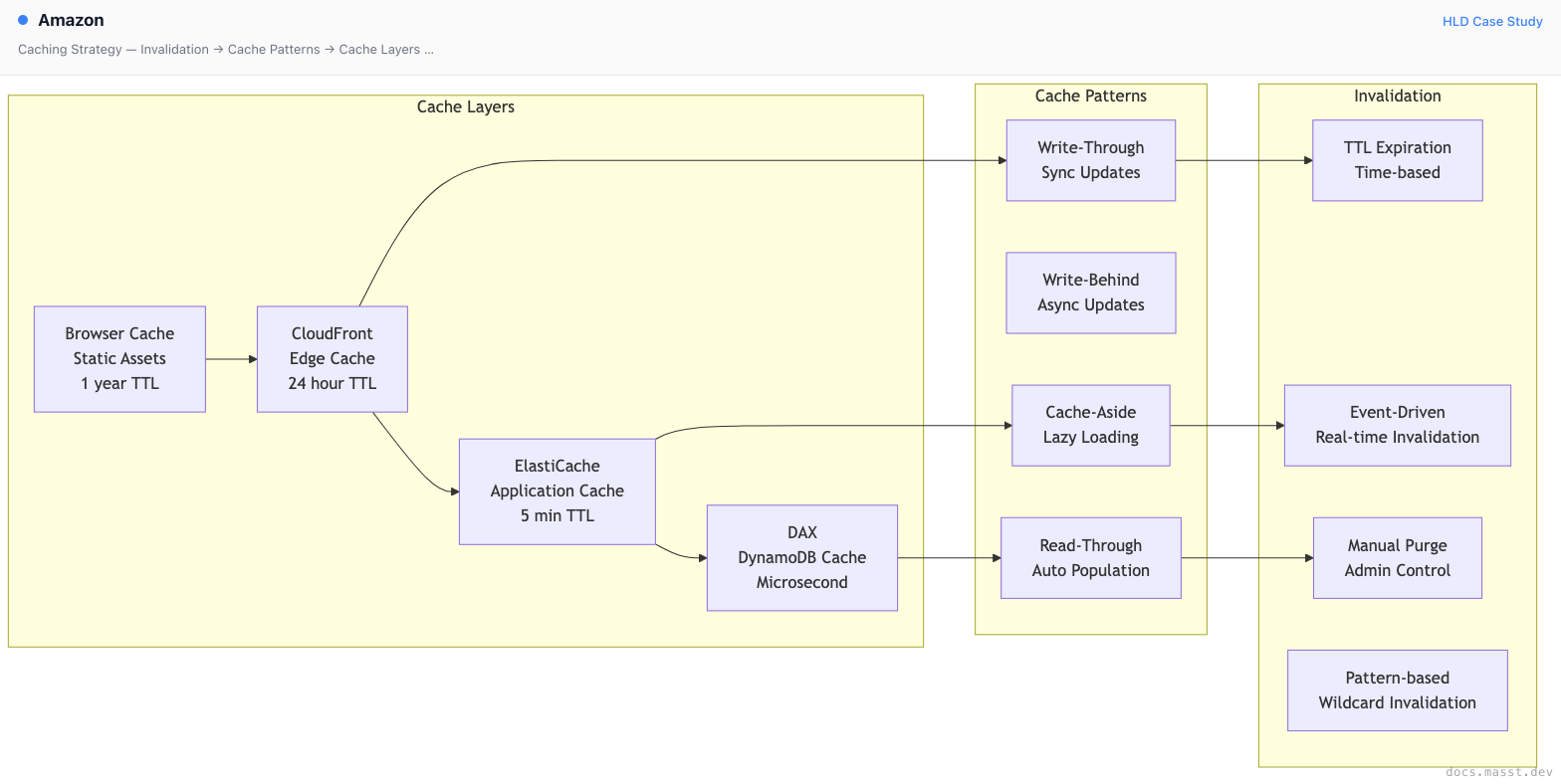
3. Prime Day Architecture

Security Architecture
1. Multi-Layer Security
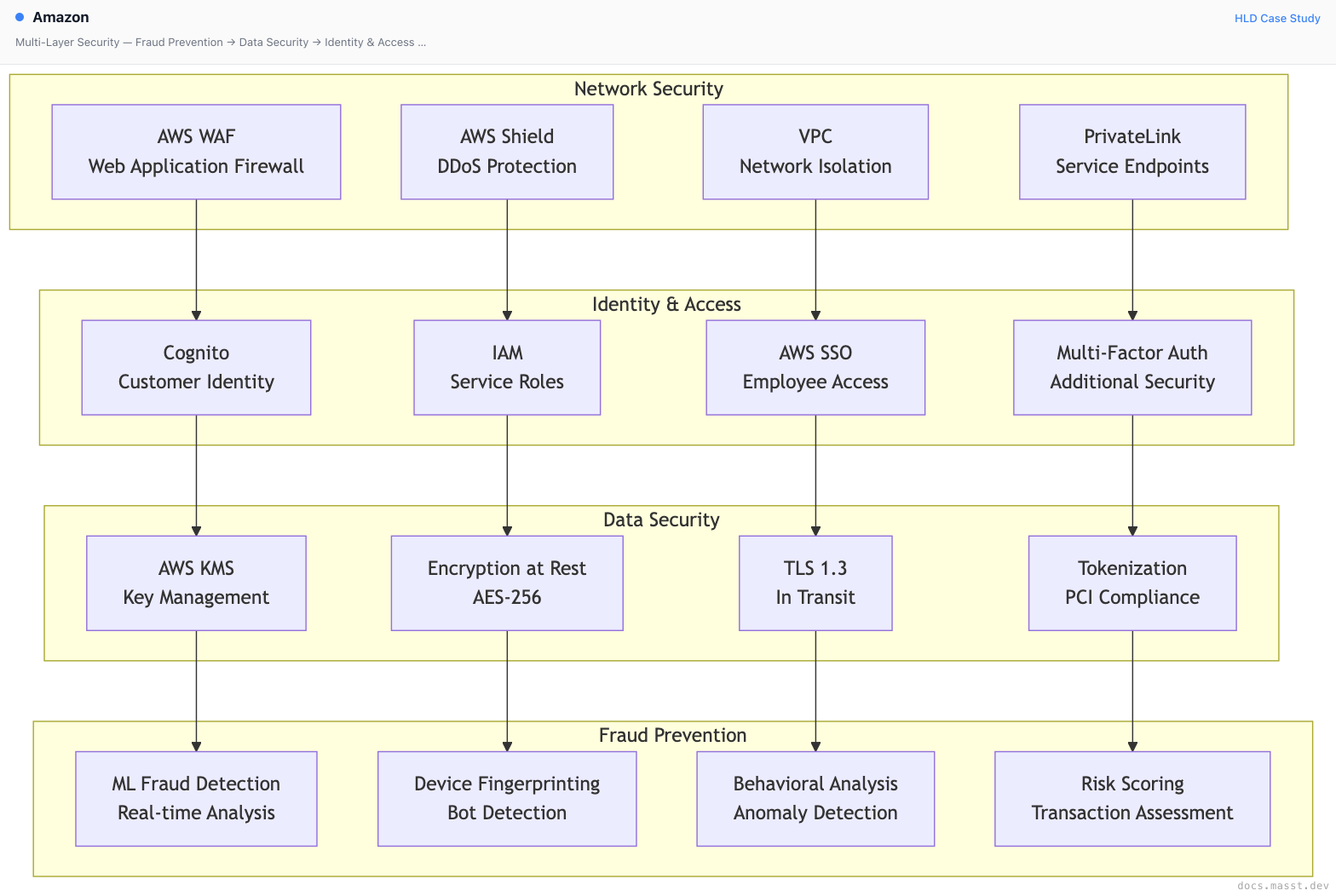
2. PCI DSS Compliance
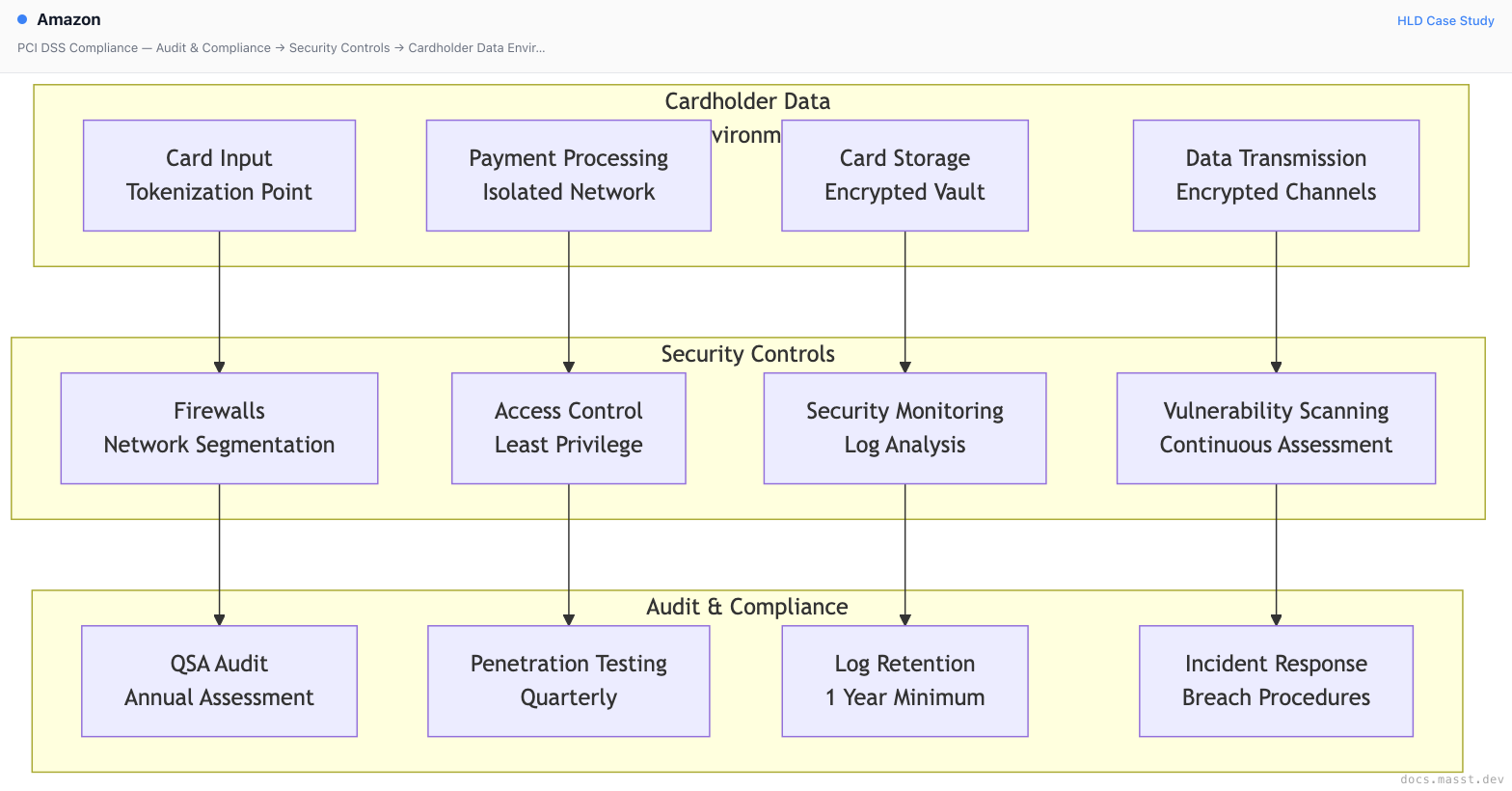
Monitoring & Observability
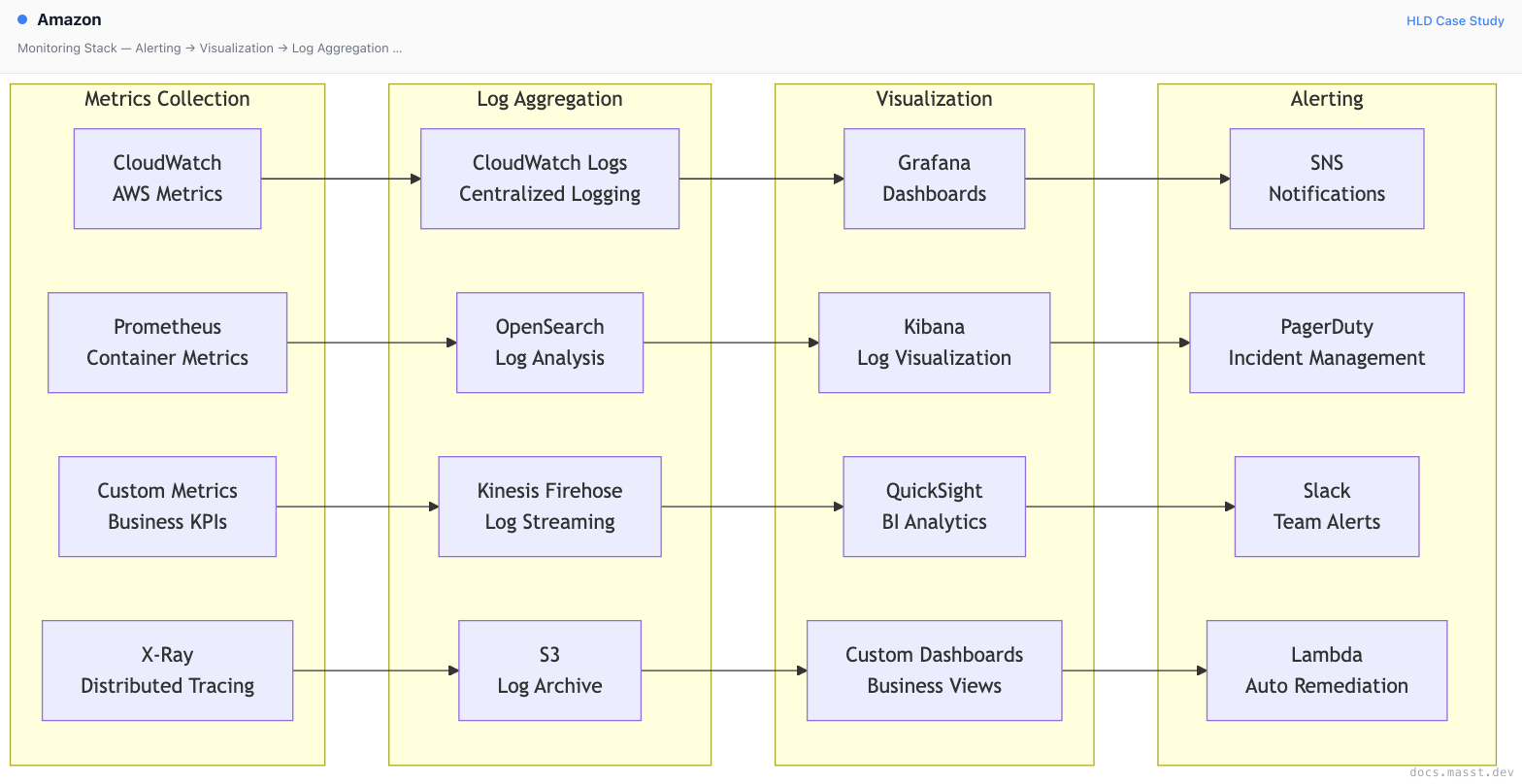
1. Monitoring Stack
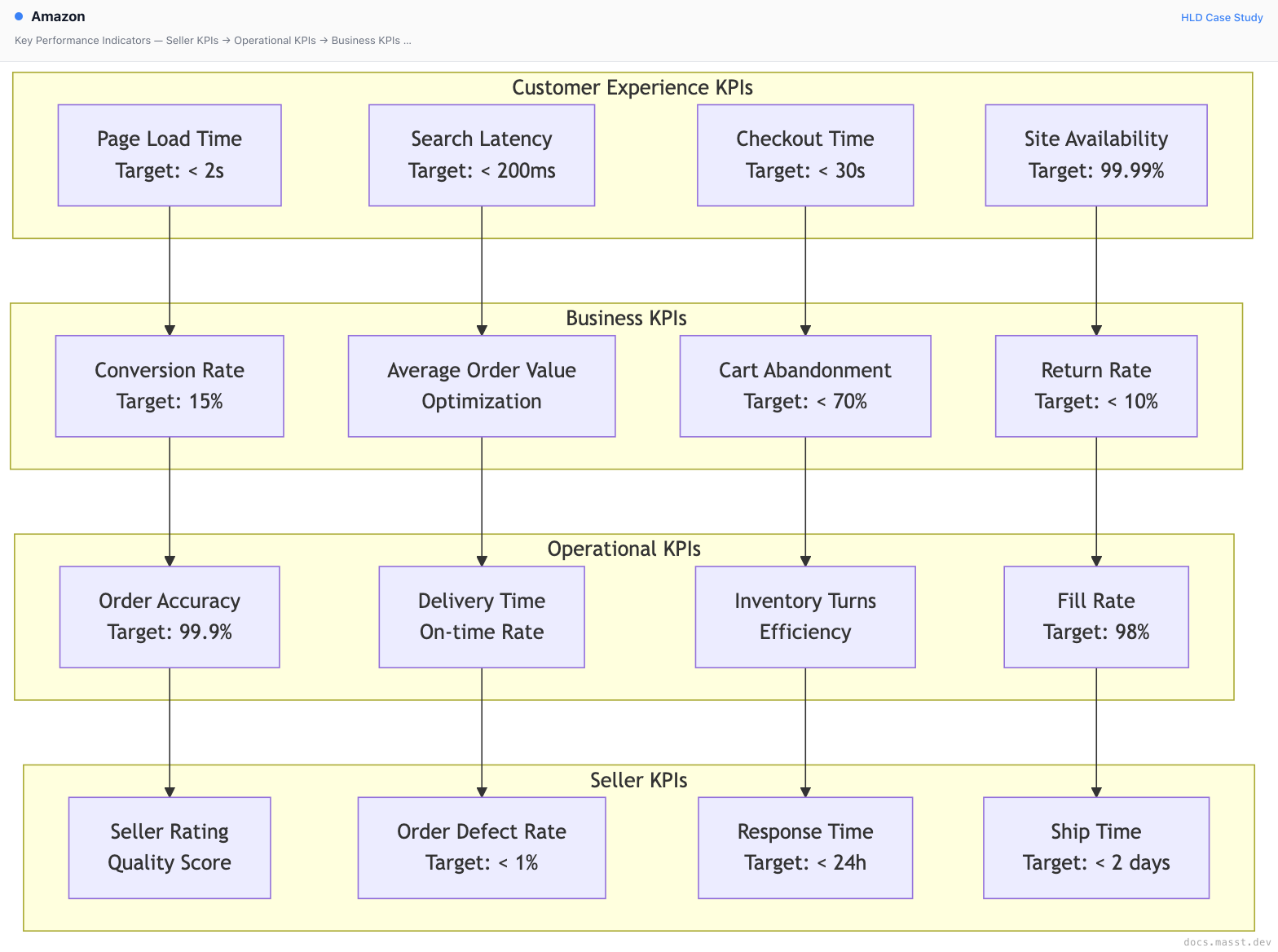
2. Key Performance Indicators
Stream Processing Architecture
1. Real-time Data Pipeline
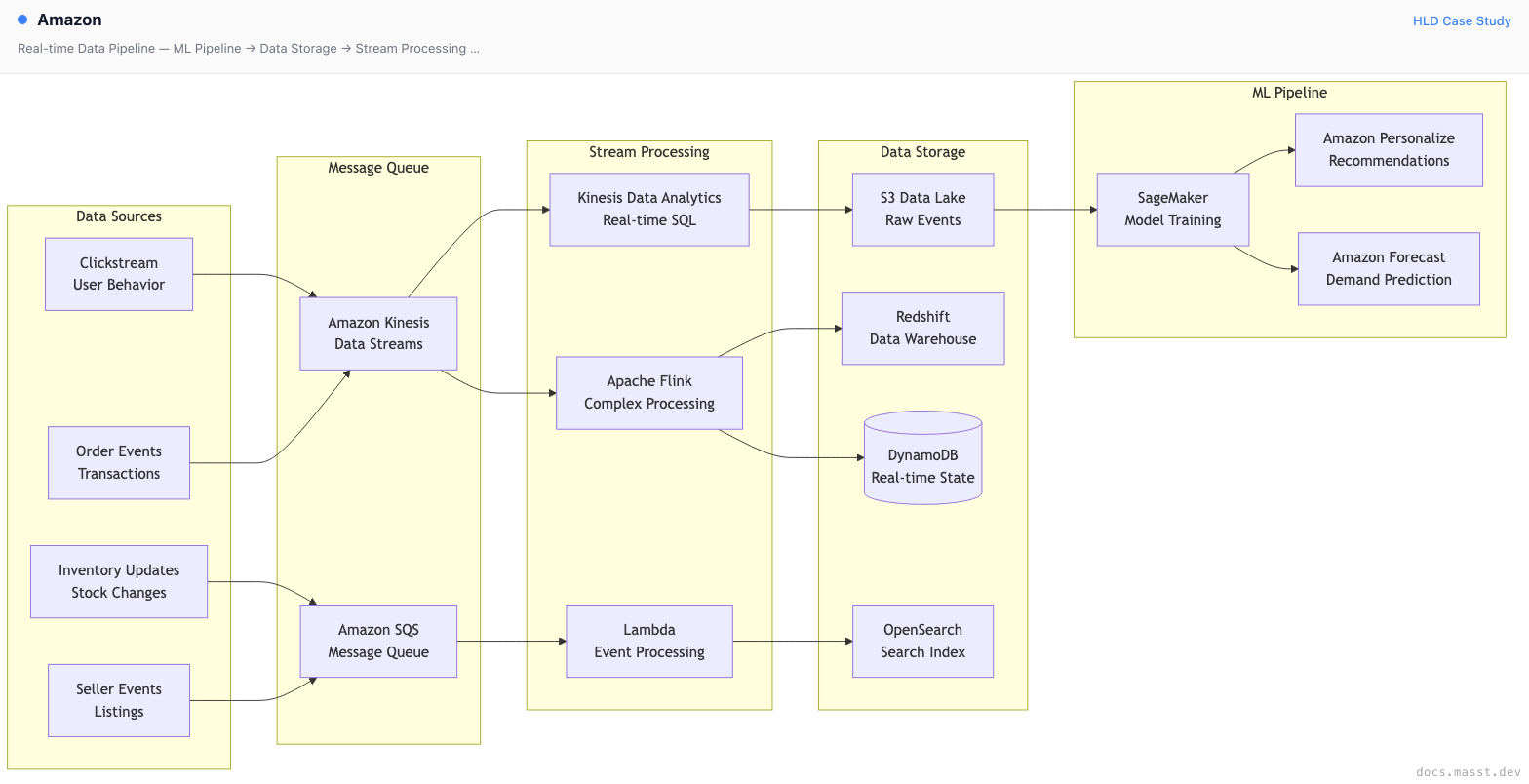
2. Apache Kafka / Kinesis
- Real-time event streaming at billions of events per day
- Order processing events and state changes
- Inventory level updates across fulfillment centers
- Clickstream data for personalization
3. Stream Processing Use Cases
- Real-time inventory: Cross-FC stock synchronization
- Fraud detection: Transaction pattern analysis
- Dynamic pricing: Demand-based price adjustments
- Personalization: Real-time recommendation updates
Event-Driven Architecture
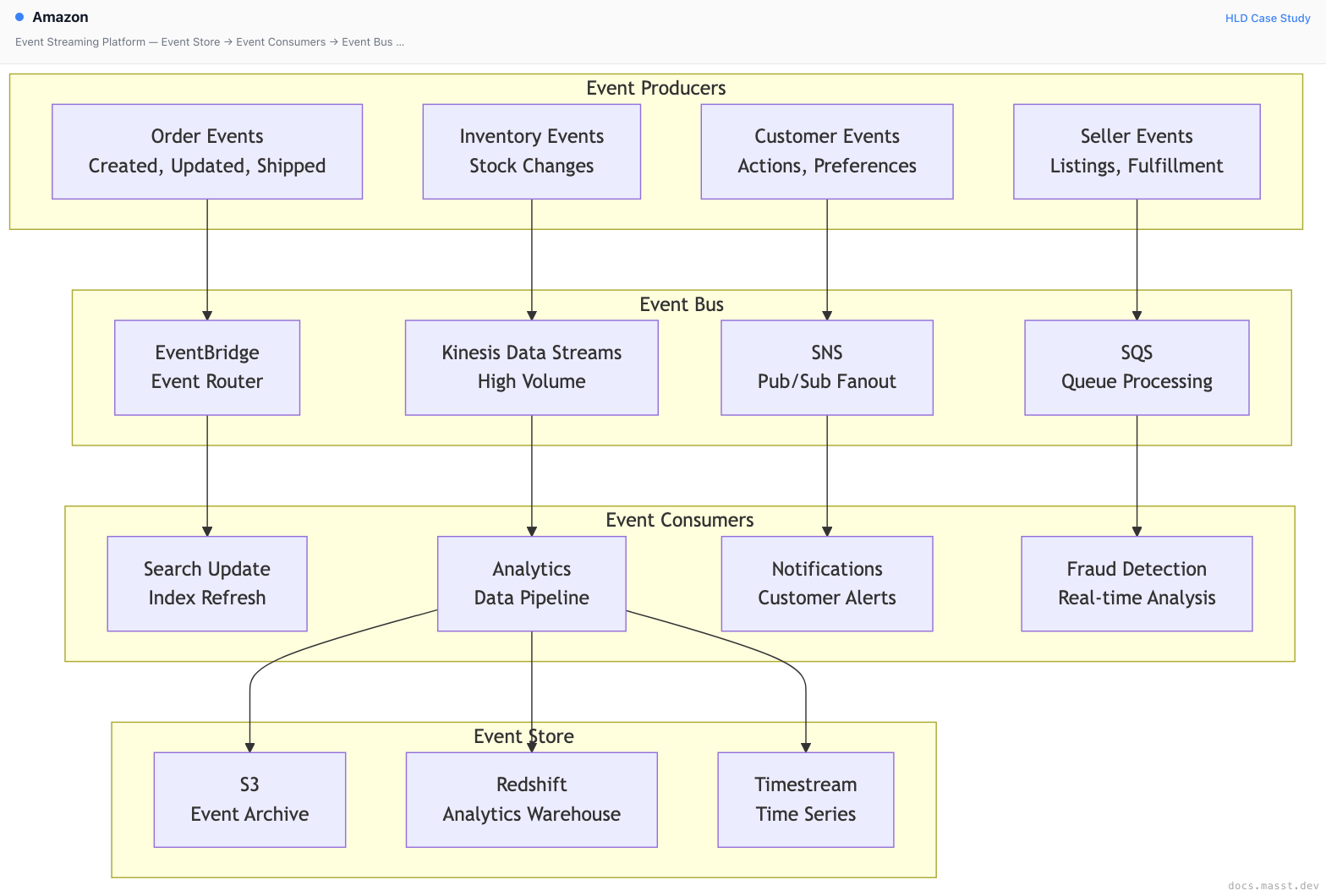
1. Event Streaming Platform
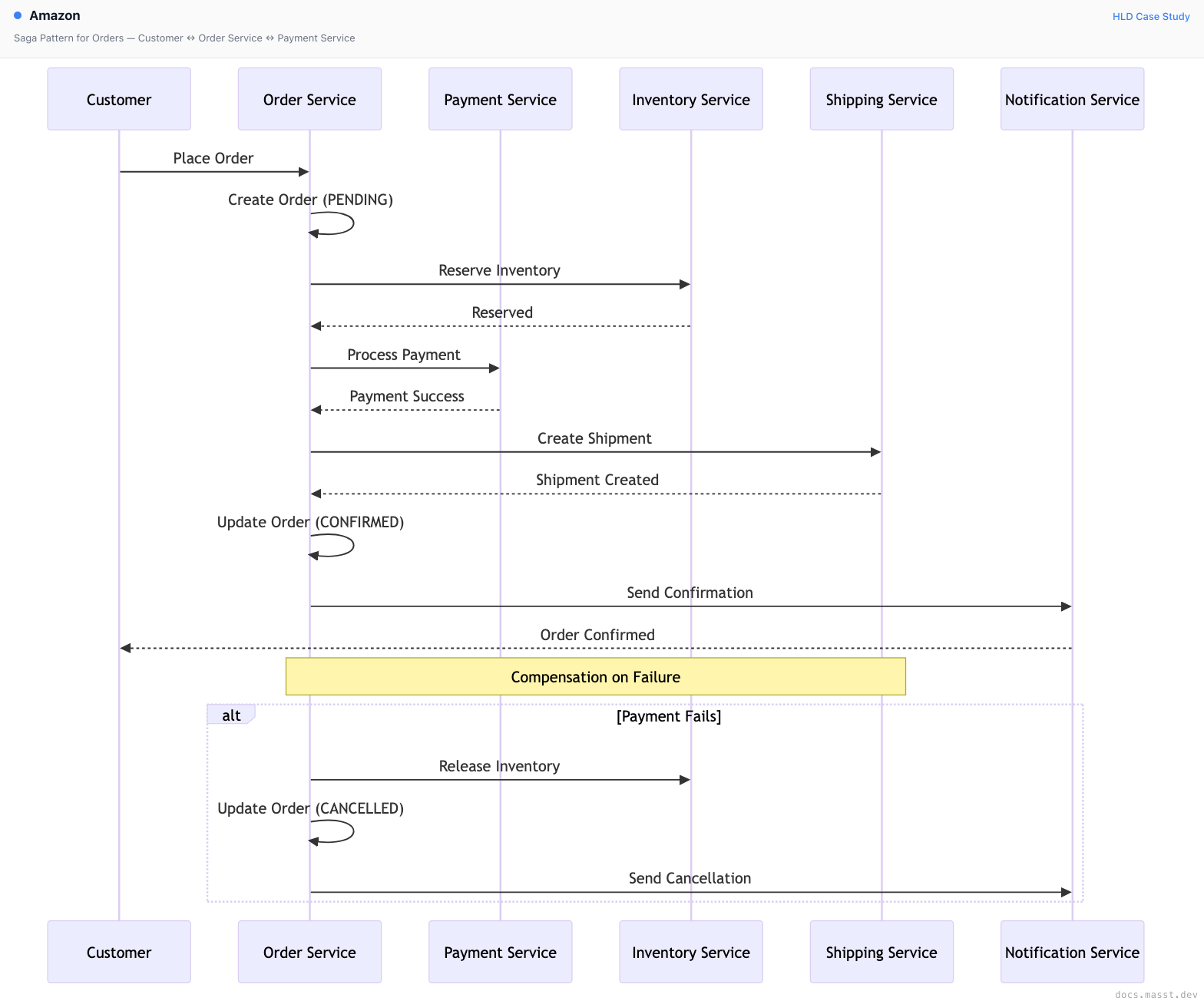
2. Saga Pattern for Orders
Global Infrastructure
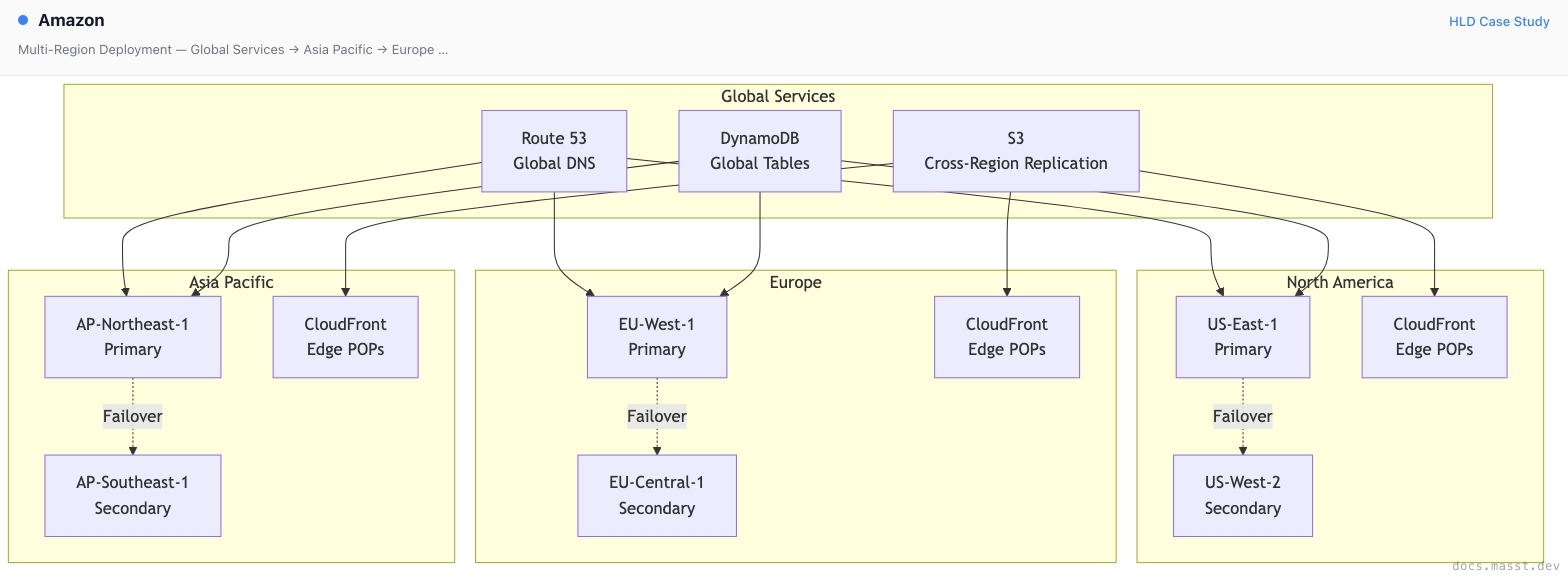
1. Multi-Region Deployment
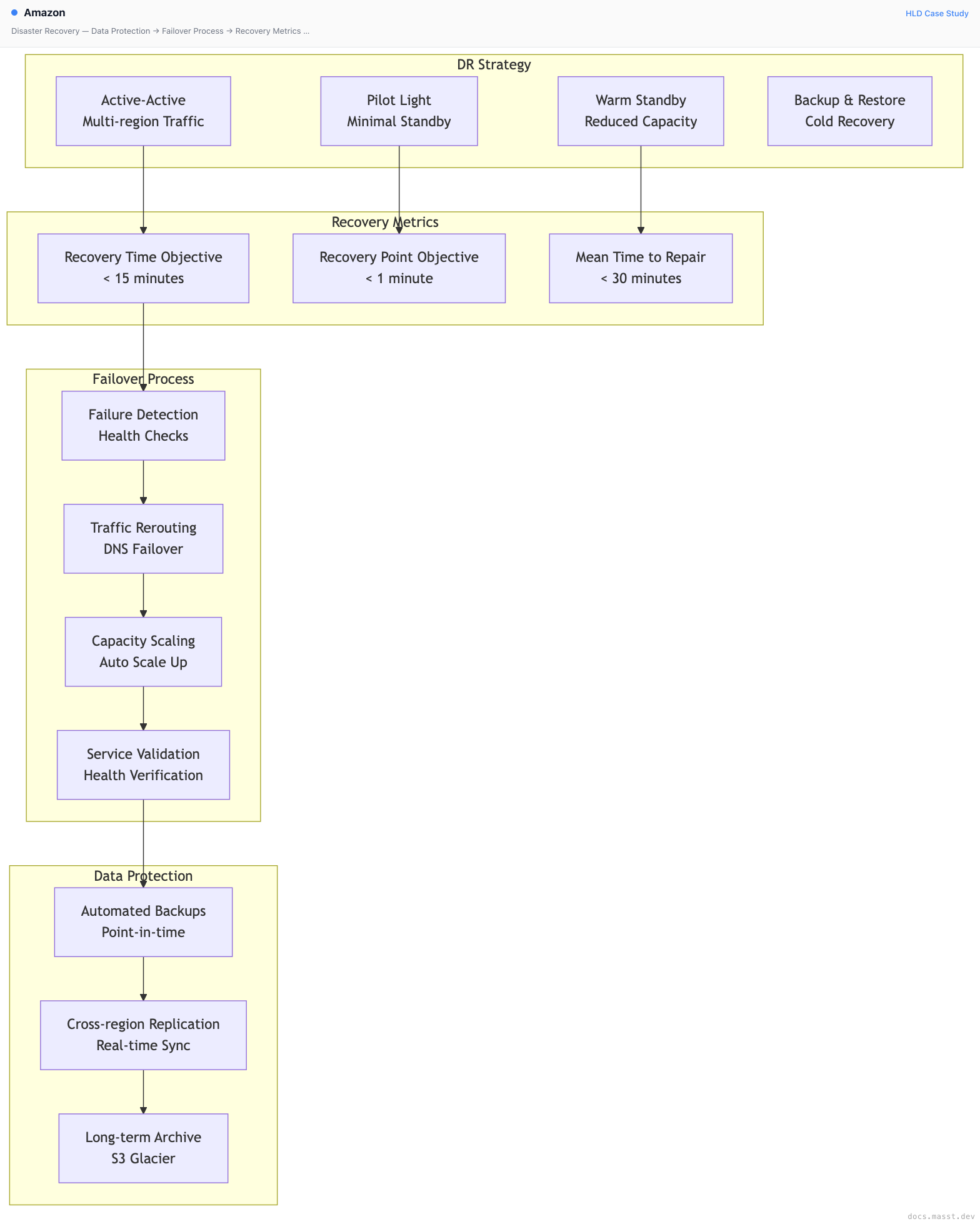
2. Disaster Recovery
Deployment and DevOps
1. Continuous Integration/Continuous Deployment
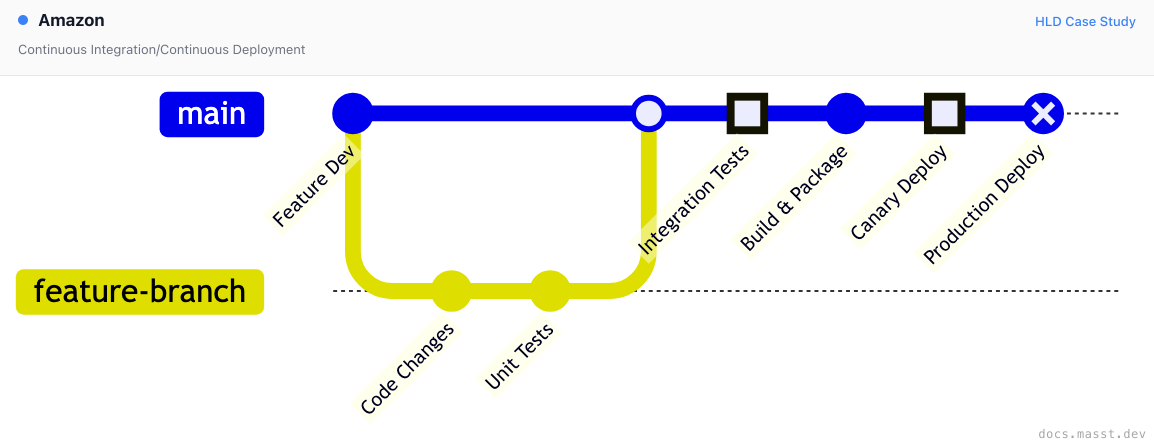
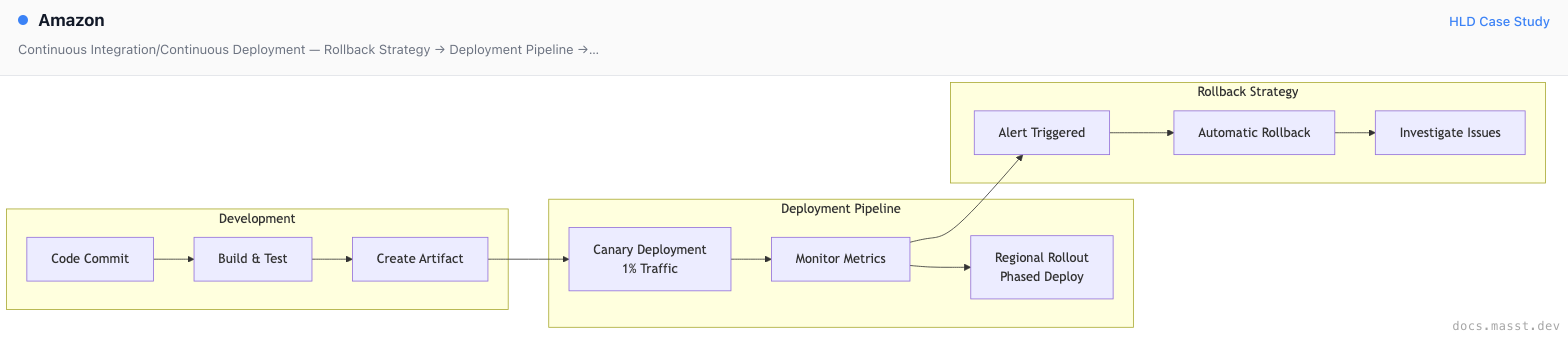
- Apollo: Amazon's internal deployment system
- One-box deployment: Single instance testing
- Regional rollout: Phased geographic deployment
- Automated rollback: Metric-triggered reversal
2. Infrastructure as Code
- AWS CloudFormation: Infrastructure provisioning
- CDK (Cloud Development Kit): Programmatic infrastructure
- Service Catalog: Standardized service templates
3. Chaos Engineering
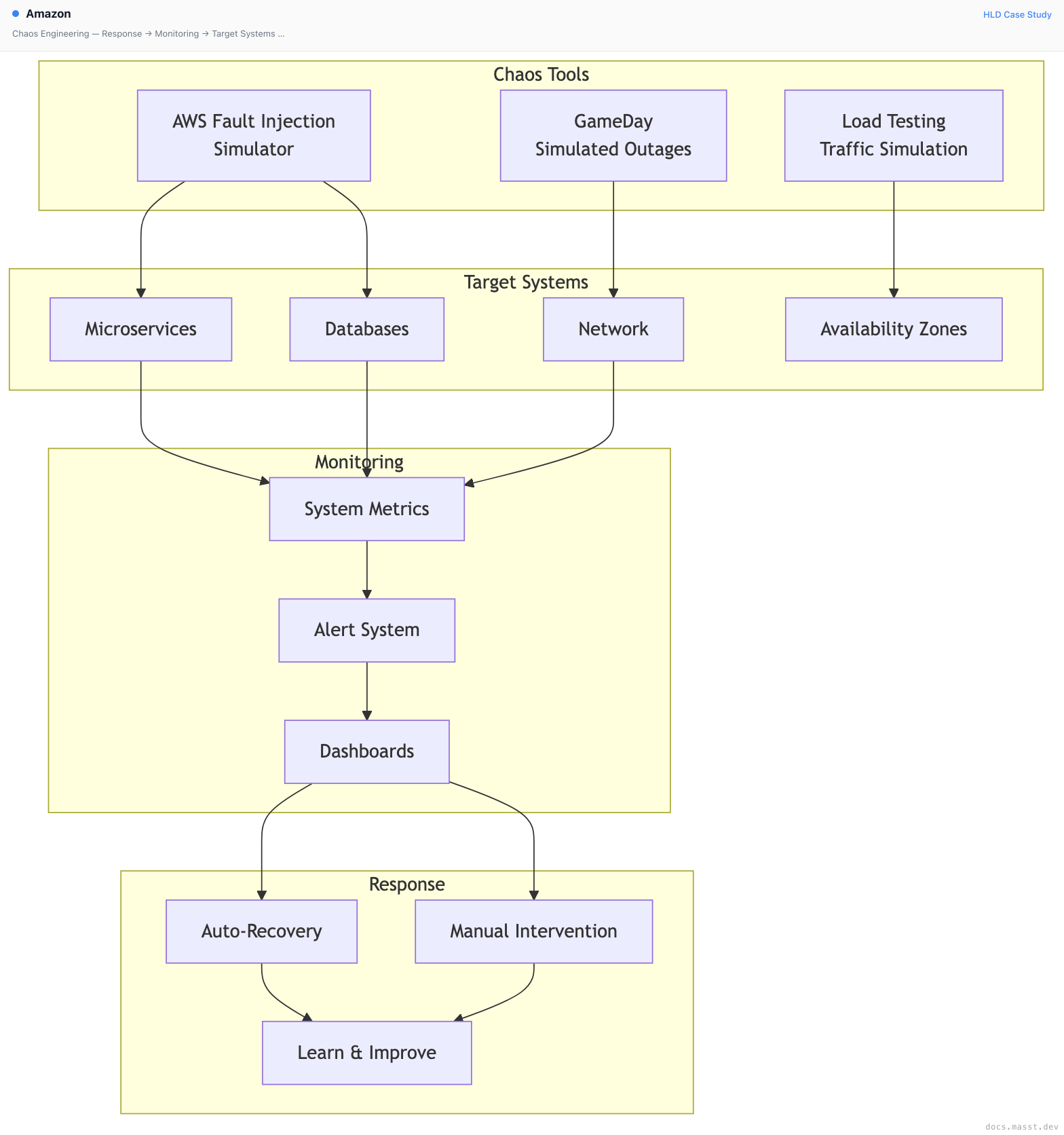
- GameDay exercises: Quarterly resilience testing
- Fault injection: Controlled failure scenarios
- Load testing: Traffic spike simulation
- Recovery validation: RTO/RPO verification
Cost Optimization
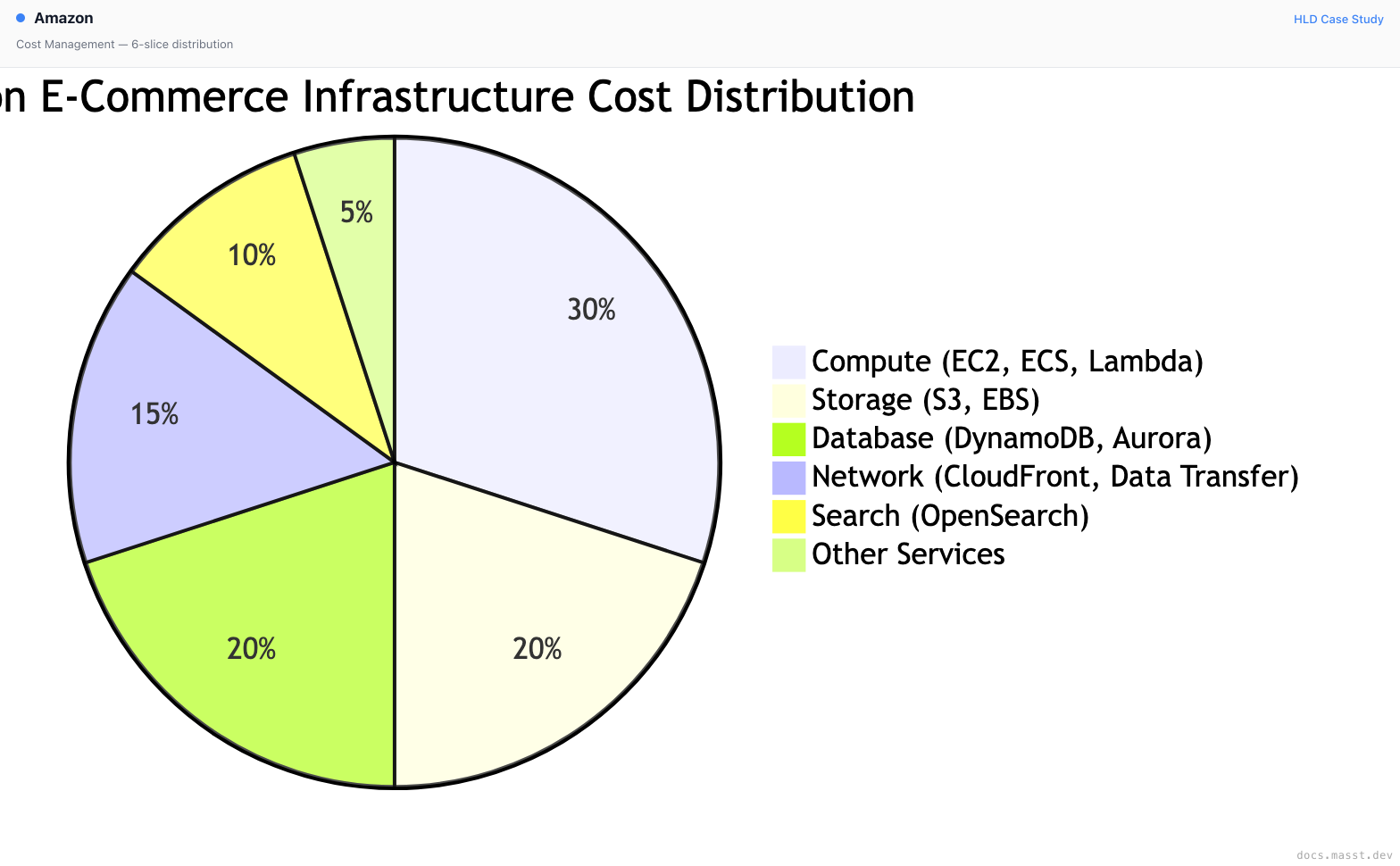
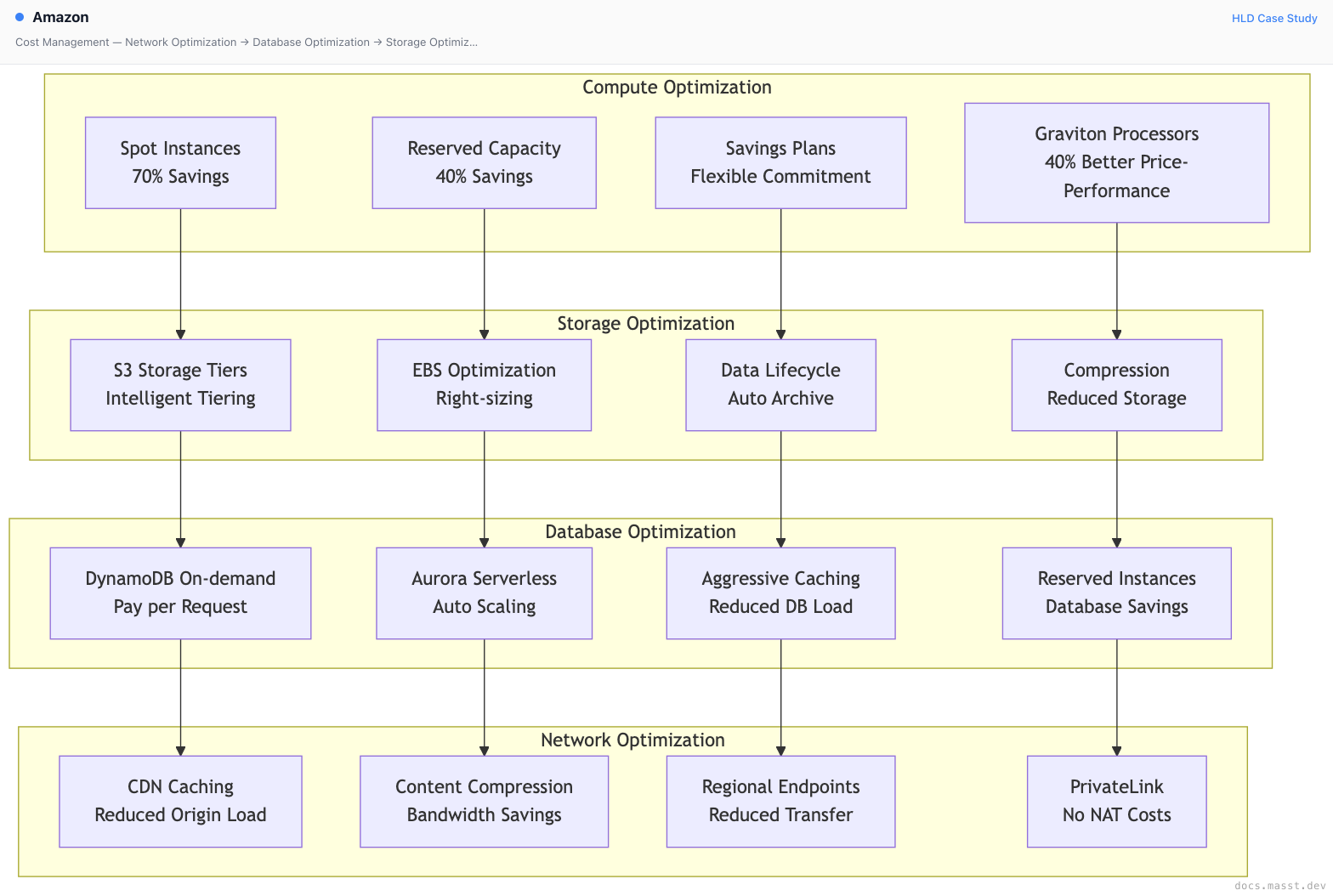
1. Cost Management
Future Architecture Considerations
1. Emerging Technologies
Conclusion
Amazon's e-commerce architecture represents the pinnacle of large-scale distributed systems, demonstrating how to build and operate a platform serving hundreds of millions of customers worldwide. The system successfully manages:
- Massive Scale: 350+ million products, billions of transactions
- Global Reach: Operations in 20+ countries with localized experiences
- High Availability: 99.99% uptime through multi-region architecture
- Real-time Operations: Inventory, pricing, and personalization updates
- Complex Fulfillment: 175+ fulfillment centers with sophisticated logistics
Key Architectural Principles:
-
Service-Oriented Architecture
- Microservices with clear boundaries
- API-first design for extensibility
- Event-driven communication
-
Scalability by Design
- Horizontal scaling at every layer
- Caching strategies for performance
- Auto-scaling for demand fluctuations
-
Data-Driven Decisions
- Real-time analytics and ML
- A/B testing for optimization
- Personalization at scale
-
Operational Excellence
- Comprehensive monitoring
- Automated incident response
- Continuous deployment
-
Security & Compliance
- Multi-layer security controls
- PCI DSS compliance
- Fraud prevention with ML
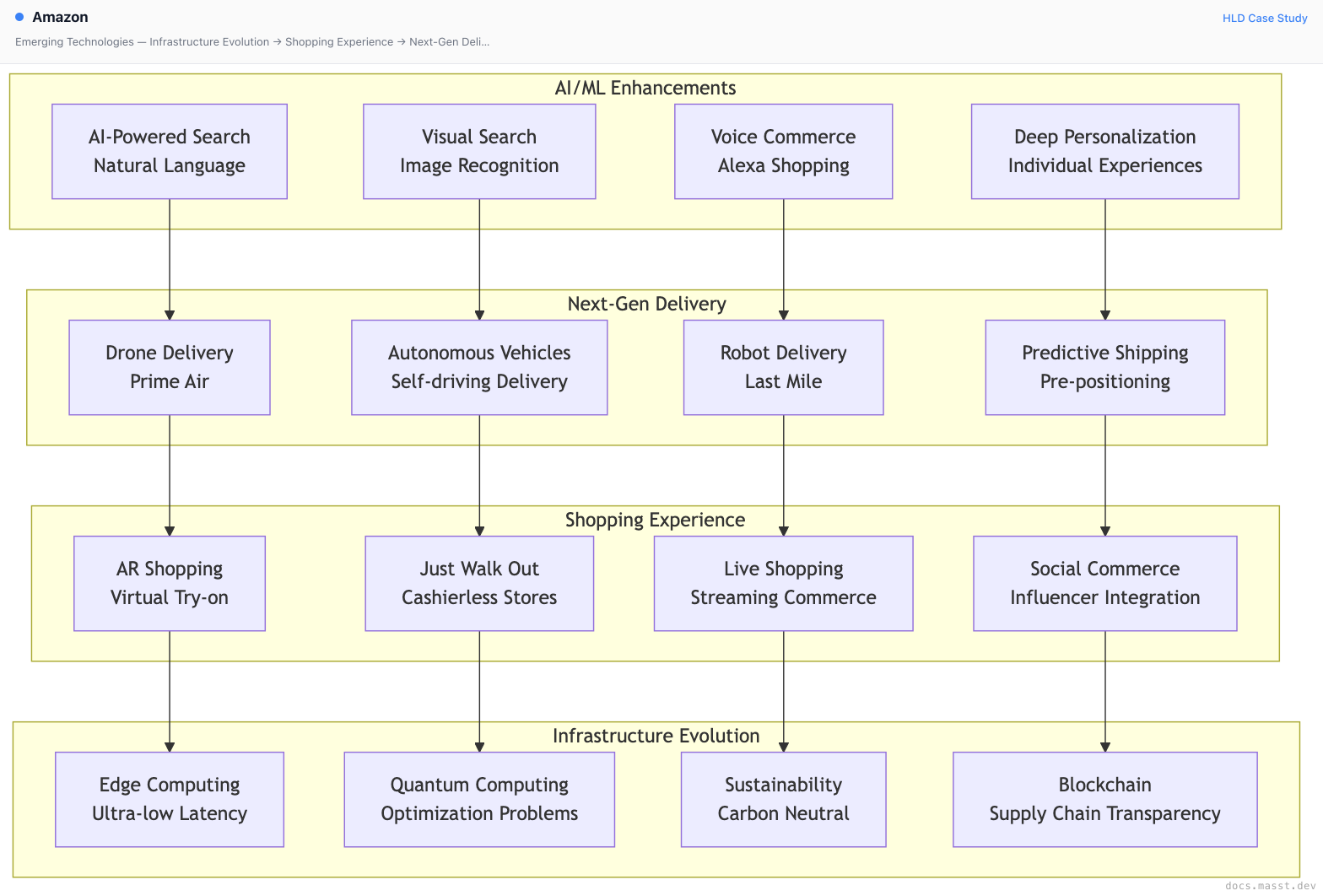
The architecture continues to evolve with emerging technologies like AI-powered search, drone delivery, and augmented reality shopping experiences, maintaining Amazon's position as the leader in e-commerce innovation.
This architecture represents Amazon's known systems and best practices. Actual implementation details may vary as the platform continues to evolve.
Practice
Try it yourself
Design the core of an e-commerce site like Amazon: catalog, search, cart, checkout and orders.
Your design should cover
- Browse and search a catalog of hundreds of millions of products
- Add to cart; the cart survives across devices
- Checkout reserves inventory, takes payment and creates an order
- Never oversell limited stock, even during a flash sale
- Order tracking and notifications
Finished reading?
Mark it done to track your progress in Designs.